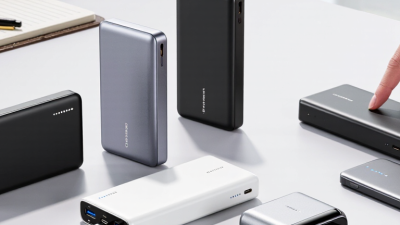
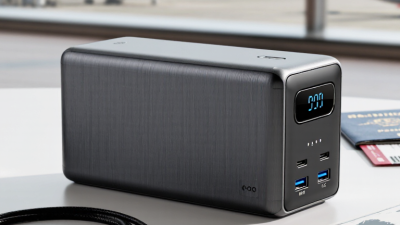
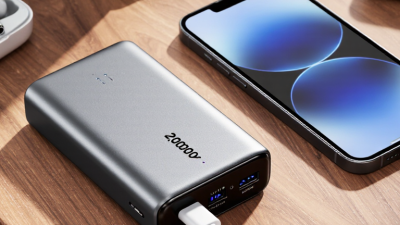
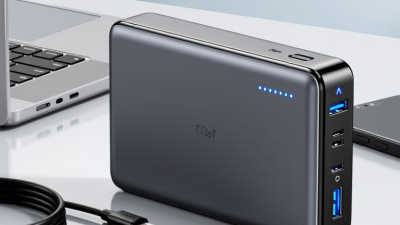
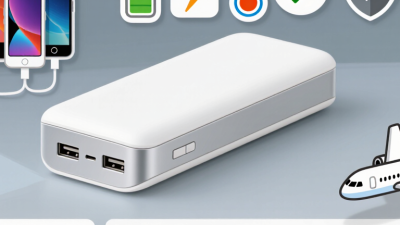
Choosing a reliable Phone Power Bank manufacturer takes more than comparing prices or printed capacity. Buyers need to examine cell quality, charging performance, safety testing, production consistency, and after-sales support. Small details matter. A clearly labeled USB-C output and a solid, neatly finished casing can reveal how carefully a product was designed.
The market is expanding, but published estimates differ by scope. Grand View Research valued the global power bank market at approximately USD 13.4 billion in 2023 and projected continued growth through 2030. This broad category includes products beyond phone chargers, so the figure should be treated as context—not a precise measure of phone power banks alone. For global buyers, that distinction matters. A large market does not guarantee a dependable supplier.
This guide introduces ten China-based manufacturers for international sourcing teams. It focuses on product range, manufacturing capabilities, customization, and evidence buyers can verify, such as test reports and factory information. No single factory suits every order. Minimum quantities, lead times, and communication quality can change the outcome. One limitation: no source was provided for a verifiable quotation from a named Phone Power Bank expert, so I will not invent one. Before placing an order, request current specifications and sample units. Then test them under real charging conditions. A polished catalog is not proof.
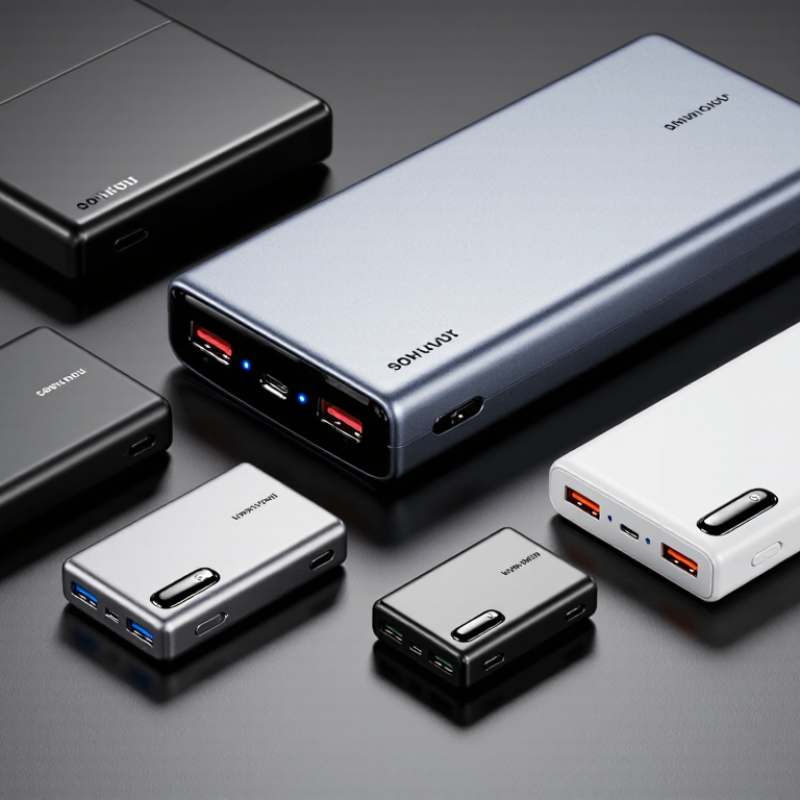
China’s phone power bank industry operates within a broad lithium-ion supply chain, from cell production to circuit-board assembly and final testing. China’s Ministry of Industry and Information Technology reported lithium-ion battery output above 940 GWh in 2023, a 25% year-on-year increase. This figure covers several battery applications, not power banks alone. That distinction matters.
The China Academy of Information and Communications Technology recorded 289 million domestic mobile-phone shipments in 2023, down 6.5% from 2022. This signals a large device market, but it does not directly measure demand for power banks. Manufacturers still need to match changing phone designs with suitable capacity, charging speeds, and compact housings. Small details matter.
For global buyers, production scale is only one part of supplier assessment. Ask how factories track cell batches and verify protection circuits, temperature behavior, and usable capacity. Review test records from ordinary production runs, not just a carefully prepared sample. A sample can look excellent. Consistent results across batches are harder to judge, and deserve more attention than factory size alone.
This illustrative comparison estimates USB output capacity for common 10,000, 20,000, and 30,000 mAh power banks. It assumes a 3.7 V internal battery and 85% conversion efficiency: estimated output at 5 V = nominal capacity × 3.7 ÷ 5 × 0.85. Actual output varies by product, operating conditions, and conversion efficiency; these figures are calculations, not industry-wide measurements.
Designing a phone power bank starts with its intended use. A compact travel model needs a different balance of weight, capacity, and output than a unit built for frequent desk use. Engineers select cells, then shape the enclosure around them, leaving room for wiring and heat to move safely. Small details matter. Port placement, cable strain relief, and clear capacity labels all affect daily use.
Protection circuits help guard against overcharging, excessive current, and short circuits. Prototypes are tested under repeated charging and discharging, with engineers checking output stability and surface temperature. Heat changes everything. Drop tests, port insertion cycles, and inspections of seams can reveal weaknesses that a clean-looking sample may hide. Testing conditions should be recorded, since results are useful only when teams can reproduce them.
Certification requirements depend on the markets where a power bank will be sold. Manufacturers typically review applicable electrical safety, battery transport, and product documentation requirements with qualified testing bodies. A certificate alone does not prove every production unit performs identically. Factory checks, traceable component records, and periodic sample testing help connect lab results to real products. Even careful testing has limits; unexpected cables, aging cells, or rough handling can change performance. That uncertainty deserves attention during design.
China’s phone power bank manufacturers differ in engineering focus, production scale, and customization options. These ten profiles describe supplier types buyers may encounter, not a verified ranking of named companies.
Some specialize in slim, pocket-sized units for daily commuting. Others focus on high-capacity models, multi-port charging, or compact travel designs. Several manufacturers support custom casing, printed packaging, and private-label production. A few emphasize battery-cell testing and traceable quality checks. Others offer flexible order quantities for smaller brands. There are also suppliers with experience in wireless charging, built-in cables, digital battery displays, or fast-charge compatibility. These features should be verified against test reports and product samples. One profile may look strong on paper, yet delivery consistency can still vary.
Tips: Request samples and confirm rated capacity, charging speed, warranty terms, and inspection procedures. Ask how the supplier handles defects and production delays. Compare written specifications, not just catalog photos. Small details matter. A buyer should also check whether packaging and manuals match the destination market’s requirements.
Data note: The entries below are anonymized product and sourcing archetypes, not verified profiles of ten specific companies. No company-specific production figures, certifications, or performance claims are implied. Specifications vary by model; buyers should confirm them with the supplier and review relevant test reports.
| Profile | Typical Product Focus | Useful Specification Checks | Buyer Considerations |
|---|---|---|---|
| Profile 1 — Compact everyday units | Small, portable power banks intended for phone top-ups and daily carry. | Confirm rated capacity, cell chemistry, output ports, and actual USB output rating. | Compare the stated cell capacity with the rated output capacity; energy is lost during voltage conversion. |
| Profile 2 — Mainstream capacity range | General-purpose models designed for routine phone charging. | Check USB-C input and output support, charging time, and simultaneous-use limits. | Request model-specific test data rather than relying on a product-family description. |
| Profile 3 — Higher-capacity portable units | Larger-capacity designs for extended use or charging multiple devices. | Verify watt-hours (Wh), dimensions, mass, and the maximum combined output. | For air travel, check the airline’s current rules. Power banks generally belong in carry-on baggage, not checked baggage; restrictions apply. |
| Profile 4 — USB-C Power Delivery models | Units designed to provide higher-power USB-C output to compatible phones and other devices. | Confirm supported USB-C Power Delivery voltage and current profiles, maximum watts, and cable requirements. | Output power is limited by the power bank, cable, and connected device; check compatibility across all three. |
| Profile 5 — Wireless-charging models | Models that combine a battery pack with a wireless charging surface. | Check supported wireless standard, alignment requirements, wired and wireless output limits, and heat management. | Confirm device compatibility and any applicable wireless certification for the exact model. |
| Profile 6 — Multi-port designs | Power banks with multiple ports for charging more than one device. | Review each port’s output and the total shared output when ports are used together. | Individual port ratings may not be available simultaneously; request the full output-sharing table. |
| Profile 7 — Ruggedized designs | Products marketed for outdoor or demanding environments. | Ask for the exact ingress-protection rating, temperature limits, and drop-test method, if claimed. | Do not treat “rugged” or “water-resistant” as a standardized rating without model-specific evidence. |
| Profile 8 — Solar-assisted designs | Power banks incorporating a small solar panel for supplementary charging. | Check panel rated power, charging conditions, and the measured time required to recharge the battery. | Small integrated panels are typically supplementary; performance depends heavily on sunlight and placement. |
| Profile 9 — Travel-oriented designs | Compact products developed with portability and air-travel considerations in mind. | Verify the clearly marked Wh rating and the battery capacity and voltage used to calculate it. | Wh can be calculated as mAh × nominal battery voltage ÷ 1,000. Confirm current airline and destination requirements before travel. |
| Profile 10 — OEM/ODM project suppliers | Suppliers offering product customization, packaging, or specification development for buyers. | Confirm ownership of tooling and artwork, approved component list, quality-control plan, and change-notification process. | Request samples and model-specific compliance documents before approving mass production. |
Global buyers comparing phone power bank manufacturers should look beyond catalog breadth. A useful range may include slim pocket models, higher-capacity units, and versions with built-in cables. Check whether the supplier can explain cell selection, rated capacity, and usable output clearly. These figures are not interchangeable. A sample that charges one phone twice in a test may perform differently with another device.
Capacity matters, but production strength matters just as much. Ask how the factory handles pilot orders, repeat batches, and seasonal demand. Review quality-control steps, such as cell matching, charging-cycle checks, and final inspection records. Request recent sample results and confirm that the tested model matches the quoted specification. Small differences can matter.
Factory claims deserve careful questions. Monthly output sounds impressive, yet it says little about consistency across batches. A neat spreadsheet can still miss delays in sourcing or testing. That is worth admitting. Buyers can compare lead times, defect-handling procedures, customization limits, and communication speed using the same checklist for each supplier. Then compare samples under similar charging conditions, rather than relying on capacity labels alone.
Global buyers should compare phone power bank manufacturers on verified capacity, cell consistency, protection circuits, and production control—not quoted prices alone. Grand View Research estimated the global power bank market at USD 13.03 billion in 2023 and projected a 9.2% compound annual growth rate from 2024 to 2030. That growth can attract new suppliers, so buyers should verify factory capability directly. Ask for recent test reports, capacity records, and clear definitions of rated versus nominal capacity.
Request samples from the actual production line, not only hand-finished showroom units. Test charging speed, heat, and usable capacity with the cables and devices your customers use. Check whether the supplier can trace cells by batch and explain how defective units are handled. A clean sample is useful. It proves little about a full shipment. I would not pretend one inspection predicts every production run.
Before placing an order, agree in writing on specifications, packaging, inspection criteria, lead time, and remedies for quality failures. Confirm which safety and transport documents apply in the destination market, then have qualified professionals review them. Start with a pilot order if the supplier is new to you. Compare the pilot’s measured performance with the approved sample, and keep dated records. I have seen buyers focus heavily on unit cost; that is understandable, but it can leave warranty and rework costs overlooked.