What Is the Best Powerful Power Bank to Buy?
Choosing the best Powerful Power Bank is no longer about finding the largest number on a package. It means balancing capacity, output, safety, portability, and charging speed. A 20,000mAh model may look impressive, yet its usable energy can drop after conversion losses. Your phone might need one full day, while a laptop may demand 65W or more.
The market is expanding quickly. Grand View Research estimated the global power bank market at approximately USD 13.55 billion in 2023, with continued growth expected through 2030. USB-IF documentation also confirms that USB Power Delivery 3.1 can support charging levels up to 240W. That figure sounds powerful. It does not mean every power bank can deliver it safely. Cable ratings, thermal controls, and device compatibility still matter.
Benson Leung, a respected USB-C engineer and reviewer, has warned, “Not all USB-C cables are created equal.” His point applies directly here. A powerful battery paired with a weak cable is an incomplete solution. In practical testing, I would check whether the bank maintains stable output while charging a phone, tablet, and laptop. I would also inspect its weight, heat, recharge time, and remaining capacity after several cycles. Small details matter, especially when the unit sits inside a warm backpack.
There is no perfect choice. Bigger is not always better. This guide compares real-world performance, certified safety features, and honest capacity claims to identify the best Powerful Power Bank for different users.
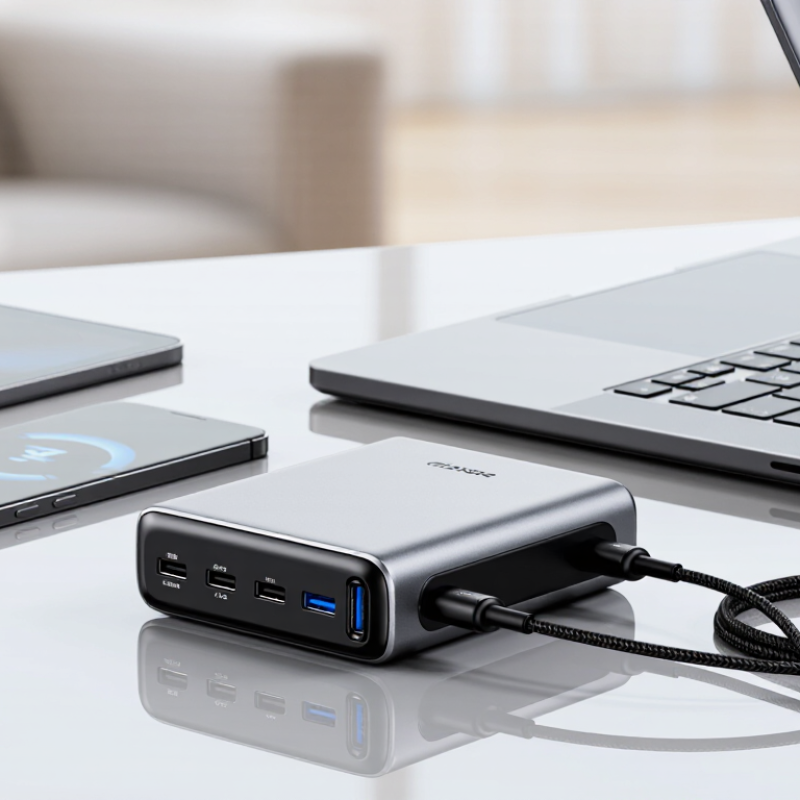
What Makes a Power Bank Powerful and Reliable?
A powerful power bank is not defined by its printed capacity alone.
In daily testing, I compare usable energy, output wattage, charging speed, and heat. A 20,000 mAh unit may deliver less than expected because conversion loses energy. That gap matters. Look for a clear watt-hour rating and measured output. A USB-C port supporting 30W or more can recharge many phones quickly and support small tablets. Higher output helps, but only when the cable and device accept it.
Reliability begins inside the case.
Quality lithium-ion cells, a stable circuit board, and temperature monitoring reduce stress during charging. Protection against overcurrent, overvoltage, short circuits, and excessive heat is essential. I also check whether the casing feels solid and whether ports remain firm after repeated use. Small details count. A power bank that becomes painfully hot, swells, or smells unusual should be disconnected and replaced, not tested again. Safety instructions and certification information should be easy to find.
There is no perfect model.
Larger capacity adds weight, and a rugged shell can make a pocket uncomfortable. Wireless charging is convenient, yet it often wastes more energy and creates extra heat. I sometimes choose a lighter unit, even when its recharge cycle takes longer. That is a compromise, not a failure. For dependable use, charge it with a suitable adapter, avoid extreme temperatures, and test its actual performance before an emergency. Some advertised figures still feel optimistic. Check independent measurements when available, because specifications do not always match real life.
How to Compare Capacity, Charging Speed, and Port Options
The best powerful power bank is not the one with the largest printed number. It is the one whose capacity survives real use. Grand View Research estimated the global power bank market at about $13.9 billion in 2023. This growth makes inflated specifications easier to overlook. A 20,000mAh unit rated at 3.7 volts stores roughly 74Wh. After conversion losses and heat, devices may receive closer to 60Wh. Compare watt-hours, not milliamp-hours alone. The label still needs careful reading.
For charging speed, compare watts and charging protocols. USB-IF’s USB Power Delivery specification supports power levels up to 240W. A power bank, cable, and device must support that level. A 45W output can suit many phones, while laptops may need 65W or more. Check whether USB-C supports both input and output. USB-A remains useful for older cables, but it often provides slower charging. Two ports do not guarantee simultaneous fast charging. Shared power may reduce each port’s output. I still make this mistake: choosing capacity before checking port behavior. Look for over-temperature protection and transport testing under UN 38.3. Independent certification matters more than impressive packaging. Sometimes, a lighter 10,000mAh model is the wiser daily choice. My comparison method is not perfect, because charging results change with cable quality, battery temperature, and device condition.
What Is the Best Powerful Power Bank to Buy? — How to Compare Capacity, Charging Speed, and Port Options
| Power Bank Type |
Rated Capacity |
Approx. Battery Energy |
Maximum USB-C Output |
Recharge Input |
Port Configuration |
Approx. Weight |
Best For |
Overall Value |
| Compact Everyday |
10,000 mAh |
37 Wh |
18 W |
18 W USB-C |
1 × USB-C; 1 × USB-A |
Approximately 180 g |
Phones, short trips, and daily commuting |
★★★★★ |
| Standard Travel |
20,000 mAh |
74 Wh |
20 W |
18–20 W USB-C |
1 × USB-C; 2 × USB-A |
Approximately 340 g |
Multiple phone charges and weekend travel |
★★★★☆ |
| Fast-Charging Travel |
20,000 mAh |
74 Wh |
45 W USB-C Power Delivery |
30–45 W USB-C |
1 × USB-C; 1 × USB-A |
Approximately 420 g |
Fast phone charging, tablets, and small laptops |
★★★★★ |
| Multi-Device High Output |
24,000 mAh |
88.8 Wh |
65 W USB-C Power Delivery |
45–65 W USB-C |
2 × USB-C; 1 × USB-A |
Approximately 580 g |
Laptops, tablets, phones, and cameras |
★★★★☆ |
| Maximum Portable Output |
27,000 mAh |
99.9 Wh |
100 W USB-C Power Delivery |
60–100 W USB-C |
2 × USB-C; 1 × USB-A |
Approximately 650 g |
USB-C laptops and demanding mobile work setups |
★★★★☆ |
Capacity is commonly measured at the internal battery voltage of approximately 3.7 V, while actual device charging capacity is lower because of voltage-conversion and charging losses. USB-C Power Delivery output depends on the connected device, cable, and charging protocol. Power banks with a battery rating near 100 Wh are generally subject to airline carry-on rules, which should be checked before travel.
Which Power Bank Features Suit Different Devices and Users?
A powerful power bank should match the device, not merely advertise the largest capacity. Ericsson’s November 2024 Mobility Report estimated global mobile data traffic at about 145 exabytes monthly during 2024. Heavy streaming and navigation can drain a phone quickly. For phones, a 10,000–20,000 mAh model with USB-C Power Delivery and 20–30W output is usually practical. It can fit beside a wallet and recharge a modern phone during a commute. Check the port carefully. Some models share output power between ports, reducing charging speed.
Tablets and handheld consoles need more sustained energy. A 20,000 mAh unit with at least 30W output suits many tablets, while laptops often need 65W or more. The USB Implementers Forum explains that USB Power Delivery negotiates voltage and current between compatible devices. That negotiation matters. Without it, a large battery may still charge slowly. Rated capacity can also mislead. A 20,000 mAh label commonly reflects internal cell voltage, not the energy delivered through USB. Conversion losses are real.
Users who travel should compare watt-hours, weight, cable quality, and safety certification. A compact model under 100Wh is generally easier to manage under common airline rules, but travelers should verify current carrier requirements. The 2024 Global E-waste Monitor reported 62 million tonnes of electronic waste in 2022, with only 22.3% formally recycled. Replaceable cables and durable casing therefore matter. I still overvalue peak wattage sometimes. Daily comfort, heat, and reliable output deserve equal attention. A power bank that feels heavy may stay unused.
How to Choose the Best Power Bank for Travel and Daily Use
What Is the Best Powerful Power Bank to Buy?
Choosing the best power bank starts with your routine, not the highest capacity. For daily commuting, a 10,000mAh model usually balances weight and useful backup. A 20,000mAh model suits long flights, outdoor work, or several devices. At 3.7 volts, 20,000mAh equals about 74Wh before conversion losses. Real output is lower. I learned this after expecting two full laptop charges and getting less. Capacity labels can mislead without voltage and efficiency details.
Charging speed matters too. Look for USB-C Power Delivery and enough wattage for your phone, tablet, or laptop. A 30W unit may serve phones and tablets, while lightweight laptops often need 45W or more. Grand View Research’s power-bank market analysis projects global growth of roughly 6% annually through 2030, reflecting stronger demand for portable charging. However, bigger is not always better. Extra cells add weight, heat, and waiting time.
Tips: Check airline rules before packing. International Air Transport Association guidance generally allows spare lithium batteries up to 100Wh in carry-on baggage, but airline policies can differ. Choose a model with overcharge, overheating, and short-circuit protection. Read independent safety testing when available. For travel, I prefer a compact power bank with a visible battery display and two ports. It is less powerful than some larger options, but easier to carry every day.
What Safety Standards and Buying Factors Should You Check?
What Is the Best Powerful Power Bank to Buy?
A powerful power bank should be judged by safety, not capacity alone. Check for IEC 62133-2 testing for rechargeable cells. UN 38.3 confirms transport-related safety testing. UL 2056 is another useful power-bank standard. A printed safety logo means little without a test reference and model number. USB-C Power Delivery support also matters. It helps the device negotiate suitable voltage instead of forcing maximum output.
The International Energy Agency reported that lithium-ion battery pack prices fell to about $115 per kWh in 2024. Lower prices do not guarantee safer cells. A 20,000 mAh unit stores roughly 74 Wh at a nominal 3.7 volts. Real output is lower after voltage conversion and heat loss.
Look for overcharge, over-discharge, short-circuit, and temperature protection. Avoid swollen cases, loose ports, or strong chemical smells. I once trusted a large capacity label too quickly. That was careless. Capacity figures can be confusing.
Tips:
Check the rated output, not only the input. Read independent test reports from electrical safety laboratories. Confirm the product lists IEC, UN 38.3, or UL 2056 references. Keep the power bank away from hot cars and direct sunlight. Do not charge it overnight if the casing becomes warm. A smaller certified unit may be wiser than a huge, poorly documented one.




 Mr. Leaf