
Leave Your Message
Choosing the right Battery Power Bank can make international travel simpler, safer, and less stressful. A reliable model should keep phones, tablets, cameras, and other everyday devices running through long flights, train journeys, and unexpected delays. However, global buyers face different charging standards, outlet types, airline policies, and product warranties. One convenient size does not suit every traveler.
This guide examines ten leading power banks for international use. We consider capacity, charging speed, USB-C support, weight, heat control, recharge time, and build quality. We also look at practical details, such as whether a 20,000mAh unit fits comfortably inside a day bag or whether its display remains readable in bright sunlight. These factors matter when your phone shows five percent battery at an unfamiliar station.
Real-world convenience matters.
Our recommendations are based on manufacturer specifications, safety features, user-focused comparisons, and common travel conditions. Buyers should still verify current airline requirements and local charging compatibility before departure. Some models offer impressive capacity but feel heavy after several hours of walking. Others charge quickly yet include short cables or limited warranty support. That trade-off deserves attention.
No single power bank wins every trip. A compact unit may suit city breaks, while a larger model helps photographers or remote workers. We may also overlook personal charging habits, which can change the final choice. The goal is not to promote one perfect product. It is to help global buyers select a dependable Battery Power Bank with clearer expectations, practical evidence, and fewer unpleasant surprises.
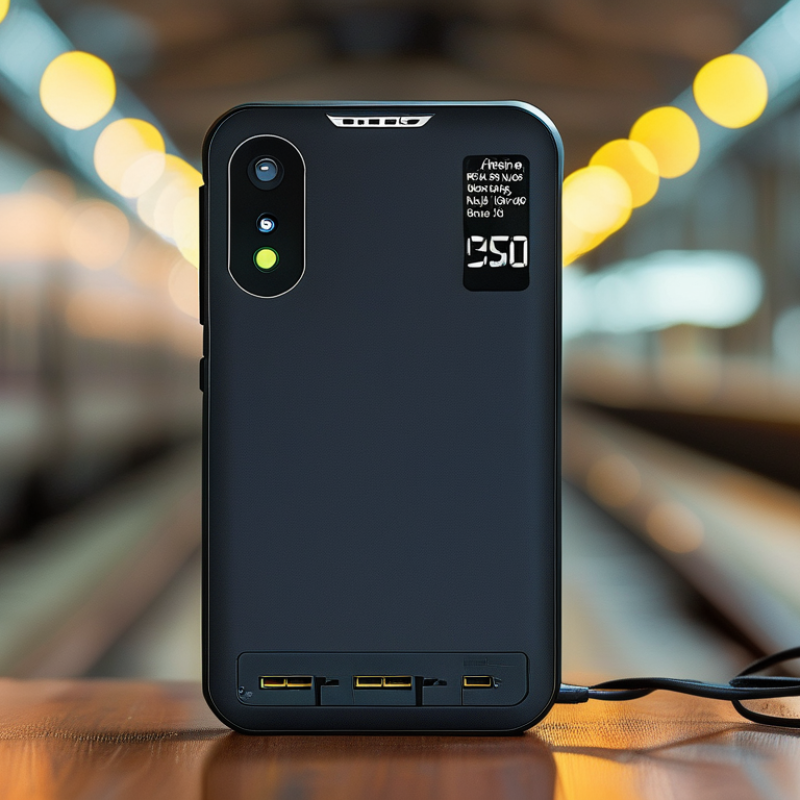
10 Best Battery Power Banks for Global Buyers
What Makes a Power Bank Suitable for Global Buyers
A suitable power bank must work beyond one country’s charging habits. Look for USB-C input and output, because compatible cables are widely available. Power delivery of 20W or more can charge many phones efficiently. Higher output may help tablets, but it often increases weight and price. Check the watt-hour rating before flying. Airline limits and declaration rules can vary by route, airport, and carrier.
Capacity labels also need careful reading. A 20,000mAh model may deliver less usable energy after voltage conversion. Real performance matters. In practical comparisons, a reliable unit should charge a phone several times without becoming unusually hot. It should include overcharge, short-circuit, and temperature protection. A clear capacity label and accessible safety documentation build trust.
Small details matter during travel. A textured case is easier to hold beside a crowded airport seat. A battery indicator prevents unpleasant surprises. Two output ports can serve a phone and wireless earbuds together. However, more ports can mean a larger body. Bigger is not always better. I would also question pass-through charging, since it may create extra heat on some models. That feature sounds convenient, but my preference remains simple: charge the power bank first, then use it. Availability of replacement cables and local customer support can matter more than a flashy capacity claim.
The table compares brand-neutral power-bank configurations using globally relevant factors such as USB-C compatibility, charging output, energy capacity, portability, and airline-travel practicality.
| Rank | Power Bank Profile | Capacity | Approx. Energy | Maximum Wired Output | Input for Recharging | Ports and Features | Approx. Size | Approx. Weight | Global-Buyer Advantage | Best Use |
|---|---|---|---|---|---|---|---|---|---|---|
| 1 | Compact Everyday 10K | 10,000 mAh | 37 Wh | 20 W USB-C Power Delivery | USB-C, up to 18 W | 1 × USB-C; 1 × USB-A; LED charge indicator | Approx. 105 × 65 × 15 mm | Approx. 185 g | Highly suitable Lightweight, widely compatible, and comfortably below common airline energy limits. |
Phones, earbuds, travel-light users |
| 2 | Fast-Charge 10K | 10,000 mAh | 37 Wh | 30 W USB-C Power Delivery | USB-C, up to 20 W | 1 × USB-C; 1 × USB-A; pass-through charging support | Approx. 110 × 68 × 17 mm | Approx. 210 g | Highly suitable Good balance of fast charging, compact size, and international device support. |
Smartphones, tablets, compact cameras |
| 3 | High-Output 10K | 10,000 mAh | 37 Wh | 45 W USB-C Power Delivery | USB-C, up to 30 W | 1 × USB-C; 1 × USB-A; digital percentage display | Approx. 115 × 70 × 19 mm | Approx. 240 g | Highly suitable Provides higher output for demanding tablets and selected small laptops while remaining portable. |
Tablets, handheld gaming devices, small USB-C computers |
| 4 | Travel Balanced 20K | 20,000 mAh | 74 Wh | 20 W USB-C Power Delivery | USB-C, up to 18 W | 2 × USB-C; 1 × USB-A; simultaneous device charging | Approx. 140 × 70 × 28 mm | Approx. 340 g | Highly suitable Offers substantially more capacity while staying below the commonly referenced 100 Wh airline threshold. |
Multi-day phone and tablet travel |
| 5 | Multi-Device 20K | 20,000 mAh | 74 Wh | 30 W USB-C Power Delivery | USB-C, up to 20 W | 2 × USB-C; 1 × USB-A; three-device charging | Approx. 145 × 72 × 29 mm | Approx. 360 g | Highly suitable Useful for travelers carrying several USB-powered devices and using different cable types. |
Families, business trips, multiple devices |
| 6 | Tablet-Focused 20K | 20,000 mAh | 74 Wh | 45 W USB-C Power Delivery | USB-C, up to 30 W | 2 × USB-C; 1 × USB-A; low-current mode for small accessories | Approx. 150 × 72 × 30 mm | Approx. 390 g | Highly suitable Higher USB-C output supports faster charging for tablets and compatible portable electronics. |
Large tablets, cameras, gaming devices |
| 7 | USB-C Laptop 20K | 20,000 mAh | 74 Wh | 65 W USB-C Power Delivery | USB-C, up to 30 W | 2 × USB-C; 1 × USB-A; digital power display | Approx. 155 × 75 × 31 mm | Approx. 470 g | Highly suitable Suitable for many USB-C laptops and remains within the common carry-on energy range. |
USB-C laptops, tablets, phones |
| 8 | Maximum Carry-On 27K | 27,000 mAh | Approx. 99.9 Wh | 65 W USB-C Power Delivery | USB-C, up to 30 W | 2 × USB-C; 1 × USB-A; digital percentage display | Approx. 160 × 80 × 32 mm | Approx. 560 g | Travel suitable Maximizes capacity near the commonly used 100 Wh limit; airline rules should be checked before departure. |
Long-haul travel and laptop users |
| 9 | High-Power 27K | 27,000 mAh | Approx. 99.9 Wh | 100 W USB-C Power Delivery | USB-C, up to 65 W | 2 × USB-C; 1 × USB-A; power-output display | Approx. 165 × 82 × 34 mm | Approx. 620 g | Travel suitable Designed for higher-power USB-C computers while remaining close to the common 100 Wh carry-on limit. |
Higher-performance USB-C laptops |
| 10 | Wireless-Ready 10K | 10,000 mAh | 37 Wh | 20 W USB-C Power Delivery | USB-C, up to 18 W | 1 × USB-C; 1 × USB-A; up to 15 W wireless charging surface | Approx. 115 × 72 × 20 mm | Approx. 220 g | Highly suitable Convenient for compatible phones that support common wireless charging standards, with wired charging as a universal backup. |
Wireless-compatible phones and short trips |


 Mr. Leaf