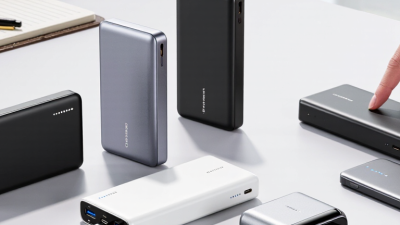
Choosing a Phone Power Bank in 2026 is less about buying the largest number on a label and more about matching real charging needs. IDC reported 1.24 billion smartphone shipments worldwide in 2024, a 6.4% increase from 2023. Ericsson’s Mobility Report estimated average global smartphone data traffic at about 21 GB per month in 2024. These figures show how central phones remain to daily life, though they do not tell us which power bank any one person needs.
Start with the details that affect everyday use: usable capacity, charging speed, size, and port compatibility. A 20,000mAh label can look reassuring. It can also mislead. Rated capacity does not equal the energy delivered to a phone, because voltage conversion and charging losses reduce the usable amount. Check the manufacturer’s watt-hour and output specifications, then compare them with your phone’s supported charging standard. USB-C alone does not guarantee the fastest charge.
Think about the day you are preparing for. A compact bank may suit a short commute, while travel or long workdays may call for more capacity and multiple ports. But extra capacity adds weight; that trade-off is easy to underestimate until the bank sits in your bag. Independent testing can help, yet results may vary with cables, temperature, and phone settings. No single model is best for everyone. This guide will compare practical specifications, safety features, and buying priorities so you can choose with clearer expectations—not just a bigger number.
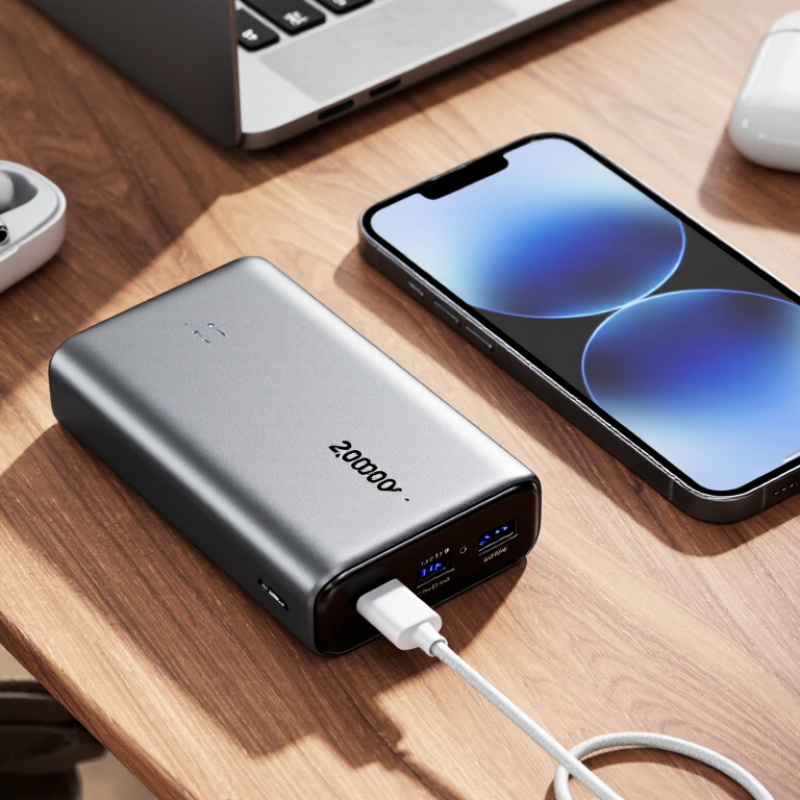
Before comparing power banks, identify your phone’s exact model and battery capacity. Check its settings or manual, then note the charging port and supported charging speed. A large capacity number does not guarantee fast charging if the bank’s output is too low. Small detail, big difference.
Next, look at a typical day rather than an ideal one. Do you leave home at 8 a.m. with a full battery, use maps during a commute, and stream music at lunch? Estimate how much charge remains when you need a top-up. If you often finish the day near 20 percent, a compact bank may cover routine use. Long travel days or heavy camera use may call for more capacity. Real life varies.
Remember that some stored energy is lost during charging, so the bank’s labeled capacity will not all reach your phone. A rough estimate is useful, not exact. Cold weather, an aging phone battery, or a busy day of navigation can change the result. I tend to overestimate how little power I’ll need; checking your battery history for a few days can give you a more honest starting point.
How to Choose the Best Phone Power Bank in 2026?
Compare capacity in watt-hours, not just the large mAh number on the case. A 10,000 mAh pack rated at 3.7 volts stores about 37 Wh before conversion losses. At an illustrative 70% usable output, that becomes roughly 26 Wh. A 5,000 mAh phone battery holds about 19 Wh, so one full recharge is plausible, but not guaranteed. Cable quality, heat, and charging while using the phone all affect the result. The estimate is imperfect; real-world testing matters.
Charging speed depends on both the bank and the phone. Check the phone’s supported charging protocol and maximum input, then match them to the bank’s USB-C output. The USB Implementers Forum’s USB Power Delivery 3.1 specification allows up to 240 W, but that is a protocol ceiling—not a promise that a phone will charge at that speed. A high-wattage bank cannot make an incompatible phone charge faster. Look for the rated output per port, too; sharing power between devices can reduce it.
Tips: For a fair comparison, note the bank’s Wh rating, USB-C output in watts, and your phone’s supported input. Use a suitable cable. Test one typical recharge and check the percentage gained. Small detail, big difference: a warm phone may slow charging, so a desk test may not match a sunny commute.
Check the phone’s charging port, supported charging standard, and maximum input rate before buying a power bank. A USB-C plug does not automatically mean fast charging; the phone, cable, and power bank must support compatible charging profiles. USB-IF’s USB Power Delivery 3.1 documentation allows power levels up to 240 watts, but that ceiling is not a phone’s charging target. Match the bank’s output to the phone’s specifications instead. Looks simple. It isn’t.
Wireless users should check device support, too. The Wireless Power Consortium states that Qi2’s initial profile supports charging up to 15 watts. That figure applies only when the phone and charger support the relevant Qi2 features; otherwise, charging may be slower. Also check whether the bank’s stated output applies to one port or is shared across several ports. A tiny specification detail, but easy to miss.
Tips: Compare the phone’s official charging specifications with the power bank’s output label. For a USB-C model, confirm supported USB Power Delivery profiles and use a suitable cable. For wireless charging, verify Qi2 support on both devices. If the listing only says “fast charging,” treat that as incomplete information. A little caution beats carrying a bank that fits the plug but not the phone.
A good phone power bank should fit your actual routine, not just offer the largest capacity on the shelf. Check its dimensions against your everyday bag or jacket pocket. A slim model may be easier to carry, while a larger one can add noticeable weight during a long walk. Capacity figures do not tell the whole story: some stored energy is lost during charging, so real-world phone charges are usually fewer than the label suggests. I still find weight easy to underestimate until I carry one all day.
Tips: Compare the listed weight and dimensions. Choose a model with clear safety information, such as over-current and over-temperature protection. Stop using it if the case cracks, swells, or becomes unusually hot.
Durability matters when a power bank gets tossed beside keys, cables, and other daily clutter. Look for a sturdy casing, firmly attached ports, and a cable connection that does not wobble. If you commute in rain, remember that water resistance is not guaranteed; check the product’s stated rating rather than guessing. Use a compatible charger, keep the power bank away from direct heat, and avoid charging it under bedding. Safety claims can differ between products, so read the label and instructions carefully. A heavier unit may last longer between charges, but that trade-off can feel annoying on a small day trip. There is no perfect balance.
How to read this chart: Energy is estimated from capacity at a nominal cell voltage of 3.7 V (mAh × 3.7 ÷ 1,000). Actual usable energy is lower because of voltage conversion and other losses. The 100 Wh line is a common carry-on reference; check your airline’s current rules.
Selection tips: Higher capacity usually means a larger, heavier pack. Compare weight and dimensions alongside Wh, and look for clear safety information, overcurrent and temperature protection, a sturdy case, and a dependable warranty.
The best phone power bank is the one that fits your budget and your daily routine. Start with how you use your phone. A commuter who streams music and checks maps may need more capacity than someone carrying a charger for emergencies. If you travel often, a larger model can mean fewer top-ups, but it also adds weight to your bag. Capacity labels are useful, though the energy delivered to your phone will be lower because of conversion losses. That matters. Compare practical features, not just the biggest number on the package.
Think about how much you are willing to spend for convenience. A compact, lower-capacity option may be better value if it stays in your pocket and gets used every day. If you need to charge multiple devices, extra ports can help, but check whether using them together reduces charging speed. Read the warranty and safety information, too. One detail is easy to miss: some power banks feel light online but bulky in a coat pocket. A small compromise. Choose the balance you will actually carry, even if it is not the highest-capacity choice.