Leave Your Message

China Top Battery Power Bank Manufacturers and Suppliers?

Choosing among China’s top Battery Power Bank manufacturers and suppliers requires more than comparing prices. A reliable supplier should demonstrate tested cells, stable output, and consistent production records. Buyers should examine capacity ratings, USB-C Power Delivery, charging speed, cycle life, and thermal protection. A 20,000mAh model may look powerful, yet usable capacity can fall after conversion losses.

Dr. Yi Cui, a battery researcher at Stanford University, has said, “We need to develop new battery technologies that can store more energy, charge faster, and last longer.” His observation remains relevant to portable power products. A dependable Battery Power Bank must balance energy density, safety, durability, and user convenience. Engineers should also inspect battery management systems, enclosure quality, connector strength, and protection against overcharging or short circuits. Small details matter.

Supplier evaluation should include factory audits, sample testing, traceable materials, and clear quality-control procedures. Certifications and transport documentation also deserve careful review. They do not replace independent testing. They support it.

Specifications can mislead.

Some suppliers publish impressive figures without explaining testing conditions. This creates uncertainty for importers and consumers. I would avoid treating online rankings as final evidence. A stronger comparison combines production experience, engineering capability, verified customer feedback, and after-sales support. China offers a broad manufacturing base, but quality varies between factories. The best supplier is not always the cheapest. It is the one that can repeatedly deliver safe, compliant, and practical Battery Power Bank products. Even this judgment needs periodic review, because battery chemistry, charging standards, and market expectations continue to change.
China Top Battery Power Bank Manufacturers and Suppliers?

What Are Battery Power Banks and How Do They Work?

Battery power banks are portable energy storage devices. They usually contain lithium-ion or lithium-polymer cells, a battery management system, and a charging circuit. The cells store electrical energy chemically. A control board manages that energy before delivery.

When connected to a wall charger, current enters through the input port. The charging circuit regulates voltage and fills the internal cells safely. When a phone is connected, a boost converter raises the cell voltage to a suitable USB output. Power then flows through the cable to the device.

The printed capacity can be confusing. A power bank marked 10,000 mAh may not deliver 10,000 mAh to a phone. Conversion losses, heat, cable resistance, and standby consumption reduce usable capacity. In practical checks, output energy is a clearer measure than the headline number. The result is never perfectly exact.

Reliable manufacturers and suppliers should explain cell type, rated capacity, input limits, output profiles, and protection functions. Look for safeguards against overcharging, deep discharge, overheating, and short circuits. A solid enclosure also matters; loose parts can create pressure and damage.

Some models support multiple devices, while others prioritize compact size. Faster charging can produce more heat. That trade-off deserves attention. I would not judge a power bank by capacity alone. Port quality, thermal control, documentation, and consistent testing often reveal more. A low-cost unit may work well, but uncertain specifications remain a practical warning.
Why China Leads the Battery Power Bank Manufacturing Industry

China Top Battery Power Bank Manufacturers and Suppliers?

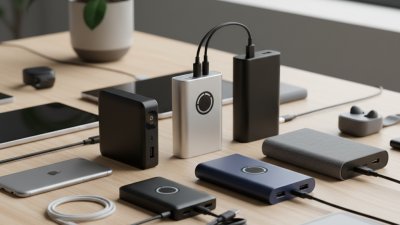
China leads the battery power bank manufacturing industry through a dense, practical supply chain. Battery cells, circuit boards, casings, connectors, and packaging are often produced within nearby industrial clusters. This proximity shortens development cycles and reduces coordination delays. Engineers can test a new prototype, adjust the circuit, and inspect another sample within days. That speed matters for capacity, charging efficiency, heat control, and product reliability.

Manufacturers also offer flexible production for different markets. They can develop slim travel models, rugged outdoor units, or compact emergency chargers. Experienced suppliers usually provide battery management systems, protection against overcharging, temperature monitoring, and sample testing records. Still, low prices alone should not guide purchasing decisions. In practice, unclear cell traceability and inconsistent quality control can create expensive problems. Buyers should review factory audits, test reports, production samples, and after-sales procedures.

Tips: Ask for cell specifications, cycle-test results, safety certifications, and inspection photos. Confirm the rated capacity under real output conditions. A polished sample is not enough. Request a small trial order before scaling production. Clear communication about ports, charging protocols, labeling, and packaging prevents avoidable revisions. Suppliers that explain limitations openly may prove more reliable than those promising perfect performance.

China Top Battery Power Bank Manufacturers and Suppliers? - Why China Leads the Battery Power Bank Manufacturing Industry

Dimension Verified Data or Technical Fact Why It Supports China's Manufacturing Advantage Reference or Calculation Basis
Global battery-cell manufacturing capacity China represented approximately 80% of global battery-cell manufacturing capacity in 2023. A large domestic battery ecosystem improves access to cells, battery-management components, testing services, packaging materials, and contract assembly resources. International Energy Agency, Global EV Outlook 2024. The figure refers to battery cells broadly, not only power banks.
Typical lithium-ion cell voltage Most lithium-ion power-bank cells have a nominal voltage of approximately 3.6–3.7 V and a full-charge voltage of about 4.2 V. Manufacturers can standardize circuit design, charging algorithms, capacity calculations, and safety testing around widely used cell specifications. IEC 61960 and common lithium-ion cell specifications.
Energy-capacity calculation A 10,000 mAh power bank rated at 3.7 V contains approximately 37 Wh of nominal stored energy: 10 Ah × 3.7 V = 37 Wh. Using watt-hours rather than only milliampere-hours enables more accurate comparison of products using different cell voltages. Actual USB output is lower because of conversion losses. Electrical calculation: Wh = Ah × V. Usable output depends on converter efficiency and operating conditions.
USB-C Power Delivery capability USB Power Delivery supports standardized voltage levels including 5 V, 9 V, 15 V, and 20 V. USB PD 3.1 extends the specification up to 240 W, although many power banks provide substantially less. Access to mature charging-controller, connector, cable, and protocol supply chains allows suppliers to offer products for phones, tablets, handheld computers, and selected laptops. USB Implementers Forum, USB Power Delivery specifications.
Battery-transport testing Lithium-ion cells and batteries intended for transport must meet the applicable UN 38.3 test requirements before shipment. Manufacturers with established compliance laboratories and export documentation processes can reduce delays in international logistics and customer qualification. United Nations Manual of Tests and Criteria, Part III, Sub-section 38.3.
Portable lithium-battery safety standard IEC 62133-2 specifies safety requirements and tests for portable sealed secondary lithium cells and batteries. Factories can build production-control plans around recognized tests such as overcharge, external short circuit, abnormal charging, and mechanical safety evaluations. IEC 62133-2, Secondary cells and batteries containing alkaline or other non-acid electrolytes.
China domestic compliance framework GB 31241 establishes safety requirements for lithium-ion cells and batteries used in portable electronic products in China. A domestic standard supports local testing, product validation, and quality-control processes before products are prepared for overseas certification or export. Chinese national standard GB 31241.
Air-travel energy thresholds Under common IATA passenger-baggage guidance, spare lithium-ion batteries up to 100 Wh are generally permitted in carry-on baggage; batteries above 100 Wh may require airline approval and are commonly limited to 160 Wh. Suppliers can design mainstream power-bank capacities below common airline thresholds, simplifying consumer use and international distribution. Airline and national rules may differ. IATA passenger baggage guidance. Spare batteries are generally not permitted in checked baggage.
Manufacturing process integration A complete power bank typically combines cells, a protection circuit, a battery-management system, a charging and boost converter, connectors, a housing, thermal materials, firmware, and final assembly. China's dense electronics manufacturing network enables multiple components and production steps to be sourced within a relatively short industrial supply chain. Product architecture based on standard lithium-ion power-bank designs.
Quality-control checkpoints Common production checks include cell matching, insulation verification, polarity inspection, charging and discharging tests, output-voltage testing, short-circuit protection, temperature monitoring, and aging tests. High-volume factories can use automated test fixtures and statistically controlled inspection to improve consistency across large production runs. Typical battery-pack manufacturing and electrical-safety quality procedures.
Product customization range Common configurable features include capacity, cell format, USB-A or USB-C ports, USB PD output, display indicators, cable integration, enclosure material, dimensions, and firmware behavior. Established tooling, injection molding, printed-circuit-board assembly, surface finishing, and packaging capabilities support short design-to-production cycles for different market requirements. Common configurable attributes in portable battery-pack product engineering.
Main technical limitations Higher capacity and output power increase heat, weight, charging time, component stress, and certification complexity. Rated capacity is not equal to energy delivered at the USB port. Experienced suppliers can balance cell selection, thermal design, converter efficiency, enclosure structure, charging speed, and regulatory requirements during product development. Engineering relationship between stored energy, conversion losses, heat generation, and battery-pack design.

Note: Technical values are representative industry data or standardized requirements. Certification, airline, transport, and market-entry requirements should be confirmed for the destination market and the specific product configuration.

How to Identify China’s Top Power Bank Manufacturers and Suppliers

Identifying China’s top power bank manufacturers requires more than comparing prices. Grand View Research valued the global power bank market at about USD 13 billion in 2023, with continued growth expected through 2030. This expansion attracts capable factories and opportunistic trading companies. A reliable supplier should clearly disclose its factory address, production capacity, cell sources, and quality-control process. Ask whether the quoted capacity belongs to one production line or the entire facility.

Request samples before signing a large order. Test rated capacity, charging speed, heat, standby loss, and repeated charging cycles. The printed capacity may not match usable output. That detail matters. Check factory records for ISO 9001 systems, UN 38.3 transport testing, IEC 62133-2 battery safety compliance, and applicable RoHS documentation. Verify certificates with the issuing laboratory, not only with a salesperson. MarketsandMarkets projects the power bank market to grow from approximately USD 14.6 billion in 2023 to USD 20.9 billion by 2028, increasing pressure for faster and cheaper production.

A serious manufacturer can provide batch records, incoming-cell inspection data, aging reports, and a traceable warranty process. Visit the line when possible. Observe battery storage, soldering controls, worker training, and final inspection. A polished showroom proves little. I would also compare three samples from different batches, because one excellent sample can hide unstable production. No audit is perfect. Require corrective-action records and clarify who pays when testing fails. Supplier quality is measured after delivery, not during a confident sales presentation.

China Power Bank Supplier Evaluation: Capacity and Energy Benchmarks

Nominal energy is calculated from rated capacity using a typical lithium-ion cell voltage of 3.7 V: Energy (Wh) = Capacity (mAh) × 3.7 ÷ 1000. These benchmarks help buyers compare supplier specifications, labeling accuracy, and product positioning without relying on brand names.

When identifying a qualified manufacturer, verify that the stated capacity is clearly labeled, supported by test records, and consistent with applicable transport and product-safety documentation. Usable output energy will be lower than nominal energy because of conversion losses.

What Product Standards and Certifications Should Buyers Check?

When comparing China’s battery power bank manufacturers and suppliers, buyers should verify product standards before discussing price. Ask for the exact model number on every certificate. It should match the sample, battery cells, casing, and charging board. Small differences matter.

For lithium power banks, check UN 38.3 test evidence for transport safety. Request IEC 62133-2 reports for rechargeable battery safety. Depending on the destination market, review CE, RoHS, and EMC documentation. These documents should come from a competent testing laboratory, not only from the supplier’s sales team. Check the report date, laboratory details, test scope, and product photographs. A certificate alone is not enough. It may cover another capacity or an older design.

Also request a safety data sheet, shipping records, and quality-control procedures. Confirm protection against overcharging, overheating, short circuits, and excessive discharge. Ask how each unit is sampled, tested, and traced by production batch. I would inspect several samples and repeat capacity tests before placing a large order. Specifications can look excellent on paper. Real output may differ after cables, temperature, and repeated charging affect performance. Buyers should also confirm labeling, user instructions, warranty terms, and destination-country requirements. Requirements change, and suppliers may not notice every update. A careful review protects both compliance and customer trust.

How to Choose the Right Chinese Power Bank Supplier for Your Needs

Choosing a Chinese power bank supplier requires more than comparing prices. A 2024 market report estimates the global power bank market at about US$13.7 billion in 2023, with continued annual growth. That expansion attracts capable factories and unreliable traders. Verify the actual manufacturing site, not only a polished website.

Ask for recent audit records, production photos, cell traceability, and sample test results. Confirm rated capacity at the output port, not the printed cell capacity. Check charging speed, thermal protection, short-circuit protection, cycle performance, and standby drain. Request evidence for UN 38.3 transport testing and IEC 62133-2 battery safety testing. Requirements may also include RoHS or REACH documentation for your destination market. A pre-shipment inspection is worthwhile. It may reveal loose ports, uneven assembly, or incorrect labels before payment.

The 2024 Global E-waste Monitor reported 62 million tonnes of electronic waste in 2022. It projects 82 million tonnes by 2030. Ask suppliers about replaceable packaging, material declarations, and responsible recycling guidance. Do not accept vague sustainability claims. Compare factory capacity with your forecast, minimum order quantity, tooling fees, lead times, payment terms, and warranty handling. I would begin with a small pilot order, even when the supplier appears experienced. My checklist is not perfect. Keep written specifications, approve a sealed reference sample, and test random units before shipment.