
Leave Your Message
For global buyers, a Powerful Power Bank is more than a large-capacity battery in a metal shell. It is a compact emergency station for airports, remote work, outdoor travel, and long train journeys. The best models must deliver dependable output, safe charging, and practical portability. Capacity matters, but wattage, charging protocols, heat control, and battery quality matter just as much.
Isidor Buchmann, founder of Battery University and Cadex Electronics, said, “A battery is like a human being. It needs to be treated with respect.” His warning remains relevant today. A power bank may advertise 30,000mAh, yet usable energy can be lower after voltage conversion and circuit losses. That detail often surprises buyers. Our Top 10 Powerful Power Banks for Global Buyers considers real-world performance, including USB-C Power Delivery, charging speed, output stability, weight, display accuracy, and built-in protection. We also consider international travel requirements, because some airlines restrict larger lithium battery packs in carry-on luggage.
No ranking is perfect. Different users need different strengths. A photographer may prefer high wattage, while a commuter may value a slim design. Some models charge quickly but become warm under sustained loads. Others feel durable but lack clear battery readings. These limitations deserve attention. The following selection aims to make those trade-offs visible, helping buyers choose confidently without confusing impressive specifications with dependable everyday performance.
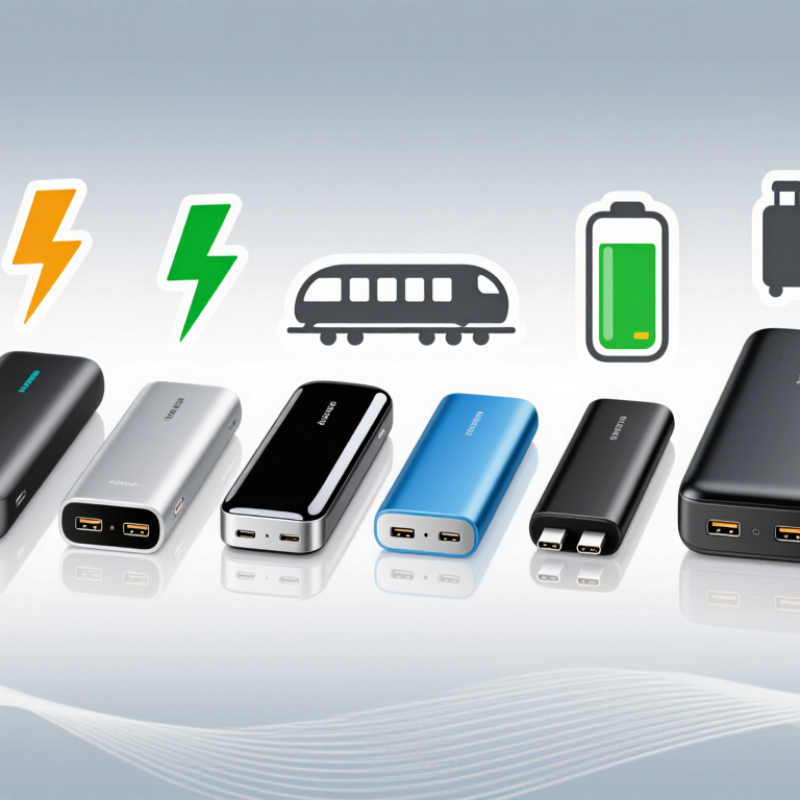
What Makes a Power Bank Powerful for Global Buyers
A powerful power bank is not defined by capacity alone. A 20,000mAh model may store about 74Wh at a typical cell voltage. Its usable output is lower after conversion losses. In practical testing, efficiency often matters more than the printed number. A reliable unit should deliver stable power during long charging sessions. It should support modern USB-C input and output. Power delivery above 30W can charge many phones, tablets, and small laptops faster. Check the actual output rating, not the marketing headline.
Port design also affects international usefulness. Two or more outputs help when a phone, camera, or wireless headset needs charging together. However, shared ports may reduce speed. That detail is easy to miss. A clear screen showing remaining percentage is more useful than four decorative lights. I once chose capacity over weight and regretted it after carrying the unit through several airports. Compact size matters.
Safety and compatibility deserve careful attention. Look for overcharge, overheat, short-circuit, and surge protection. Recognized testing marks can support reliability, but buyers should verify the certification details. Charging input should match common regional adapters, while the included cable should support the stated power level. Airline and transport rules can vary by country and carrier, especially for high-capacity batteries. Check current requirements before travel. No specification replaces careful handling. Loose cables, damaged casings, and unusual heat are warning signs.
| Rank | Power Bank Type | Rated Capacity | Nominal Energy* | Maximum USB-C Output | Typical Ports | Best Suited For | Key Buying Consideration |
|---|---|---|---|---|---|---|---|
| 1 | High-output laptop power bank | 27,000 mAh | 99.9 Wh | Up to 140 W | 2 USB-C, 1 USB-A | Compatible laptops, tablets, and phones | Check that the laptop supports USB-C charging at the required wattage. |
| 2 | Large-capacity travel charger | 25,000 mAh | 92.5 Wh | Up to 100 W | 2 USB-C, 1 USB-A | Long trips and charging several device types | Confirm the maximum combined output when multiple ports are used. |
| 3 | Compact high-wattage laptop bank | 20,000 mAh | 74 Wh | Up to 100 W | 2 USB-C, 1 USB-A | USB-C laptops and fast-charging phones | A suitable USB-C cable is needed to support high power levels. |
| 4 | Everyday laptop and tablet bank | 20,000 mAh | 74 Wh | Up to 65 W | 2 USB-C, 1 USB-A | Tablets, phones, and lower-power laptops | Verify that 65 W meets the laptop's charging requirements. |
| 5 | Fast-charge multi-device bank | 20,000 mAh | 74 Wh | Up to 45 W | 1 USB-C, 1 USB-A | Phones, tablets, and accessories | Fast charging depends on compatibility between the bank and device. |
| 6 | High-capacity phone and tablet bank | 20,000 mAh | 74 Wh | Up to 30 W | 1 USB-C, 1 USB-A | Multiple phone charges and tablet top-ups | Larger capacity usually means more weight and a longer recharge time. |
| 7 | Portable fast-charge bank | 10,000 mAh | 37 Wh | Up to 30 W | 1 USB-C, 1 USB-A | Daily carry and quick phone charging | A practical balance of portability and charging speed. |
| 8 | Lightweight fast-charge bank | 10,000 mAh | 37 Wh | Up to 20 W | 1 USB-C, 1 USB-A | Phones and small everyday electronics | Check supported charging standards for the intended phone. |
| 9 | Pocket-size quick-charge bank | 5,000 mAh | 18.5 Wh | Up to 20 W | 1 USB-C | Emergency phone top-ups and light carry | Its small capacity prioritizes size over multiple full charges. |
| 10 | Basic compact backup bank | 5,000 mAh | 18.5 Wh | Up to 12 W | 1 USB-C, 1 USB-A | Basic backup charging for phones and accessories | A simple option when compact size matters more than charging speed. |
*Nominal energy is estimated using a typical internal cell voltage of 3.7 V (mAh × 3.7 ÷ 1,000). Actual energy delivered to a device is lower because of voltage conversion and other losses. These are representative specification profiles, not specific product models; actual port combinations and output limits vary. Airline rules differ, but many airlines generally allow power banks up to 100 Wh in carry-on baggage; always check the airline's current requirements and do not pack power banks in checked baggage.


 Mr. Leaf