Leave Your Message

2026 How to Choose the Best Mobile Power Inverter?

Choosing the best Mobile Power Inverter in 2026 requires more than comparing wattage and price. Your decision should match real power demands, travel habits, battery capacity, and safety expectations. A compact inverter may run a laptop, camera charger, or small fan smoothly. It may fail with a refrigerator, kettle, or medical device.

Start with your actual equipment list. Check each device’s running watts and starting surge. Add a sensible margin for unexpected demand. Pure sine wave output is usually safer for sensitive electronics and modern chargers. Modified sine wave models can cost less, but compatibility may be limited. Read the manufacturer’s specifications carefully.

Safety matters every time.

A reliable Mobile Power Inverter should include overload, overheating, short-circuit, and low-voltage protection. Look for recognized testing marks and clear documentation. Avoid products with vague ratings, damaged cables, or unrealistic performance claims. In a vehicle, place the inverter where air can circulate. Never cover its vents, even during a short trip.

Battery chemistry also changes the experience. Lithium batteries often provide lighter, longer-lasting storage, while lead-acid systems remain familiar and affordable. However, neither option is perfect for every user. Cold temperatures, poor ventilation, and repeated deep discharges can reduce performance. I have found that convenience often hides energy loss. A higher-rated inverter does not automatically deliver longer runtime.

This guide compares efficiency, portability, connections, noise, durability, and total operating cost. It also considers practical use in cars, vans, emergency kits, and outdoor workspaces. The best choice is not the most powerful model. It is the one that performs safely, consistently, and honestly within your daily needs.
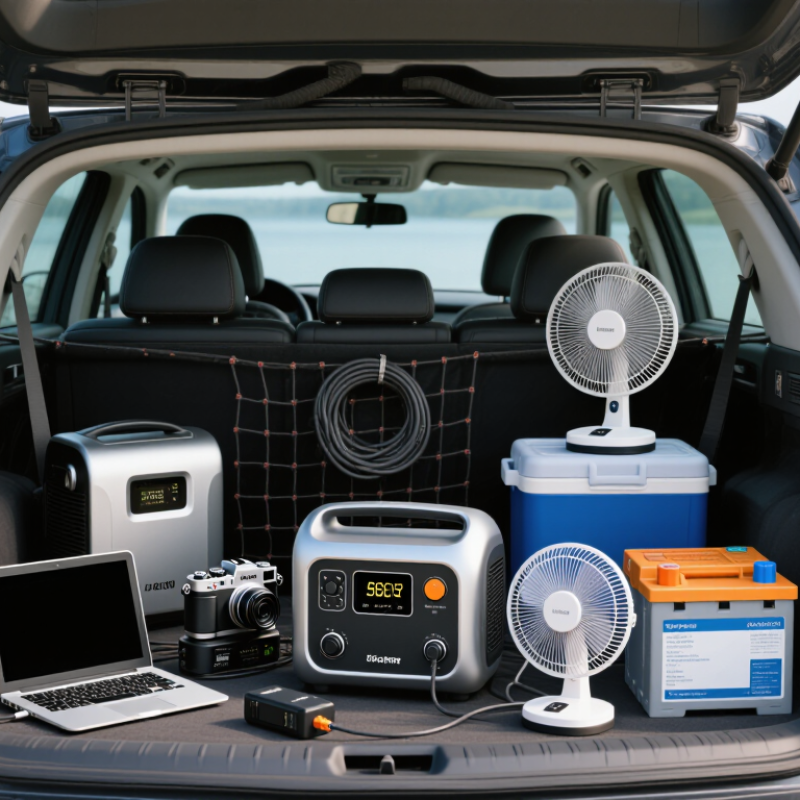
2026 How to Choose the Best Mobile Power Inverter?

What Is a Mobile Power Inverter and How Does It Work?

A mobile power inverter converts battery-stored direct current (DC) into household alternating current (AC). The U.S. Department of Energy describes inverters as essential conversion equipment for battery and solar systems. In practical use, the inverter rapidly switches DC through electronic circuits. A transformer and filter then shape the output into usable AC power. Some portable units also include USB ports, displays, cooling fans, and automatic shutoff protection.

The battery supplies energy, but the inverter controls how that energy reaches your devices. A 500-watt inverter may run a laptop, lights, or a small monitor. It may not start a refrigerator, because motors need extra surge power. Efficiency also changes with load, temperature, cable length, and battery age. The International Energy Agency reported that global battery demand exceeded 750 GWh in 2023, rising about 40% from 2022. This growth supports wider access to mobile power, although battery capacity does not equal usable AC output. The explanation sounds simple. Real results are messier.

Tips: Check continuous and peak wattage separately. Choose pure sine-wave output for sensitive electronics. Keep ventilation clear during operation. Test the inverter with your actual devices, not only their label ratings. I sometimes find that published capacity feels optimistic, especially in cold conditions or near full load. That detail deserves attention.
How to Match Inverter Capacity with Your Devices

Choosing a mobile power inverter starts with your devices, not the inverter’s biggest advertised number. List each device’s running wattage, then add their starting demand. A 65W laptop, 45W monitor, and 12W router need about 122W continuously. A 300W inverter may work, but 500W provides safer headroom. Motors and compressors are less predictable. Their startup demand can briefly reach two to seven times their running wattage, according to U.S. Department of Energy equipment-sizing guidance.

Real use is messier. I once sized an inverter from the peak rating alone. That was a mistake. A 1,000W appliance can overload a 600W inverter immediately, even when other devices appear modest. Check both continuous and surge ratings. Also check socket limits. At 600W, a 12V system may draw roughly 56A after conversion losses. Thin cables and loose connections can become serious heat sources.

Efficiency changes usable capacity. NREL’s 2024 Annual Technology Baseline places modern battery-storage round-trip efficiency broadly around 85% to 90%. A 500Wh battery may therefore provide only about 425–450Wh through AC output, before reserve limits. For phones and laptops, a 300W inverter is usually practical. For heating tools, refrigerators, or pumps, choose a higher surge rating and verify the manufacturer’s specifications. Leave 20% to 30% spare capacity. It costs more, but undersizing costs reliability. Controls, temperature, and battery age still complicate the calculation.

Which Inverter Waveform, Battery Type, and Features Matter?

Choosing a mobile power inverter starts with its waveform, not its advertised wattage. Pure sine wave output closely matches household electricity and suits laptops, medical chargers, audio equipment, and induction motors. Modified sine wave models usually cost less, but they may create buzzing, extra heat, or unreliable performance with sensitive devices. Pure sine is safer.

Check both continuous power and surge power. A small refrigerator may run below 800 watts but briefly demand much more during startup. Leave practical headroom instead of operating at the limit. Heat matters. An inverter with thermal shutdown, overload protection, low-voltage cutoff, and a clear display is easier to trust inside a hot vehicle.

Battery choice changes weight, runtime, and maintenance. Lithium batteries provide useful capacity with lower weight, while lead-acid batteries remain practical for occasional, budget-focused use. Compare usable watt-hours, not only battery voltage or amp-hours. A 1,000-watt inverter also needs thick, short cables and secure connections. I once underestimated cable heating during a long load test; the inverter worked, but the connection became uncomfortably warm. That experience made temperature checks part of every installation. Also inspect charging speed, ventilation, socket placement, noise, and warranty terms. Some compact units look powerful, yet their real continuous output drops sharply as internal temperature rises. Test the inverter with your actual devices before depending on it during travel or an outage.

2026 How to Choose the Best Mobile Power Inverter? - Which Inverter Waveform, Battery Type, and Features Matter?

Configuration / Feature Typical Specification Main Advantages Limitations Best Mobile Use Selection Priority
Pure Sine Wave Output AC waveform with low distortion; commonly 110–120 V or 220–240 V, 50/60 Hz Safest choice for sensitive electronics, motors, chargers, medical equipment, and audio systems Usually costs more and may be slightly less compact at the same power rating Laptops, CPAP devices, refrigerators, pumps, camera equipment, and professional tools Recommended for most users
Modified Sine Wave Output Stepped approximation of an AC sine wave Lower purchase cost and suitable for many basic resistive loads May cause extra heat, audible noise, reduced efficiency, or compatibility issues with motors and sensitive chargers Incandescent lamps, simple heaters, and selected non-sensitive loads Use only after checking compatibility
Lead-Acid Battery 12 V or 24 V systems; commonly flooded, AGM, or gel; practical usable depth of discharge is often about 50% Low initial cost, widely available, and familiar charging requirements Heavy, slower to recharge, lower cycle life, and reduced capacity under high discharge rates Occasional camping, emergency backup, and budget-conscious installations Choose when purchase price matters more than weight and lifespan
LiFePO4 Battery 12.8 V or 25.6 V nominal systems; commonly supports about 80–90% usable capacity when properly managed High usable energy, low weight, long cycle life, stable chemistry, and faster charging Higher upfront cost; requires a suitable battery-management system and charging protection in cold conditions Frequent travel, RVs, marine use, portable workstations, and repeated daily cycling Best all-round option for mobile use
Continuous Power Rating Common portable ranges: 300 W, 600 W, 1,000 W, 1,500 W, and 2,000 W Defines the load that can run continuously without exceeding the inverter’s thermal limits A higher rating generally increases size, weight, cost, and battery consumption Select a rating at least 20–25% above the expected continuous load More important than peak wattage
Surge / Peak Power Often 1.5–3 times the continuous rating for a short period, depending on the design Helps start compressors, pumps, power tools, and other motor-driven equipment Peak duration varies; a high advertised surge value does not guarantee motor-starting performance Refrigerators, fans, pumps, drills, and small compressors Check both surge watts and surge duration
USB-C Power Delivery Common output levels include 30 W, 65 W, 100 W, and up to 140 W on compatible systems Charges phones, tablets, cameras, and many laptops without using the AC inverter stage Actual charging power depends on the cable, device, port protocol, and thermal conditions Remote work, photography, travel, and field service Prefer independently rated USB-C PD ports
AC Transfer / UPS Function Automatic transfer time commonly ranges from several milliseconds to a few tens of milliseconds Keeps selected devices powered when utility input fails or becomes unavailable Not every model is suitable for servers, medical equipment, or equipment requiring zero interruption Home-office equipment, networking devices, and small electronics Verify transfer time and operating mode before relying on it
Protection System Overload, short-circuit, over-temperature, low-voltage, and over-voltage protection Reduces the risk of damage to the inverter, battery, connected devices, and wiring Protection does not replace correct cable sizing, ventilation, fusing, or safe installation All mobile applications, especially high-current 12 V systems Essential feature
Cooling and Efficiency Peak efficiency may exceed 85–90%; idle consumption varies by design and operating mode Higher efficiency provides longer runtime and less heat generation Efficiency is load-dependent; fans may create noise and consume additional energy Long-duration operation in vehicles, tents, cabins, and off-grid locations Compare efficiency at realistic loads, not only the maximum rating
Monitoring and Connectivity LCD display, battery percentage, input/output watts, runtime estimate, Bluetooth, or mobile application Makes energy use easier to track and helps identify overloads or abnormal battery behavior Runtime estimates are approximate and may change with temperature, battery age, and load profile Field work, travel, emergency preparedness, and solar-connected systems Useful when runtime planning and remote status checks matter

Practical rule: Choose pure sine wave output for sensitive or motor-driven equipment, select LiFePO4 for frequent mobile use, and size continuous inverter power at least 20–25% above the expected load. Always confirm local voltage, frequency, battery compatibility, ventilation, cable size, and safety requirements.

How to Compare Portability, Safety, Efficiency, and Durability

2026 How to Choose the Best Mobile Power Inverter?

Choosing the best mobile power inverter requires more than checking wattage. Portability affects every real-world decision. Measure the unit, handle, cable storage, and total weight before buying. A 500Wh model may look compact, yet cables and adapters can add several kilograms. In a car, that matters. The IEA’s Batteries and Secure Energy Transitions report states that global battery demand exceeded 750 GWh in 2023. More capacity does not automatically mean better mobility. I would question any product that hides its battery chemistry or operating temperature range.

Safety deserves careful comparison. Look for overload, short-circuit, over-temperature, and low-voltage protection. Pure sine-wave output is preferable for sensitive electronics and medical-grade chargers, but compatibility still needs checking. Independent certification should match the inverter’s voltage and intended use. The U.S. Department of Energy’s Energy Storage Grand Challenge Roadmap identifies safety, reliability, and performance as core evaluation areas. Small omission, big risk. A bright display cannot replace verified protection circuits.

Efficiency depends on load. Compare conversion efficiency, standby consumption, and performance below 20% load. Fraunhofer ISE’s Photovoltaics Report 2024 records peak efficiencies above 98% for leading photovoltaic inverters. That is a benchmark, not a promise for portable units. Durability also needs evidence, including cycle-life testing, enclosure strength, and thermal performance. The 2024 Global E-waste Monitor reports 62 million tonnes of e-waste in 2022, projected to reach 82 million tonnes by 2030. Repairable parts and longer service life therefore deserve more attention than attractive capacity numbers.

2026 How to Choose the Best Mobile Power Inverter?

Compare portability, safety, efficiency, and durability using representative specifications for common mobile inverter sizes.

Smaller inverters are generally lighter and easier to carry, while higher-capacity models provide more continuous and surge power. For everyday mobile use, look for at least 90% peak efficiency, multiple protection functions, and a durable aluminum or reinforced enclosure. The figures shown are representative ranges from commonly available consumer inverter specifications; always confirm the exact datasheet before purchase.

How to Choose the Best Mobile Power Inverter for Your Needs

2026 How to Choose the Best Mobile Power Inverter?

Choosing the best mobile power inverter starts with your actual devices, not the advertised peak wattage. List each appliance, then check its running and startup power. A small laptop charger may need 65 watts, while a portable refrigerator can briefly demand much more. Add the figures carefully. My first estimate was too optimistic because I ignored startup surges.

For sensitive electronics, a pure sine wave output is usually the safer choice. It can reduce buzzing, heat, and unstable performance. Check the inverter’s continuous rating, surge rating, cooling method, and low-voltage protection. A metal case may handle rough travel better, but it can become hot in direct sunlight. Ventilation matters. Never place it under blankets or inside a sealed compartment.

Match the inverter with your battery and vehicle system. A 12-volt battery supplying high power can draw substantial current, so cables must be short, thick, and firmly connected. Measure real battery capacity rather than trusting ideal runtime claims. Efficiency also changes with load, temperature, and battery age. I would test the setup at home first, using the actual cable and appliance. That trial may reveal an inconvenient detail: the inverter works, but the battery empties sooner than expected. Select certified equipment, follow local electrical rules, and replace damaged cables instead of improvising repairs.