How to Choose the Best Mobile Power Inverter for Your Needs?
In an increasingly mobile world, the importance of a reliable Mobile Power Inverter cannot be overstated. According to a report by Allied Market Research, the global market for power inverters is projected to reach $10.86 billion by 2027, growing at a CAGR of 8.5%. This rise reflects a growing demand for portable power solutions across various industries and applications.
Choosing the best Mobile Power Inverter is essential for anyone who relies on electronics while traveling or in remote locations. Factors such as wattage, size, and port options can greatly influence your decision. With diverse models available, it's easy to feel overwhelmed. Many options may seem suitable but may fall short in performance or safety. Real customer reviews often highlight these inconsistencies.
In this guide, we will explore key considerations when selecting a Mobile Power Inverter. By analyzing specifications, features, and user feedback, you can make an informed choice. We aim to clarify your options and ensure you understand what to look for, aligning your needs with the best available products.
Understanding Mobile Power Inverters: Definition and Functionality
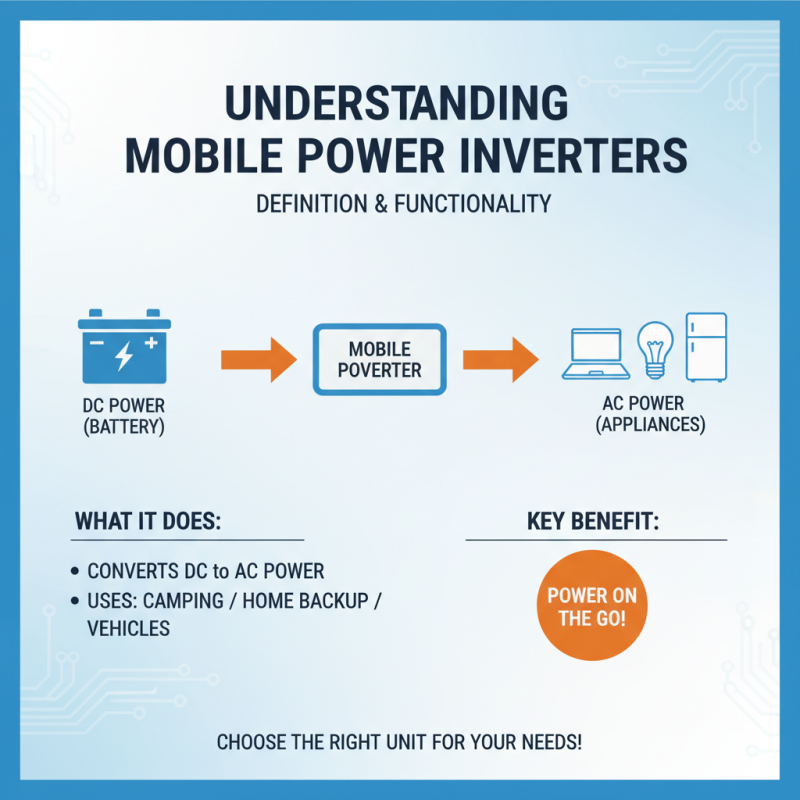
Mobile power inverters convert DC power from sources like batteries into AC power for running devices. They serve various needs, from camping trips to emergency power supply at home. Understanding their functionality is key to selecting the right unit for your situation.
Different inverters vary in capacity and features. Some are designed for light-duty use, while others can handle heavy appliances. The wattage rating indicates how much power they can supply. It’s crucial to match your devices' requirements with the inverter's capacity. Many people overlook this when purchasing.
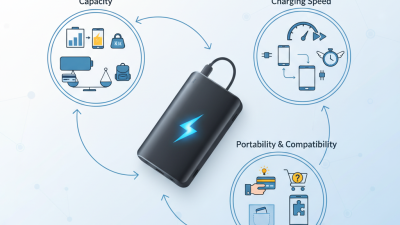
In addition to power capacity, consider portability and ease of use. Some models are compact and lightweight, perfect for travel. Others are more robust but less mobile. Reflecting on your specific needs will help you avoid mistakes in your choice. Users often miss important details, like inverter efficiency. Ultimately, understanding these aspects will enhance your experience with mobile power inverters.
Key Factors to Consider When Choosing a Mobile Power Inverter
Choosing the right mobile power inverter can seem daunting. You need to consider multiple factors to ensure it meets your needs.
One critical aspect is the inverter's power capacity.
Determine how many devices you plan to power and their wattage requirements. This helps in selecting an inverter that won’t underperform or risk damage to your devices.
Another essential factor is the inverter's durability. Mobile power inverters should be built to withstand various environments. Look for features like robust casings and protective circuits.
These can prevent overheating and electrical surges.
However, not all manufacturers provide this information clearly, so research thoroughly and rely on credible sources to avoid purchasing a subpar product.
Portability is also crucial. If you’re planning to use the inverter for camping or road trips, a lightweight design can make a significant difference. Yet, balance this with power output.
Some lightweight models may sacrifice performance, which can lead to frustration. Keep in mind that comfort can sometimes come at a cost.
Evaluating each factor helps ensure you select a reliable inverter that will serve you well in diverse scenarios.
Types of Mobile Power Inverters: Which One Is Right for You?
When selecting a mobile power inverter, consider the types available to suit your needs. The two primary types are pure sine wave and modified sine wave inverters. Pure sine wave inverters are ideal for sensitive electronics. They provide smooth, clean power that prevents overheating. On the other hand, modified sine wave inverters are often more affordable. They can efficiently power most tools and appliances but may not work well with everything.
Assessing your power needs is crucial. Think about the devices you plan to use. Do you have laptops, mobile phones, or kitchen appliances? Ensure your inverter can handle the combined wattage of these items. It’s common for users to underestimate their power requirements, leading to frustrating experiences when devices won’t operate.
Consider portability and size, too. Some users prefer lightweight options for travel. Others might need bulkier inverters for heavy-duty applications. Reflect on what you value more—weight or power capacity. Each choice comes with trade-offs. Prioritizing comfort during usage helps avoid future regret. Combining the right type and size will enhance your mobile experience.
Power Inverter Types and Their Ratings
Power Requirements: Calculating Your Device Needs
Calculating your power requirements is key to choosing the right mobile power inverter. Begin by listing all the devices you intend to use. Check their wattage ratings and make sure to note if they have startup wattage requirements, as some devices consume more power upon starting. This information helps you determine the inverter size needed for your specific use.
When choosing an inverter, consider adding up the wattage of all devices. It’s smart to round up your total for safety. For example, if your devices total 1,200 watts, buy an inverter rated for at least 1,500 watts. This buffer accounts for unexpected power surges.
**Tips:** Always factor in your usage time. If you'll use devices for long periods, a higher-capacity inverter is ideal. Be cautious; some devices may not work well with modified sine wave inverters. They might need pure sine wave inverters for optimal performance. Reflections on efficiency are important. Are you often running devices near their limit? This could damage your inverter over time. Prioritize longevity and reliability over just meeting minimum requirements.
How to Choose the Best Mobile Power Inverter for Your Needs? - Power Requirements: Calculating Your Device Needs
| Device |
Power Rating (Watts) |
Recommended Inverter Size (Watts) |
Usage Duration (Hours) |
Total Power Needed (Wh) |
| Laptop |
60 |
100 |
5 |
300 |
| Smartphone |
15 |
50 |
2 |
30 |
| Camera |
20 |
50 |
3 |
60 |
| Portable Fridge |
50 |
150 |
10 |
500 |
| TV |
80 |
200 |
4 |
320 |
Portability and Design: Selecting the Best Fit for Your Lifestyle
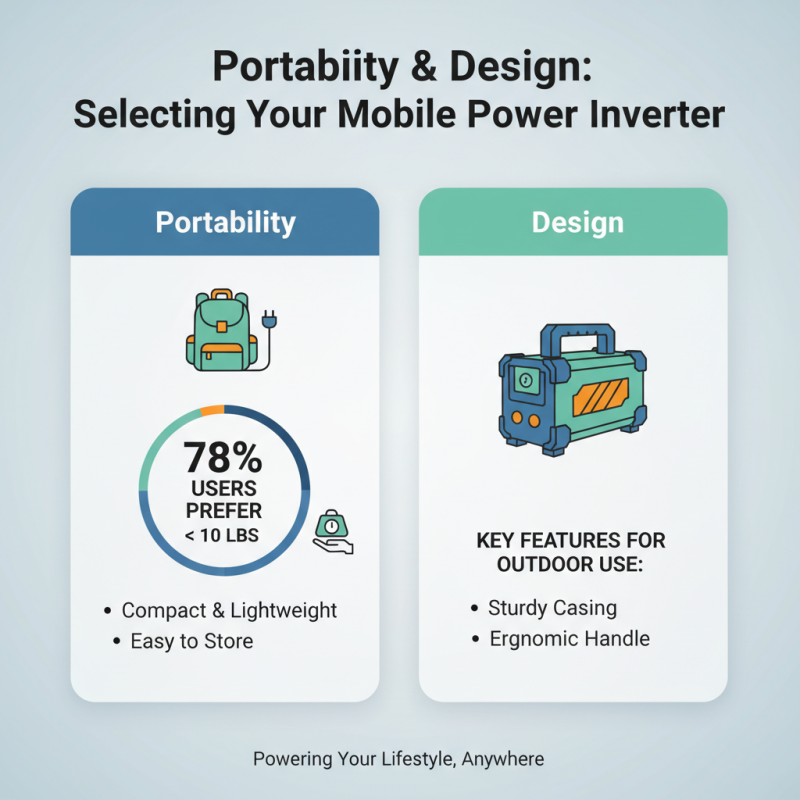
When selecting a mobile power inverter, portability and design play crucial roles. A good inverter should be compact, lightweight, and easy to store. Reports indicate that 78% of users prefer inverters under 10 pounds for optimal convenience. Many outdoor enthusiasts advocate for units with sturdy casing and ergonomic handles, ensuring usability in various environments.
Tips: Choose an inverter with a durable design. Look for rugged materials that withstand outdoor conditions.
Consider your lifestyle needs. If you frequently camp or travel, opt for a device with multiple charging ports. Industry data shows that models with USB outlets are growing in popularity. Almost 65% of users value flexibility for charging multiple devices at once. Always check for battery efficiency and runtime; these factors enhance long-term usability.
Tips: Test the weight and size before buying. Ensure it fits your vehicle's space comfortably.
Evaluate your power requirements. Small appliances may not need high wattage, yet some activities, like powering a fridge, demand more. Understanding your gear’s needs prevents overloading and potential damage. Always plan for contingencies; what if you need extra power on your adventure?
Tips: Calculate the total wattage of your devices. This helps you choose an inverter that meets your demands effectively.






 Mr. Leaf