Top Mobile Power Inverter Options for Global Buyers?
As global demand for mobile power solutions increases, the mobile power inverter market has become more significant. According to industry reports, the market is expected to grow at a CAGR of 6.5% over the next five years. This calls for careful consideration when selecting the best options available. Industry expert Dr. Jane Thompson emphasizes, “The portability of mobile power inverters is revolutionizing energy access for consumers.”
Mobile power inverters convert DC power from batteries into AC power. They are crucial for powering various devices, especially on-the-go. A reliable inverter can ensure that essential appliances remain functional during travel or power outages. While many brands claim to offer the best products, some do not deliver adequate performance or safety features.
Buyers need to prioritize quality when shopping for mobile power inverters. Some lower-end models may lack longevity or reliability. These shortcomings can lead to device damage or safety hazards. In a rapidly evolving market, selecting the right inverter demands informed choices. It is vital for users to weigh their options carefully and invest in proven technologies that can withstand diverse environments.
Overview of Mobile Power Inverters and Their Importance
Mobile power inverters serve a crucial role in modern life. They convert DC power from batteries into AC power, making it usable for various devices. This transformation is essential for anyone reliant on portable energy sources. Whether for outdoor adventures or emergency situations, understanding their significance is vital.
These inverters come in different sizes and capacities, tailored for specific needs. Users may face challenges in selecting the right model. Some options might not handle high loads effectively, leading to potential failures. Real-world experiences show that improper use can result in overheating or damage.
Reliability is a key factor when choosing an inverter. Consumers should prioritize units with robust safety features. A unit that fails during critical moments can create significant challenges. Reviewing user feedback and performance reports can help buyers make informed choices. While many options appear promising, not all deliver as expected. It’s essential to research thoroughly and weigh pros and cons before making a decision.
Key Features to Consider When Choosing a Mobile Power Inverter
When choosing a mobile power inverter, it's essential to evaluate several key features. First, consider the power output capacity. This specification determines how many devices can be powered simultaneously. Inverters usually come with ratings in watts. For example, a 300-watt inverter can easily support small electronics like laptops or smartphones. However, larger appliances may require inverters with higher outputs.
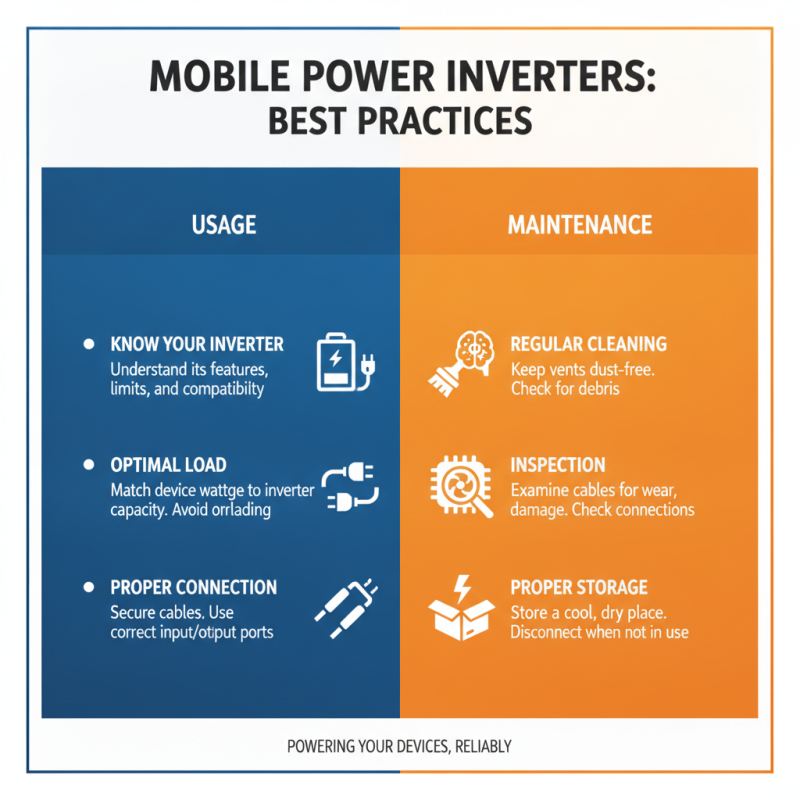
Next, look at the inverter design and portability. Many models are lightweight, making them ideal for travel. Compact designs can easily fit in your car or backpack. Moreover, features like built-in fuses and cooling fans enhance safety. You should also consider the type of connection. Some inverters offer multiple AC outlets, USB ports, or even DC outputs, increasing versatility.
Lastly, think about the efficiency rating. Some inverters convert power less efficiently, leading to wasted energy. A model with a higher efficiency rating will save you battery life in the long run. These specifications matter a lot, especially for frequent travelers. Choose wisely to ensure reliable power wherever you go.
Top Mobile Power Inverter Options for Global Buyers
| Model |
Power Output (Watts) |
Number of Outlets |
Input Voltage |
Special Features |
| Model A |
300W |
2 |
12V |
Compact design, Overload protection |
| Model B |
500W |
3 |
12V |
USB ports, LED display |
| Model C |
1000W |
4 |
24V |
High efficiency, Multiple safety protections |
| Model D |
1500W |
2 |
12V |
Fan cooled, Short circuit protection |
| Model E |
3000W |
6 |
24V |
Remote control, LCD monitoring |
Top Mobile Power Inverter Brands for Global Buyers
When selecting a mobile power inverter, buyers should consider key brands that prioritize reliability and performance. Many reputable brands have developed a strong focus on harnessing advanced technology. These brands are noted for their high-quality materials and durable designs. This results in products that withstand harsh conditions.
One brand stands out for its user-friendly interfaces. It often includes easy-to-read displays and simple connection points. This makes them suitable for both novices and seasoned users. Another brand has earned acclaim for its safety features. Overload protection and short circuit prevention are critical for safe operations. These aspects instill confidence in users, especially during outdoor adventures.
However, not all products meet expectations. Some may struggle under high loads or have inconsistent outputs. Buyers may find it challenging to select the right size or type for their needs. It’s essential to consider personal requirements carefully. Evaluation of product specifications can help avoid mismatches. Investing time in research can lead to a more satisfying purchase.
Top Mobile Power Inverter Options for Global Buyers
Comparative Analysis of Popular Mobile Power Inverter Models
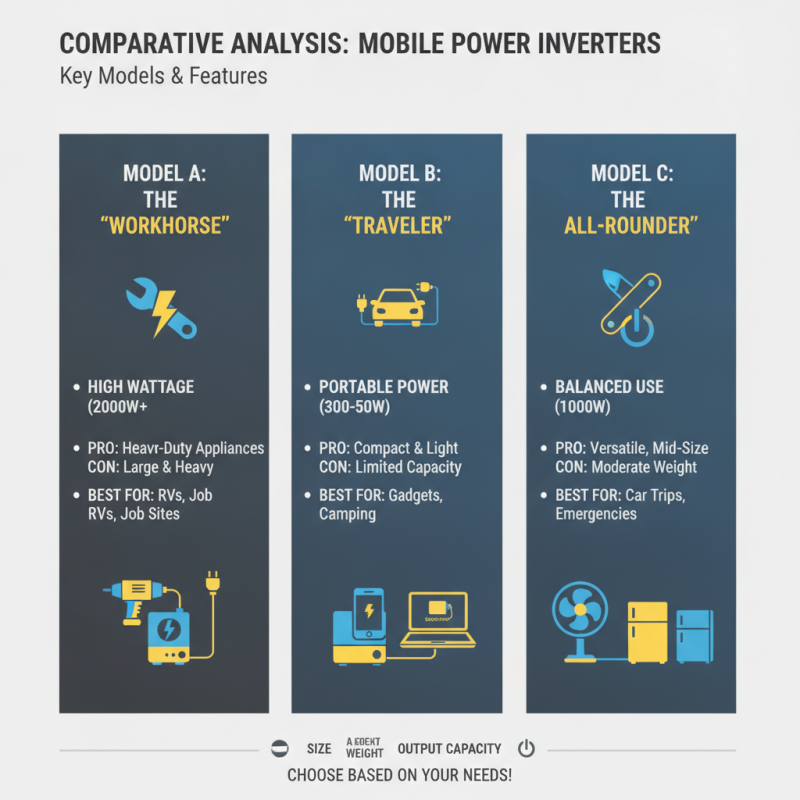
When looking for mobile power inverters, users often seek insights into popular models. Each option has unique features that cater to various needs. Some inverters are designed for high wattage use, while others prioritize portability. Factors like size, weight, and output capacity play a crucial role in the selection process.
A significant point to consider is the inverter's safety features. Models should offer overload protection and short circuit prevention. These features help ensure safe operation during use. Some consumers may overlook this aspect, leading to potential risks. Check user reviews before purchasing. Real-world experiences offer valuable insights.
Tips: Opt for an inverter that matches your power requirements. Research the inverter's output capability against your devices. Sometimes, users choose a powerful model and misjudge their actual power need, leading to wasted capacity. Additionally, think about portability. Lightweight inverters are convenient for road trips, but they may lack power. Striking the right balance is essential. Engage with community forums for recommendations. Users share practical insights that can guide your decision.





 Mr. Leaf