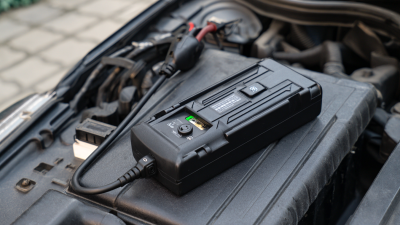
Choosing a reliable Mobile Car Battery Charger can save hours beside a silent vehicle, especially during winter travel, roadside delays, or remote work trips. Modern chargers range from compact jump starters to smart maintenance units. Their differences are not always obvious from product photos or short online descriptions.
This guide examines the 2026 market for global buyers. It considers starting current, battery compatibility, charging speed, safety protection, cable quality, display accuracy, portability, and warranty support. Real-world handling matters. A charger should fit inside a glove box, remain usable with cold hands, and provide clear signals in weak light. It should also support common battery types without encouraging unsafe connections.
No single model suits every driver. That matters.
A powerful unit may be too heavy for daily carrying. A small device may struggle with a large diesel engine. Some specifications appear impressive, yet testing conditions can be unclear. Therefore, this overview compares practical performance with manufacturer claims and highlights areas requiring careful verification. Buyers should confirm voltage, connector design, battery chemistry, regional plug requirements, and after-sales service before ordering internationally.
The selected products are assessed through a professional, evidence-based lens, while recognizing that availability and standards can change across markets. User experience also matters, including emergency use, routine maintenance, storage, and repeated charging cycles. A charger that works once is not automatically dependable.
Expect useful choices, not perfect answers.
A mobile car battery charger is a portable device that stores electrical energy for emergency starting. It usually contains lithium-ion cells, control electronics, cables, and insulated clamps. Unlike a traditional charger, it does not need a wall outlet during use. This makes it useful beside a roadside, in a garage, or during winter travel.
The working process is simple but powerful. The charger transfers direct current to the vehicle’s starter battery through the positive and negative terminals. Its control circuit checks voltage, polarity, and connection quality before releasing high starting current. A short boost can help the starter motor turn when the battery is weak. However, it cannot repair damaged battery plates or replace a failed alternator.
The need is significant. ADAC’s 2024 breakdown report recorded starter batteries as the cause of 44.1% of reported vehicle failures in Germany. This figure shows why compact emergency equipment matters to global drivers. Still, advertised peak amperage can be misleading. Real performance depends on cable quality, temperature, battery condition, and charge level. A charger rated for 2,000 peak amps may deliver much less usable power during a cold start. That detail deserves more attention.
Reliable models should include reverse-polarity protection, short-circuit protection, overcharge control, and clear status indicators. Users should inspect swollen batteries, cracked cases, and overheated cables before connecting anything. The International Energy Agency’s Global EV Outlook 2024 also highlights rapid growth in vehicle electrification, but conventional 12-volt systems remain common in many vehicles. Compatibility must be checked carefully.
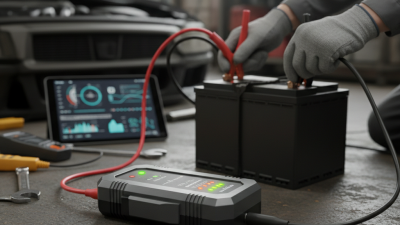
For global buyers, output performance is only one part of a mobile car battery charger. Compare charging voltage, current range, and compatibility with lead-acid, AGM, and lithium batteries. A charger should detect battery condition before supplying power. This reduces overheating and incorrect charging.
Safety features deserve close attention. Look for reverse-polarity protection, short-circuit control, overcharge prevention, and thermal monitoring. A clear display can show voltage, current, and charging stage. It helps during roadside work, especially in poor light. However, bright screens can drain a small internal battery faster than expected.
Portability also affects daily usefulness. Check the charger’s weight, cable length, handle design, and storage protection. An IP-rated enclosure may resist dust and light water exposure, but it does not make careless use safe. Buyers should compare input voltage ranges and plug compatibility across regions. USB-C output can recharge a phone, yet it may slow the main charging process. I prefer a model with independent power management. Warranty terms, test documentation, and a readable manual also reveal product reliability. Some advertised capacity figures seem impressive, but real charging time can differ in cold weather. That detail is easy to overlook.
| Mobile Charger Profile | Battery System | Typical Starting Output | Typical Vehicle Coverage | Internal Battery Capacity | Charging Ports and Input | Safety Features to Compare | Approximate Weight | Global-Buyer Considerations |
|---|---|---|---|---|---|---|---|---|
| Compact Lithium Jump Starter | 12 V lead-acid or AGM vehicle batteries | 600–1,000 A peak current | Most small petrol engines up to approximately 3.0–4.0 L; diesel engines up to approximately 2.0–2.5 L | Approximately 6–12 Ah lithium battery | USB-A and/or USB-C output; USB-C input commonly 15–30 W | Reverse-polarity protection Short-circuit protection Over-temperature protection | Approximately 0.6–1.0 kg | Best for private cars and emergency storage. Confirm the supplied cable type and operating-temperature range before purchasing. |
| Mid-Range Lithium Jump Starter | 12 V lead-acid, AGM, EFB, or compatible start-stop batteries | 1,000–2,000 A peak current | Petrol engines up to approximately 5.0–6.0 L; diesel engines up to approximately 3.0–4.0 L, depending on engine condition | Approximately 10–20 Ah lithium battery | USB-C input/output commonly 30–60 W; some units include a 12 V accessory outlet | Spark protection Reverse connection alarm Over-current protection LED work light | Approximately 0.8–1.5 kg | A practical balance of portability and starting power for family cars, vans, and light commercial vehicles. Check whether the unit supports automatic start-stop battery systems. |
| High-Output Lithium Jump Starter | 12 V lead-acid, AGM, or EFB vehicle batteries | 2,000–3,000 A peak current | Petrol engines up to approximately 7.0–8.0 L; diesel engines up to approximately 5.0–6.0 L | Approximately 18–30 Ah lithium battery | USB-C fast charging commonly 60–100 W; USB-A and 12 V DC output may also be included | High-current cable protection Reverse-polarity protection Thermal monitoring Overcharge protection | Approximately 1.2–2.5 kg | Suitable for larger SUVs, pickups, vans, and demanding roadside use. Peak-current figures are not standardized, so compare cable quality, tested current, and warranty terms as well. |
| 12 V/24 V Heavy-Duty Jump Starter | 12 V and 24 V lead-acid or compatible commercial-vehicle batteries | Approximately 1,000–3,000 A, depending on voltage mode | Light trucks, buses, agricultural equipment, and larger diesel vehicles; exact engine coverage varies by model | Approximately 20–60 Ah lithium battery | USB-C and USB-A outputs; 12 V/24 V DC output; charging input commonly 30–100 W | Automatic voltage detection Incorrect-voltage protection Overload protection Heavy-duty clamps | Approximately 2.0–5.0 kg | Choose only when 24 V support is clearly specified. Verify the vehicle's battery configuration before connection; a 24 V system must not be connected to a 12 V-only device. |
| Portable Smart Battery Charger | Usually 12 V lead-acid, AGM, GEL, or EFB batteries | Not a jump starter; charging current commonly 2–10 A | Passenger cars, motorcycles, recreational vehicles, and small commercial vehicles | Internal battery may be absent; some models use an integrated lithium power pack | AC input required on many models; common charging modes include 12 V, maintenance, and reconditioning | Automatic charge control Overcharge protection Short-circuit protection Battery-polarity detection | Approximately 0.7–2.0 kg | Better for slow charging and battery maintenance than emergency starting. Confirm local mains voltage, plug type, and whether a travel adapter is included. |
| Portable Lithium Battery Charger with Maintenance Mode | 12 V lead-acid, AGM, GEL, or selected lithium iron phosphate batteries | Charging current commonly 1–5 A; not intended for engine cranking | Motorcycles, passenger cars, boats, caravans, and stored vehicles | Usually powered directly from AC or a vehicle accessory socket | Selectable chemistry mode; some models provide temperature-compensated charging and permanent-maintenance operation | Chemistry selection Reverse-polarity protection Low-voltage recovery Temperature control | Approximately 0.4–1.2 kg | Check carefully that the charger supports the battery chemistry. A lead-acid charger should not be used with a lithium battery unless the manufacturer explicitly permits it. |
| Solar-Assisted Portable Battery Charger | Primarily 12 V lead-acid or AGM batteries; compatibility varies | Usually 0.5–3 A in bright sunlight; not designed for jump starting | Vehicles in storage, outdoor equipment, caravans, and remote locations | May include a small internal battery or operate directly from a solar panel | Solar input commonly 5–30 W; some units also accept USB or 12 V DC input | Charge controller Overcharge protection Blocking diode Weather-resistant housing | Approximately 0.3–1.5 kg, excluding mounting accessories | Charging performance depends heavily on sunlight, panel orientation, shading, and seasonal conditions. Confirm the stated weather-resistance rating rather than assuming full waterproofing. |
Choosing the right mobile car battery charger starts with the vehicle, not the charger’s appearance. A small sedan usually needs a 12-volt charger with moderate starting current. Large SUVs, vans, and trucks may require higher peak output because their engines need more starting power. Motorcycles often use smaller batteries and benefit from low-current maintenance charging. Check the battery label, capacity, chemistry, and voltage before buying. A charger made for lead-acid batteries may not suit AGM or lithium batteries.
Your intended use also matters. For emergencies, choose a portable jump starter with clear polarity protection, a strong cable clamp, and enough capacity for repeated starts. For home or workshop use, a smart charger is better because it can control charging stages and reduce overcharging risks. Travellers should check input voltage, plug compatibility, weather resistance, and storage temperature. Electric vehicles need special care. A 12-volt charger can support the auxiliary battery, but it cannot charge the high-voltage traction battery.
Tips: Read the vehicle manual carefully. Keep the battery terminals clean and dry. Never connect clamps by guesswork. Test the charger before an emergency, not during one. In practice, many buyers focus on peak amps and overlook cable length or weight. I have made that mistake in planning, too. A powerful charger may still be inconvenient if it stays in the garage or has confusing indicators. Reliability is sometimes less impressive than advertised power.
2026 Top Mobile Car Battery Chargers for Global Buyers
Global buyers should treat certification as a safety filter, not a marketing decoration. IEC 60335-2-29 covers many household and similar battery chargers, while EMC rules address unwanted electrical interference. Market access still varies. Europe may require CE conformity, Britain uses UKCA rules, Australia accepts RCM pathways, and other markets apply local approvals. A certification mark without a test report deserves caution.
Compatibility is equally practical. The ACEA Vehicles on European Roads report places the average EU passenger car age at about 12.5 years. That means one charger may meet vehicles with different alternators, battery chemistries, and connector designs. Check 6V, 12V, or 24V support, battery capacity limits, polarity protection, temperature control, and charging modes for flooded, AGM, EFB, or lithium batteries. Never assume “automatic” means universal.
The IEA Global EV Outlook 2024 recorded nearly 14 million electric-car sales in 2023, showing how quickly vehicle technology is changing. However, many mobile chargers still target conventional 12V systems, not high-voltage traction batteries. Buyers should verify whether the device supports auxiliary batteries only. Ask for regional test documentation, operating-temperature data, ingress protection, and instructions in the destination language. Real-world testing matters. I would still question vague claims such as “works with all cars.”
Global safety, certification, and compatibility requirements
Mobile chargers should clearly support the vehicle’s nominal battery system: 12 V for most passenger vehicles, 24 V for many commercial vehicles, and 48 V for selected newer mild-hybrid systems. Global buyers should also verify input-voltage coverage, charging chemistry, polarity protection, electromagnetic compatibility, and market-specific requirements such as CE, UKCA, FCC, RoHS, IEC 60335-2-29, or UN ECE R10 where applicable.
A mobile car battery charger is useful when a vehicle will not start, but correct handling matters. Check the charger’s voltage, cable condition, and battery compatibility before connecting anything. Park outdoors or in a well-ventilated area. Switch the charger off. Then connect the red clamp to the positive terminal and the black clamp to the negative terminal or a clean metal ground point. Keep the clamps apart.
Follow the charger’s instructions carefully, especially when selecting charging mode. Start with a low setting when the battery condition is uncertain. Watch for unusual heat, swelling, smoke, or a sharp chemical smell. Stop immediately if any warning sign appears. Never leave a charging battery unattended for long periods. A common mistake is assuming that a higher current always saves time. It may increase heat and shorten battery life.
After charging, switch off the unit before removing the clamps. Wipe moisture and dirt from the cables. Inspect damaged insulation, loose connectors, and cracked housing. Recharge the mobile unit after use, even if it supplied only one jump-start. Store it in a dry, cool place away from direct sunlight and metal objects. Do not keep it inside a hot vehicle. I once underestimated storage temperature during summer; the unit still worked, but its battery capacity dropped noticeably. Check it every few months and recharge it before travel. Manufacturer guidance should remain the final reference.