
Leave Your Message
China’s mobile power inverter market serves vehicle owners, installers, and equipment makers who need dependable power away from the grid. This guide introduces ten Chinese manufacturers and the products they offer. It is a starting point, not a final verdict. No list is perfect.
Robert W. Erickson, co-author of Fundamentals of Power Electronics, describes the field this way: “Power electronics is the application of electronics to the conversion and control of electric power.” That principle matters in a Mobile Power Inverter, where conversion efficiency, heat management, and output stability affect everyday use. A printed rating alone tells only part of the story. Buyers should compare continuous and surge output, DC input options, waveform quality, cooling design, and protections against overload or overheating. A unit powering a laptop in a parked vehicle faces different demands from one running a small pump at a remote worksite. Details matter.
The manufacturers in this overview can be assessed through product range, technical documentation, production capability, certifications, and after-sales support. These factors help distinguish a suitable supplier from one with merely attractive specifications. Independent testing and current factory information are still worth checking. That extra step can feel tedious. It may prevent an expensive mismatch.
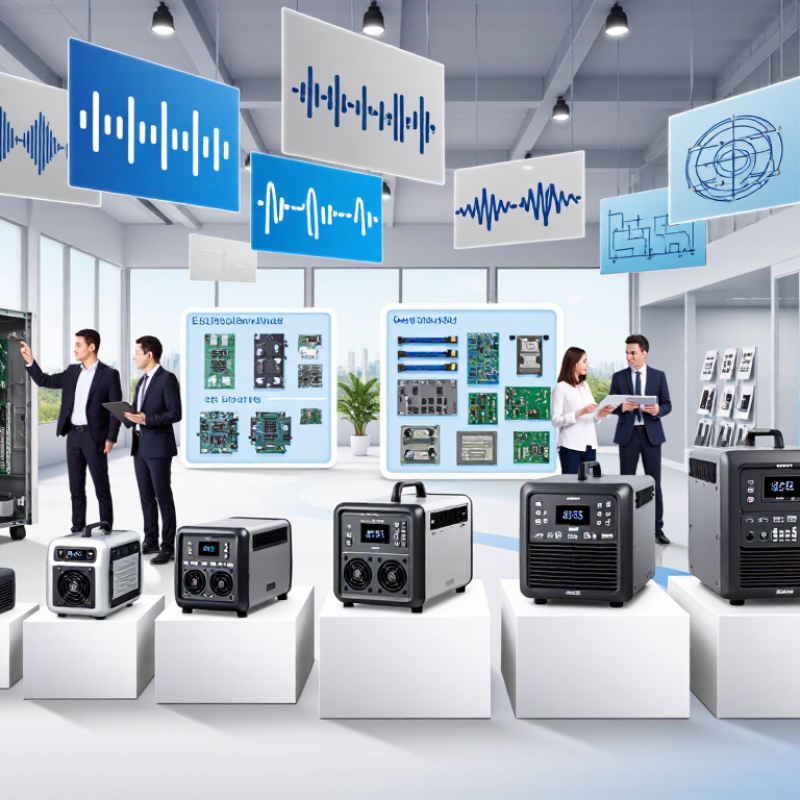
A mobile power inverter converts direct current from a battery into alternating current for compatible electrical devices. It can make stored battery power useful beyond low-voltage accessories. Common setups connect the inverter to a vehicle or portable battery, then supply power through standard AC outlets. The exact output depends on the unit, battery, and wiring.
That sounds simple. It isn’t always. In a parked vehicle, an inverter may run a laptop, camera charger, or small work light. On a boat or at a remote work site, it can power selected tools and electronics when grid power is unavailable. During an outage, a battery-based setup may keep essential devices running for a limited time. Runtime matters.
Choosing one involves more than matching plug shapes. Check the device’s running wattage and starting demand, especially for motors. Compare those needs with the inverter’s continuous and surge ratings. A sensitive charger or computer may also require a suitable output waveform. Keep the inverter ventilated, use cables sized for the expected load, and avoid drawing power beyond the battery’s capacity. One detail gets missed: a large inverter cannot create energy; it only converts what the battery can provide. Practical setups are not always tidy, and estimates can be optimistic.
A mobile power inverter converts direct current (DC) from a battery into alternating current (AC) for compatible electrical equipment. The table below compares common mobile inverter configurations and applications; it is not a manufacturer ranking.
| Configuration | Typical DC Input | Typical AC Output | Common Continuous Power Range | Typical Uses | Key Selection Consideration |
|---|---|---|---|---|---|
| Compact vehicle inverter | 12 V DC | Typically 120 V or 230 V AC, depending on market | About 100–300 W | Charging small electronics and powering low-wattage accessories in cars | Check the vehicle socket’s current rating; higher loads may require a direct battery connection. |
| Standard car battery inverter | 12 V DC | Typically 120 V or 230 V AC | About 300–1,000 W | Laptops, small appliances, and travel or roadside equipment | At 12 V, higher output draws substantial battery current; use correctly sized cables and protection. |
| Van and camper inverter | 12 V or 24 V DC | Typically 120 V or 230 V AC | About 500–2,000 W | Mobile refrigeration, entertainment equipment, and selected kitchen appliances | Allow for startup surges from motor-driven appliances and verify battery capacity. |
| Truck inverter | 12 V or 24 V DC, according to vehicle system | Typically 120 V or 230 V AC | About 500–2,000 W | Cab equipment, communications devices, and selected work tools | Match input voltage to the truck electrical system and consider engine-off battery drain. |
| Portable battery-system inverter | Commonly 12 V, 24 V, or 48 V DC | Typically 120 V or 230 V AC | About 300–2,000 W | Camping, mobile workstations, and off-grid equipment | Confirm battery chemistry compatibility and the inverter’s low-voltage cutoff settings. |
| Pure sine wave inverter | Varies by model; commonly 12 V, 24 V, or 48 V DC | AC output with a waveform designed to closely approximate utility power | Available across a wide range, from low to high power | Sensitive electronics and equipment whose specifications require a sine-wave supply | Check output voltage, frequency, continuous rating, and surge rating against the load. |
| Modified sine wave inverter | Varies by model; commonly 12 V or 24 V DC | Stepped AC waveform; compatibility depends on the connected device | Available across a range of power ratings | Some basic resistive loads and devices explicitly rated for this waveform | Not suitable for every electronic or motor load; consult the equipment manufacturer’s requirements. |
| Solar-charging mobile inverter system | Battery DC input; solar panels require a compatible charge controller | Typically 120 V or 230 V AC | System-dependent; commonly hundreds to thousands of watts | Mobile off-grid use, campsites, and remote work locations | Size the battery, controller, panels, and inverter as a compatible system. |
| Emergency-response inverter setup | Commonly 12 V, 24 V, or 48 V DC from a battery bank | AC output matched to local equipment requirements | Selected to suit the connected critical loads | Temporary power for communications, lighting, and other compatible equipment | Prioritize load planning, battery runtime, ventilation, and electrical safety. |
| Mobile workshop inverter | Commonly 24 V or 48 V DC for higher-power installations | Typically 120 V or 230 V AC | About 1,000 W and above, depending on tools and system design | Selected portable tools and equipment used in service vehicles or remote work areas | Check each tool’s running and startup power; high loads may need a larger battery system. |
Power ranges are indicative examples, not guaranteed specifications. Actual ratings, output voltage, frequency, waveform, efficiency, and protections vary by inverter model and local electrical standards.



 Mr. Leaf