Leave Your Message

How to Choose a Multi Mobile Charger for Global Sourcing?

Global sourcing of a Multi Mobile Charger now requires more than comparing wattage and purchase price. IDC’s Worldwide Quarterly Mobile Phone Tracker recorded approximately 1.24 billion smartphone shipments in 2024. GSMA’s The Mobile Economy 2024 also reported 4.6 billion mobile internet users in 2023. These figures suggest strong demand for compact, adaptable charging equipment across travel, retail, and workplace markets.

Jeff Ravencraft, President and COO of the USB Implementers Forum, stated, “USB Type-C is the connector of choice for the next generation of USB devices.” His comment highlights a practical sourcing direction. A reliable Multi Mobile Charger should support widely adopted USB-C standards, stable power distribution, and clear device compatibility. Buyers should examine charging protocols, thermal control, cable quality, plug configurations, and output performance under simultaneous loads. A charger promising 100W may deliver less when four ports operate together.

Look beyond the sample unit. Request laboratory test reports, factory audit records, and traceable component information. Check whether the supplier explains overvoltage, overcurrent, short-circuit, and temperature protection. Packaging should show accurate specifications, not attractive guesses. Regional plug requirements also matter. So do customs documents and after-sales support.

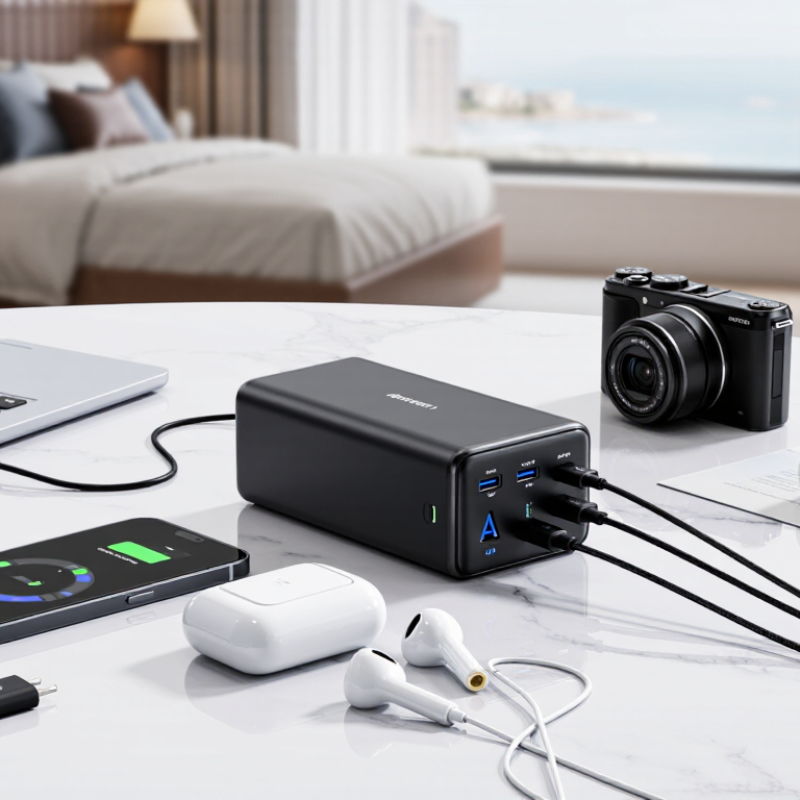
Small details reveal supplier discipline. Does the charger remain cool beside a hotel bed? Does a laptop continue charging when a phone is connected? These questions deserve physical testing. Yet reports cannot replace experience. One weakness remains: many product listings use inconsistent performance claims. A thoughtful buyer should therefore compare independent tests with manufacturer data before approving a global order.
How to Choose a Multi Mobile Charger for Global Sourcing?

Define Your Global Charging Requirements

How to Choose a Multi Mobile Charger for Global Sourcing?

Define Your Global Charging Requirements

Define requirements before comparing multi mobile chargers. “Multi” may mean four, eight, or twenty ports. Record target markets, device types, daily charging cycles, and shipment quantities. A warehouse charging tablets needs different capacity than a hotel serving guests. Measure actual usage, not optimistic forecasts. Small details matter.

Check local voltage ranges, plug formats, and approved safety requirements for every destination. Confirm whether the charger supports USB-C, older connectors, or both. Then calculate simultaneous power demand. A charger rated for 100 watts may deliver less when every port is occupied. Look for clear output tables, power allocation rules, and overheating protection. These details are easy to overlook.

Ask suppliers for test reports, factory quality records, and samples from current production. Verify performance with your own phones, tablets, cables, and cases. Run the unit for several hours at full load. Touch the housing carefully after testing. Excessive heat deserves investigation. Cable length, replaceable cords, packaging strength, and labeling also affect global delivery.

I once treated port count as the main buying factor. That was a weak assumption. Real efficiency depends on device compatibility and charging speed. Keep a written requirement sheet, including acceptable failure rates and inspection steps. A small pilot order can reveal problems that polished specifications hide.

Compare Charger Types, Ports, Power Ratings, and Device Compatibility

Choosing a multi mobile charger for global sourcing starts with the charging environment. A compact wall charger suits travelers. A desktop charger works better for offices, hotels, and shared workspaces. Travel models may include interchangeable plugs, but their mechanical fit needs careful inspection. Loose connections create heat and customer complaints.

Port selection should match the devices buyers actually carry. USB-C ports support newer phones, tablets, and many laptops. USB-A remains useful for older cables and accessories. Mixed-port designs offer flexibility, yet shared power can reduce charging speed. Check whether each port has an independent rating. A port labeled “high output” is not enough.

Power ratings require practical testing. A 65-watt charger may power several phones, but laptops can change the calculation. Read the total output, per-port output, and supported charging protocols. Compatibility also depends on voltage ranges, plug formats, cable quality, and device protection. In one sourcing project, the lower-priced sample looked impressive until two devices charged slowly together. That mistake was avoidable. Request test reports, temperature data, product dimensions, and clear compliance documents before placing a large order. Build samples should be tested with real devices, not only laboratory loads. Small details matter.

How to Choose a Multi Mobile Charger for Global Sourcing? - Compare Charger Types, Ports, Power Ratings, and Device Compatibility
Charger Type Typical Port Configuration Common Total Power Power Distribution Compatible Devices Main Standards or Features Global Sourcing Advantages Important Purchasing Checks
Basic USB-A Multi-Port Charger 4–8 × USB-A USB-A output 20–40 W Usually shared across all ports; commonly 5 V output with limited fast-charging support. Older smartphones, basic accessories, Bluetooth devices, power banks, and low-power electronics. USB 2.0 or USB 3.x charging capability; some models support proprietary fast-charge protocols. Low unit cost, simple user operation, and suitable for hospitality, offices, and shared charging areas. Confirm output current per port. A high total wattage may not be available on every port simultaneously.
Multi-Port USB-C PD Charger 2–4 × USB-C PD outputs 45–140 W Dynamic allocation; individual ports may provide approximately 20–100 W depending on the model. Modern smartphones, tablets, handheld game devices, compact laptops, cameras, and power banks. USB Power Delivery; programmable voltage and current profiles; reversible USB-C connectors. Strong cross-device compatibility and good suitability for international retail and e-commerce channels. Check the exact wattage of each port, supported PD profiles, cable requirements, and whether all ports can operate at full load.
USB-C and USB-A Hybrid Charger 1–3 × USB-C 1–3 × USB-A 45–100 W USB-C ports generally receive priority; USB-A ports may share a lower secondary power budget. Mixed fleets containing current USB-C devices and legacy USB-A cables or accessories. USB PD on USB-C; USB-A charging protocols may vary by model. Reduces the need for separate charger inventories during a transition from USB-A to USB-C. Verify whether USB-A use reduces USB-C output. Confirm connector quality, port spacing, and simultaneous charging performance.
High-Power GaN Multi-Charger 2–4 × USB-C Optional USB-A 100–240 W Intelligent power sharing; a single USB-C port may support up to approximately 140 W on suitable products. Laptops, tablets, smartphones, portable monitors, cameras, and other USB-C devices. Gallium nitride switching components; USB PD; improved power density and thermal efficiency compared with many silicon-based designs. Smaller form factor and lower shipping volume for high-power applications. Check thermal performance, sustained-load testing, over-temperature protection, safety certification, and compatibility with high-power USB-C cables.
Desktop Charging Station 4–8 outputs USB-C + USB-A AC input cord 65–240 W Designed for simultaneous charging; output allocation is usually defined in the product specification. Multiple smartphones, tablets, laptops, headsets, power banks, and workplace devices. USB PD, over-current protection, over-voltage protection, short-circuit protection, and temperature monitoring. Suitable for offices, schools, hotels, service counters, and shared workspaces with multiple users. Evaluate enclosure fire resistance, cord type, plug options, ventilation, desk stability, and long-duration multi-port testing.
Travel Charger with Interchangeable Plugs 1–3 × USB-C Optional USB-A Replaceable plug heads 30–100 W Power is shared across ports; plug adapters change the wall connection, not the output rating. International travelers using smartphones, tablets, compact laptops, cameras, and accessories. Input commonly supports 100–240 V AC; USB PD support depends on the model. One product can serve multiple wall-socket regions and simplify international product assortment. A plug adapter does not convert voltage. Confirm input range, plug retention, regional approvals, fuse requirements, and grounding design.
Wireless Charging Hub with Wired Outputs Wireless pad 1–3 × USB-C Optional USB-A 30–100 W input Wireless output is commonly lower than wired USB-C output; total capacity depends on simultaneous use. Qi-compatible smartphones and earbuds plus wired USB-C devices. Qi wireless charging; USB PD for wired outputs; foreign-object detection on compliant wireless designs. Adds convenience and product differentiation for home, office, hotel, and travel applications. Check alignment, case compatibility, wireless efficiency, heat generation, charging distance, and regional wireless requirements.
Power-Delivery Charger with PPS 1–4 × USB-C PD + PPS 25–140 W Uses adjustable voltage and current steps when supported by both charger and device; other devices fall back to standard PD profiles. Modern smartphones, tablets, compact laptops, and USB-C power banks that support PPS. USB PD with Programmable Power Supply for finer voltage adjustment and potentially lower charging losses. Broadens compatibility with newer fast-charging device designs without requiring a dedicated charger for each model. Confirm the actual PPS voltage/current range, port-specific support, cable rating, and independent test results.
High-Current USB-C Charging Hub 4–10 × USB-C Centralized power input 100–300 W Often optimized for many low-to-medium-power devices rather than maximum laptop charging on every port. Smartphones, tablets, barcode scanners, headsets, power banks, and small USB-C equipment. USB-C charging, port-level current management, and centralized cable organization. Efficient for fleet charging in schools, warehouses, retail operations, and device-management programs. Check per-port current, total thermal load, cable storage, mounting options, replaceable power supply availability, and serviceability.
Regional AC Input Multi-Charger USB-C and/or USB-A Fixed regional plug 30–200 W Output depends on the internal power supply and the regional mains specification. Devices used in a specific target market, including smartphones, tablets, laptops, and accessories. Designed for a defined input system such as 100–127 V or 220–240 V; local plug and compliance configuration. Can simplify certification and packaging when sales are limited to one electrical region. Confirm rated input frequency, plug standard, local safety requirements, label language, EMC performance, and required documentation.
Selection note: For global sourcing, compare the charger’s per-port output, simultaneous-load behavior, input voltage range, cable requirements, thermal protection, and destination-market compliance rather than relying only on the advertised total wattage.

Evaluate Safety Standards, Certifications, and Regional Compliance

When choosing a multi mobile charger for global sourcing, safety evidence should guide the purchase. Start by requesting test reports, technical files, and factory quality records. Check whether the product meets IEC 62368-1 requirements for electrical and fire safety. Review protections against overvoltage, overcurrent, overheating, and short circuits. A reliable supplier should explain these controls clearly. Vague answers are warning signs.

Certification requirements vary by destination. CE marking supports market access in the European Economic Area, while UKCA may apply in Great Britain. The United States often requires FCC compliance for electromagnetic interference. RoHS restrictions also affect materials and components in many regions. These marks do not replace independent verification. Confirm the declaration of conformity, certificate scope, testing laboratory, and product model number.

Regional details matter too. Confirm input voltage ranges, plug designs, cable standards, and labeling languages before placing an order. A charger built for 100–240V is more practical for mixed markets, but the plug still needs attention. I once focused too heavily on charging speed and overlooked documentation quality. That was a useful correction. Ask for samples from mass production, then test heat, charging stability, and port performance under load. Keep records of every revision. Compliance can change when a supplier replaces a component. Reliability is never a one-time checkbox.

Assess Supplier Capability, Product Quality, and Customization Options

A multi mobile charger should be evaluated as a supply system, not a cheap accessory. Ask how many units the supplier can produce monthly, and request three months of production records. Check whether key components have approved alternatives. A factory may promise 100,000 units, yet lack stable testing capacity. That gap matters.

Product quality needs measurable evidence. Request reports for temperature rise, overload protection, short-circuit protection, and repeated plug cycles. Verify laboratory accreditation and test methods, rather than accepting a simple certificate image. The Global E-waste Monitor 2024 reported 62 million tonnes of electronic waste in 2022, with only 22.3% formally collected and recycled. Durable chargers can reduce replacement waste, but durability must be tested. Do not trust appearance alone.

Customization should cover more than colors and logos. Confirm connector combinations, output allocation, travel adapters, packaging language, cable length, and firmware-free safety controls. Require pilot samples from the actual production line. Then test them with different phones simultaneously. USB charging specifications and regional safety requirements should guide the design. A supplier that understands these details is more valuable than one offering endless options. One weakness remains: buyer testing is often too short. A charger may pass a one-day inspection and fail after weeks of heat exposure. Build a small field trial into the purchasing plan.

How to Choose a Multi Mobile Charger for Global Sourcing

Supplier capability, product quality, and customization options evaluated on a practical 0–100 sourcing scorecard.

The strongest sourcing decisions balance manufacturing capacity, quality controls, charging safety, performance consistency, and flexibility for packaging or regional plug requirements. Higher scores indicate stronger suitability for global sourcing.

Calculate Total Cost, Logistics, Warranty, and Long-Term Value

In global sourcing, the purchase price is only the first number. I start with landed cost. Add unit price, tooling, samples, inspection, packaging, freight, duties, insurance, and payment fees. For a 10,000-unit order, a small freight increase can erase an attractive factory quote. Keep it visible. Request a cost sheet with currency, Incoterms, minimum order quantity, and delivery milestones. Do not rely on a polished quotation alone.

I also test the route, not just the product. Confirm carton dimensions, pallet limits, port schedules, customs documents, and destination handling charges. Different regions may require different plugs, voltage ratings, labeling, and safety documentation. A pre-shipment inspection can reveal loose ports or damaged housings before the cartons leave the factory. That expense is easier to accept than a delayed container.

Warranty language often looks stronger than actual support. Define the coverage period, failure threshold, response time, replacement process, and responsibility for return freight. Ask whether replacements come from new production or reserved stock. A 24-month warranty means little if every claim takes eight weeks. Long-term value also includes energy efficiency, stable output, return rates, and inventory risk. I compare these figures across several shipments, not one perfect sample. The spreadsheet will still be imperfect. Demand changes, freight fluctuates, and early defect data can mislead. A practical sourcing decision leaves room for those uncomfortable surprises.