Choosing the best Smart Power Bank can be challenging. With so many options available, making the right choice demands careful consideration. A Smart Power Bank is more than just a battery; it's your mobile lifeline. It ensures your devices stay charged when you need them most.
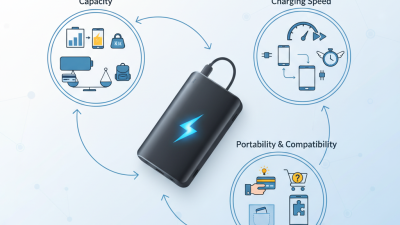
When selecting a Smart Power Bank, think about capacity, size, and charging speed. Consider your typical usage patterns. Will you be traveling? Do you need a high-capacity bank for multiple devices? These details matter.
Not all Smart Power Banks are created equal. Some may enhance your device's lifespan, while others may not. Researching brands and customer reviews is essential. Every little detail contributes to a well-informed decision. Remember, this choice impacts your daily routine and convenience.
When selecting a smart power bank, understanding battery capacity is crucial. The capacity of a power bank is measured in milliampere-hours (mAh). A higher mAh rating means more energy to charge your devices. For example, a power bank with 10,000 mAh can charge a smartphone up to three times. This is a key factor to consider before making a purchase.
However, it’s not just about mAh numbers. Some power banks have additional features like fast charging capabilities. If you only charge devices occasionally, a lower capacity may suffice. Think about your charging habits. If you travel frequently, a high-capacity power bank would offer more convenience. Weigh these factors against the size and weight of the power bank. A larger capacity often means a bulkier design.
Don’t overlook the importance of quality. Some inexpensive power banks may not meet their advertised capacity. User reviews and expert recommendations can provide insight. It’s wise to seek reliable models, even if it takes extra research. Reflect on your specific needs and preferences. Not every option will suit everyone; finding the right balance is key.
When selecting a smart power bank, evaluating charging speed is crucial. Wattage and output can vary significantly between models. Higher wattage often translates to faster charging. Look for power banks that offer at least 18W output for effective charging of smartphones and tablets. This is essential for busy users needing quick power boosts on the go.
It's important to consider how often you use your devices. Some users might find a lower output acceptable, especially for small gadgets. If you primarily charge accessories, then a bank with lower specs might suffice. Still, if you own power-hungry devices, opt for a higher wattage model to ensure efficiency.
Additionally, check for compatibility with your devices. Not all power banks support fast charging. Reading user reviews can provide insights into real-world performance. An advertised wattage might not reflect actual output. Evaluate whether the bank delivers consistent speed during repeated use. This reflection can help you make an informed choice.
| Power Bank Model | Wattage | Output Ports | Charging Speed (Fast Charge) | Battery Capacity (mAh) |
|---|---|---|---|---|
| Model A | 18W | 2 | Yes | 10000 |
| Model B | 20W | 3 | Yes | 20000 |
| Model C | 22.5W | 2 | Yes | 15000 |
| Model D | 30W | 4 | Yes | 25000 |
| Model E | 15W | 1 | No | 5000 |
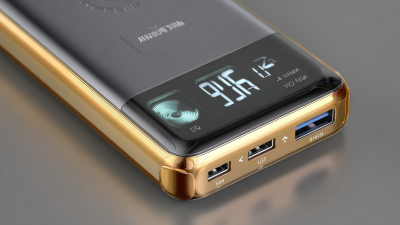
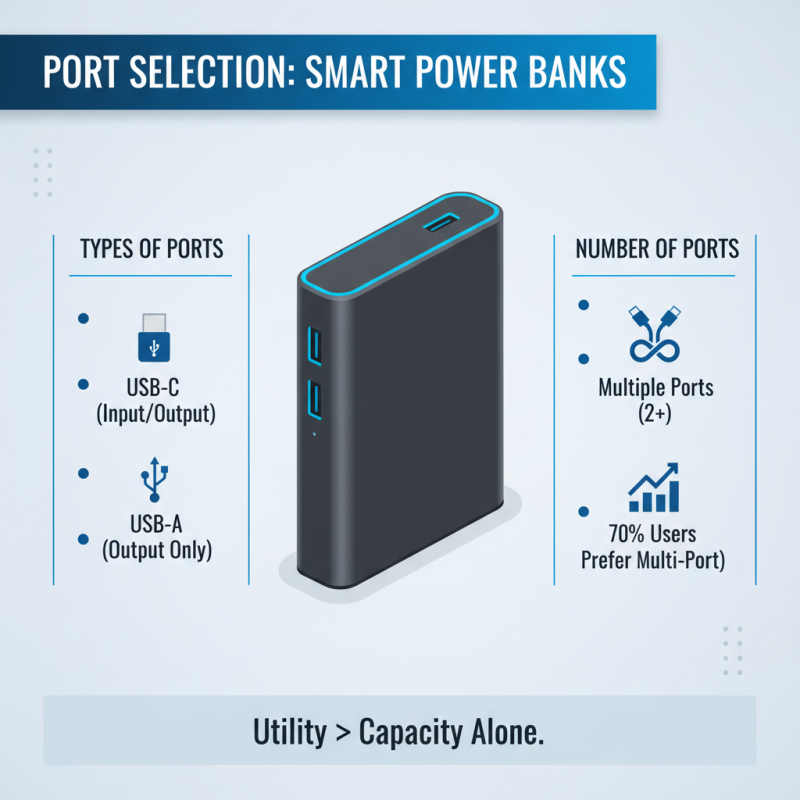
When selecting a smart power bank, the type and number of ports are crucial aspects to consider. Many consumers overlook this factor, focusing solely on capacity. However, a device's utility often hinges on its port configuration. According to industry reports, about 70% of users prefer devices that offer multiple charging options. This accessibility allows users to charge various devices simultaneously, enhancing convenience.
USB-A and USB-C ports are the most common types available. USB-C ports provide faster charging, with speeds up to 100W, making them ideal for laptops and other high-power devices. In contrast, USB-A ports, while slower, remain popular for many personal gadgets. It’s common for power banks to feature both types of ports, catering to a broader audience. Still, a power bank with solely USB-A may limit its versatility, especially as newer devices increasingly adopt USB-C standards.
The number of ports should also be a consideration. Power banks with two to four ports meet the needs of most users. A 2021 survey revealed that 55% of respondents preferred power banks with at least two ports. This allows friends or family to share charging resources. However, too many ports can lead to complexities in charging speeds. Users often find that connecting multiple devices decreases overall performance, an important trade-off to remember.
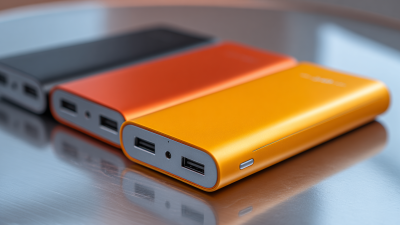
When selecting a smart power bank, portability is key. The size and weight of the power bank can significantly affect your daily routine. A lightweight model may fit easily in a pocket or small bag. This makes on-the-go charging convenient. However, smaller models might sacrifice capacity. Balancing size and power is crucial.
Consider how you plan to use the power bank. For frequent travelers, a compact design is ideal. Yet, someone who works at a desk may prefer a heavier model with more capacity. Look for features such as a slim profile without excessive bulk. This option allows for easy transport without feeling cumbersome.
Checking the overall weight is essential too. A power bank under a pound often feels best to carry regularly. However, the temptation to choose ultra-light models can lead to lower performance. Don’t overlook this; a power bank should serve multiple charges effectively. Always prioritize your specific needs before making a final choice.
This chart illustrates the distribution of power banks categorized by weight. It highlights the popularity of mini and compact power banks, emphasizing the importance of portability in consumer choices.
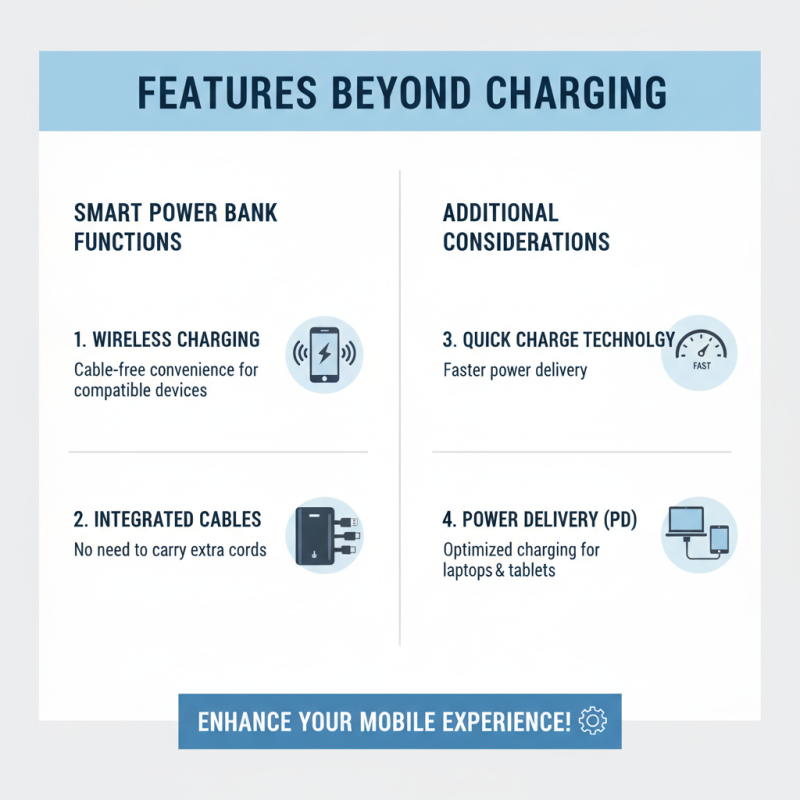
When selecting a smart power bank, functionality extends far beyond simple charging. Many modern power banks now offer features enhancing user experience and convenience. For example, some models provide built-in wireless charging capabilities. This allows for cable-free use, which is particularly beneficial for those with wireless-enabled devices.
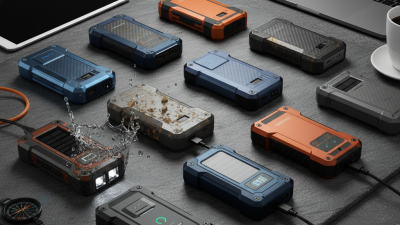
Data from the Consumer Electronics Association reveals that about 45% of users look for extra functionalities in power banks, including LED flashlights and solar charging options. The inclusion of a flashlight can add a layer of practicality in emergencies, while solar panels cater to outdoor enthusiasts, giving them the ability to recharge the bank itself. However, solar efficiency often varies, leading to mixed user experiences.
Another frequent consideration is multiple output ports. Having several outputs enables charging for multiple devices simultaneously. Yet, some power banks compromise charging speed for more ports. This can lead to frustration if devices do not charge quickly enough. Many users may find themselves settling for slower charge times just to accommodate extra devices. Balancing performance with versatility remains a challenge worth pondering.