How to Choose the Best Heavy Duty Power Bank for Your Needs?
Choosing the right Heavy Duty Power Bank can seem overwhelming. With so many options, it’s essential to understand your specific needs. Industry expert John Smith, a leading figure in portable charging technology, once said, “A Heavy Duty Power Bank is not just a device; it's a lifeline for those on the go.” This emphasizes the importance of reliability and functionality.
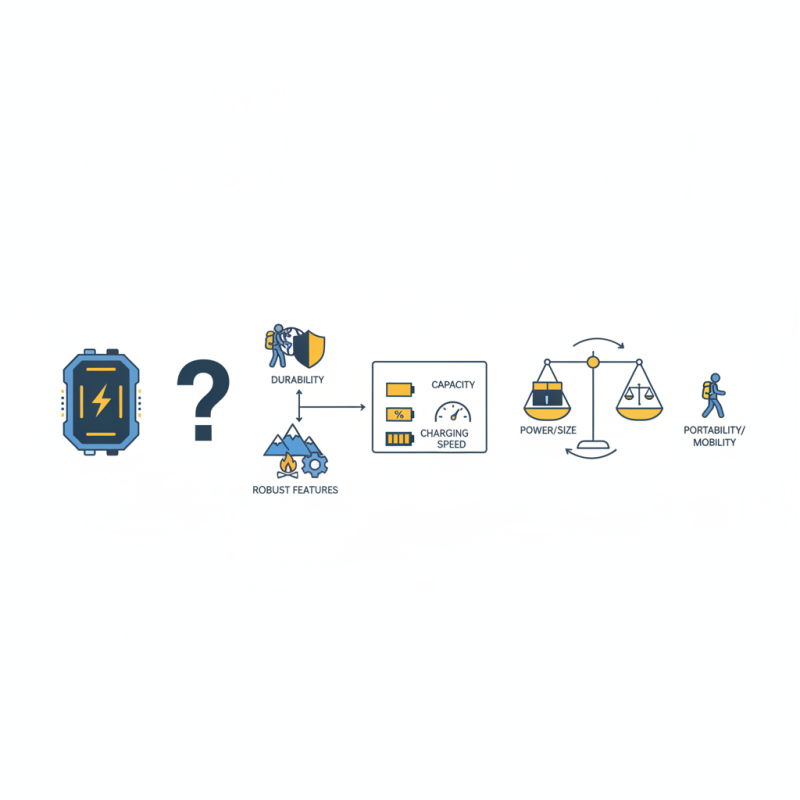
A Heavy Duty Power Bank should cater to your lifestyle. Frequent travelers might prioritize durability, while outdoor enthusiasts need robust features. Understanding battery capacity, size, and charging speed is key. Assessing personal usage will help narrow down choices.
However, there can be trade-offs. More power often means a larger size. Some may find it heavy or cumbersome. Evaluating all aspects critically will lead to a more informed decision. Balancing features with portability is crucial for long-term satisfaction. A Heavy Duty Power Bank should enhance your mobility, not hinder it.
Understanding Your Power Needs: A Guide to Heavy Duty Power Banks
When it comes to selecting the right heavy-duty power bank, understanding your power needs is crucial. Heavy-duty power banks often feature high capacities, ranging from 10,000 mAh to 30,000 mAh or more. According to industry reports, most users typically require 20,000 mAh to power multiple devices over several days. Knowing how you plan to use your power bank helps narrow down your options.
Consider how many devices you will charge. Some users may need to power a smartphone and a tablet simultaneously, while others may have different needs. Charging speed is another factor; look for power banks with fast charging capabilities, ideally providing 18W or more output. These specifications can significantly cut down on wait times, especially during busy days.
**Tip:** Always check the power bank's weight and size. A heavier power bank might provide more capacity, but it could also be cumbersome to carry.
Remember that the best power bank for you may not be the one with the highest capacity. Your preference for portability versus power affects your choice. Regularly reassessing your usage patterns can help identify when a larger or more compact power bank is needed.
Battery Capacity Comparison of Heavy Duty Power Banks
This bar chart illustrates the battery capacity of various heavy duty power banks measured in milliampere-hours (mAh). Each bar represents a different power bank model, allowing consumers to compare their capacities effectively.
Key Features to Consider When Choosing a Heavy Duty Power Bank
When selecting a heavy-duty power bank, several key features deserve attention. First, consider the capacity measured in milliampere-hours (mAh). A higher capacity is critical for extended use, such as during road trips or camping adventures. Look for options that provide at least 20,000 mAh. This ensures you can charge multiple devices several times, especially when you’re off-grid.
Next, check the output power. A good power bank should offer multiple output ports with varying voltages. This allows simultaneous charging of different devices. Fast charging capabilities can save you crucial time. Ideally, you want at least one USB-C port for efficient charging.
Durability is also essential. Look for rugged designs that are shock-resistant and water-resistant. This will ensure the power bank withstands outdoor conditions.
Lastly, pay attention to the weight and size. While a high-capacity bank is useful, it shouldn’t be excessively heavy. Finding a balance between portability and power is important. Many heavy-duty options can be bulky. Reflect on your needs; will it fit in your bag during travel? Test the setup and think about your typical usage. Each aspect contributes to making the right choice.
Battery Capacity and Its Impact on Performance and Usage
Battery capacity greatly influences power bank performance and usability. A higher capacity means more stored energy. For example, a 10,000mAh power bank can charge most smartphones two to three times. However, not all devices require such capacity. Your usage patterns should guide your choice.
Consider how often you travel or your devices' power needs. If you use high-drain devices, a power bank with 20,000mAh or more may be necessary. Yet, a larger capacity often results in a heavier and bulkier design. This might affect portability. A delicate balance is essential. Reflect on your typical day.
Not all power banks are created equal. Some claim high capacity but underperform. Real-world testing is vital. Look for reliable reviews and user feedback. This will help in making an informed decision. Capacity alone isn't everything. Ensure that the power bank has safe charging features too.
Portability and Design: Finding the Right Balance for Your Lifestyle
When choosing a heavy-duty power bank, design and portability are crucial. A bulky power bank can be a hassle to carry. It may not fit well in bags or pockets. Opt for a sleek design with rounded edges. This can make a significant difference in comfort when carrying.
**Tip:** Look for power banks that offer a lightweight option. A good weight range is between 300 to 500 grams. Consider the size relative to your daily activities. If you’re always on the go, choose one that slips easily into your bag.
Finding the right balance is essential. Some power banks offer impressive capacity but may be hard to handle. Think about how often you travel or commute. Your device should serve your lifestyle, not disrupt it.
**Tip:** Check for additional features like built-in cables or LED indicators for convenience. These elements can enhance usability without adding bulk. Remember, the best power bank fits seamlessly into your life. It should not feel like an extra burden.
How to Choose the Best Heavy Duty Power Bank for Your Needs?
| Feature |
Description |
Importance |
| Capacity |
Measured in mAh, higher capacity means more charges for your devices. |
High |
| Weight |
Heavier models may indicate larger battery capacity, but can be less portable. |
Medium |
| Number of Ports |
Multiple ports allow charging of multiple devices at once. |
High |
| Charging Speed |
Fast charging capabilities reduce time spent waiting for devices to charge. |
High |
| Durability |
Look for power banks that are shockproof or water-resistant for outdoor use. |
Medium |
| Design |
Sleek and compact designs are easier to carry while maintaining functionality. |
High |
| LED Indicators |
Indicators show remaining battery life, which helps in planning recharges. |
Medium |
Budget Considerations: How Much Should You Spend on a Power Bank?
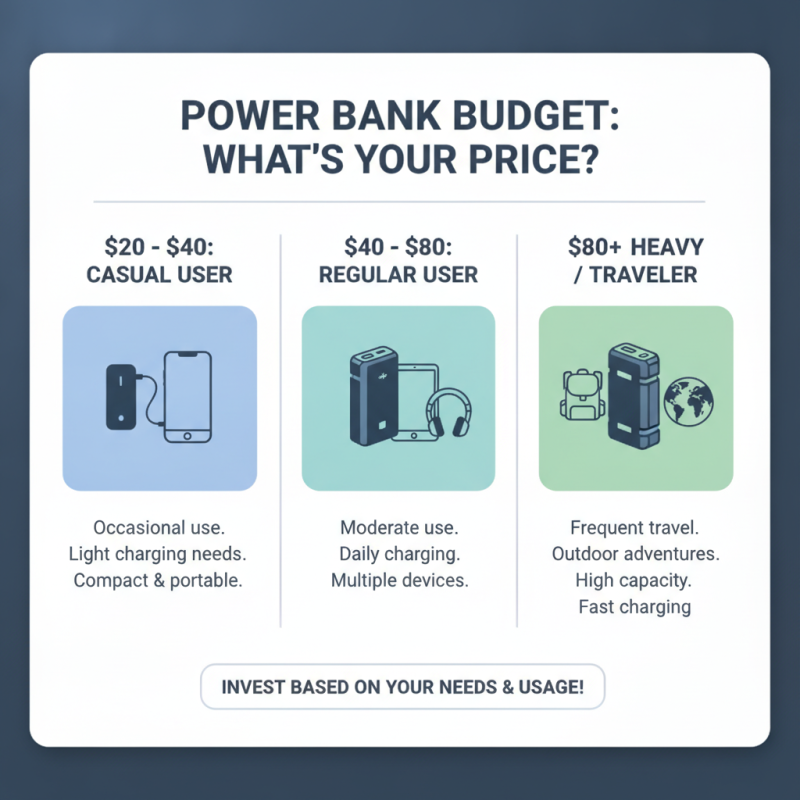
Choosing the right heavy-duty power bank involves careful consideration, especially regarding your budget. It's important to set a limit before you start shopping. Prices can vary significantly, with options ranging from $20 to over $100. Think about how often you’ll use it. A frequent traveler might want to invest more.
While it’s tempting to choose the cheapest option, this may lead to disappointment. Low-cost models might lack durability or capacity. Evaluate your needs carefully. If you often use multiple devices, opting for a higher capacity power bank is wise, even if it costs more. Look for user reviews and expert opinions no matter the brand.
You might find yourself overlooking little details like weight and size. A bulky power bank can be cumbersome. Reflect on how you plan to carry it. Will it fit into your backpack easily? A compact design could be more valuable than an extra-large capacity. Balance your needs with your budget for the best decision.







 Mr. Leaf