How to Choose the Best Portable Mobile Charger for Travel?
In our increasingly connected world, having a reliable Portable Mobile Charger is essential for travelers. According to Statista, over 70% of travelers rely on their smartphones for navigation, communication, and entertainment. However, a dead battery can quickly turn a fun trip into a frustrating experience. The market for portable chargers has grown significantly, with the Global Portable Battery Pack Market expected to reach $9 billion by 2026. This surge reflects the demand for efficient and portable power solutions.
Choosing the best Portable Mobile Charger can be daunting. Many options are available, each with different capacities, sizes, and features. Some fail to deliver the promised battery life, leaving users disappointed. A quality portable charger should offer not just power but also convenience, so it's crucial to evaluate the key features. Weight, charging speed, and compatibility with multiple devices can greatly impact your travel experience.
While it’s easy to get overwhelmed by choices, paying attention to user reviews and industry reports can guide your decision. Many travelers overlook this, leading to frustration when their charger does not perform as expected. It’s important to be informed and to weigh your options carefully. A little research can go a long way in ensuring your devices stay charged and you stay connected during your adventures.
Understanding Your Charging Needs for Travel
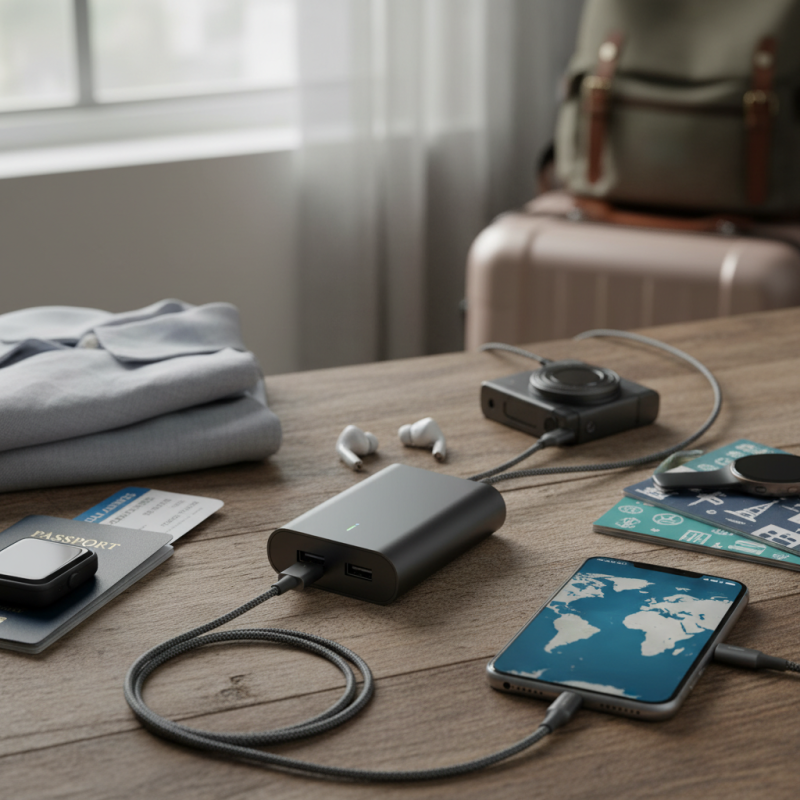
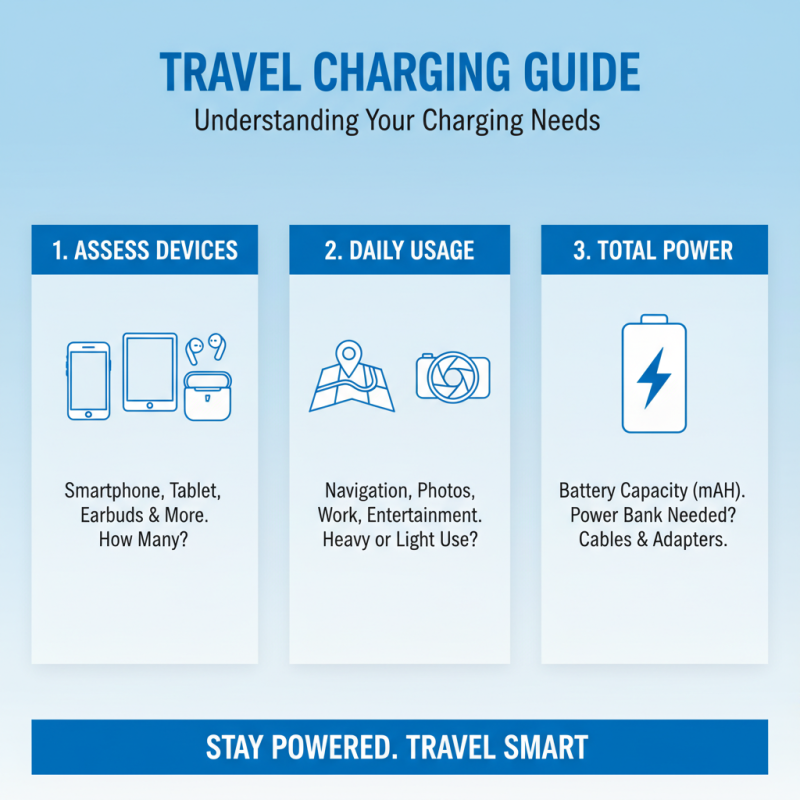
When planning a trip, understanding your charging needs is crucial. Consider how many devices you will bring. A smartphone, tablet, and maybe even a wireless earbud case all need power. Each device has its charging requirements, which can vary significantly. A good rule of thumb is to assess your daily usage patterns. Will you be using your devices heavily for navigation or photography? Knowing this helps determine how much battery capacity you actually need.
Think about the duration of your travels as well. A weekend trip may only require a compact charger, while a week-long adventure demands more power. Check the charger’s output specifications too. A higher output means faster charging, which can save precious time during busy travel schedules. Additionally, reflect on the weight and size of the charger. A portable charger should fit conveniently in your bag without adding too much bulk.
Keep in mind any potential issues. Battery efficiency can decline over time, leading to poorer performance. It’s important to research and read user reviews for insight into reliability. A charger that doesn’t perform well in real-world conditions can leave you stranded. The key is to find a balance between capacity, weight, and durability to ensure you stay powered up on your journey.
Key Features to Look for in Portable Mobile Chargers
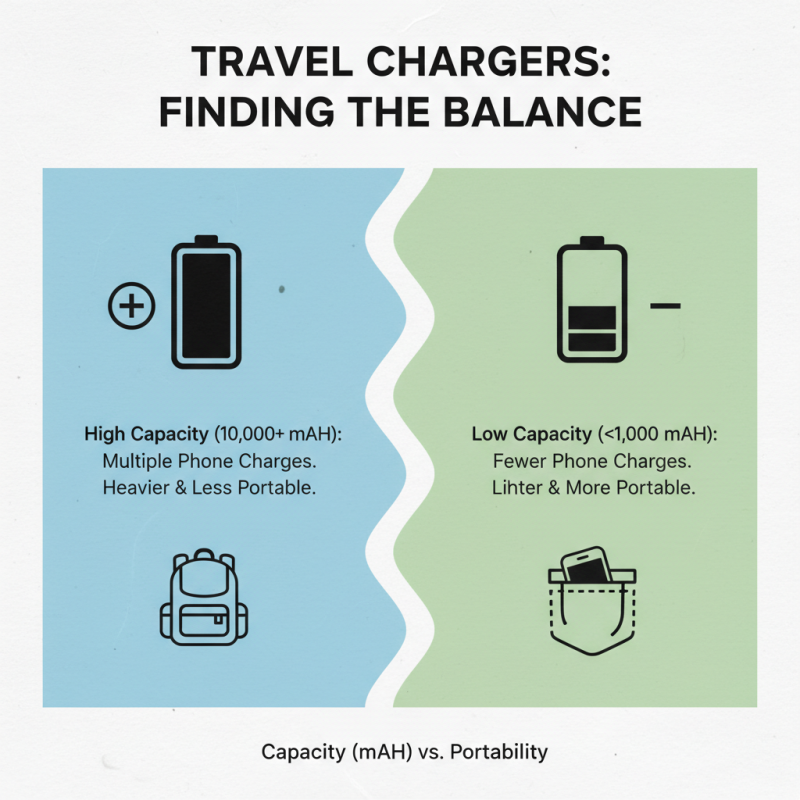
When choosing a portable mobile charger for travel, several key features stand out. The first consideration is capacity, measured in milliamp hours (mAh). A charger with at least 10,000mAh can recharge a smartphone several times. According to industry data, chargers with higher mAh ratings are often preferred by travelers who need reliability. However, larger capacity models can be bulkier, challenging portability.
Another important feature is charging speed. Look for chargers that support fast charging technology, allowing devices to power up quickly. Some models boast 2.1A output, significantly reducing charging time. Additionally, the number of output ports can enhance convenience, enabling multiple devices to charge simultaneously. However, offering too many ports could lead to reduced overall power, which may not meet all user needs.
Weight and size also matter significantly. Travelers often seek lightweight products that fit easily in bags. While small chargers are portable, they may compromise on power capacity. Thus, it’s crucial to find a balance. A recent survey found that 65% of travelers prioritize portability without sacrificing performance. Some users have reported frustration when their compact options fall short during long trips, proving that careful choice is essential for an enjoyable travel experience.
Types of Portable Mobile Chargers: Pros and Cons
When selecting a portable mobile charger, it's essential to understand the types available. Each type carries its own pros and cons. For example, power banks are the most common option. They can charge multiple devices at once. However, they can be bulky and heavy, making them less ideal for travelers who value lightweight gear.
Another option is solar chargers. These are excellent for outdoor enthusiasts. They harness sunlight to charge your devices. Yet, their efficiency can depend on weather conditions. Sometimes, they may not provide enough power for quick charging. It's important to consider these factors based on your travel plans.
Wireless chargers offer convenience. They eliminate the need for cables and can be great for on-the-go situations. But, they typically charge devices more slowly than wired options. They may not be suitable during extended trips without access to a power source. Choosing the right type will depend on your travel habits and device compatibility. Consider what features you truly need.
How to Choose the Best Portable Mobile Charger for Travel? - Types of Portable Mobile Chargers: Pros and Cons
| Type |
Capacity (mAh) |
Weight (grams) |
Charge Speed |
Pros |
Cons |
| Lithium-ion |
5000 - 20000 |
150 - 400 |
Fast |
Lightweight, high capacity |
Degrades over time |
| Solar |
5000 - 15000 |
300 - 600 |
Medium |
Eco-friendly, can charge anywhere |
Slow charging in low light |
| Power Bank |
10000 - 30000 |
200 - 700 |
Fast |
Multiple charges, versatile |
Bulky and heavy |
| Wireless |
3000 - 10000 |
200 - 400 |
Slow to medium |
Convenient, tangle-free |
Less efficient, may require compatible devices |
Compatibility with Devices: Ensuring a Universal Charge
When selecting a portable mobile charger for travel, compatibility is crucial. A universal charger should support various devices. According to industry reports, over 80% of travelers own more than one mobile device. This highlights the need for a charger that can accommodate smartphones, tablets, and more.
Many chargers boast universal compatibility, but not all live up to this claim. Travelers should look for a charger with multiple output ports. This allows charging different devices simultaneously. Choose a device with fast charging capabilities to save time during travel. Reports show that 70% of users prefer chargers that can replenish their devices quickly.
**Tip:** Always check the output specifications. A charger with higher amperage can provide a faster charge.
Another consideration is the charging cables included. Often, chargers come with a standard USB cable only. This may not work for all devices. It's wise to carry additional cables or adapters to avoid disruptions. A well-rounded approach ensures all devices stay charged and ready.
**Tip:** Invest in a multi-cable option for versatility.
By prioritizing compatibility, you make your travel experience smoother. Even though high compatibility options exist, not all perform as expected. Proper research and reviews can guide better choices.
Portable Mobile Charger Compatibility with Devices
Battery Capacity and Output: Finding the Right Balance for Travel
When traveling, a reliable portable mobile charger can be vital. Understanding battery capacity is crucial. Battery capacity is measured in milliamp hours (mAh). A charger with 10,000 mAh can provide multiple charges for most smartphones. However, larger capacities mean heavier devices. It’s essential to find a balance. A heavier charger might not fit easily in your pocket.
Output power also matters. Most modern phones require at least 2.0A output for efficient charging. If a charger has low output, it may take hours to recharge your device. This can be frustrating during travel, especially when you're in a hurry. Some chargers come with features like fast charging. However, this may drain the battery faster. Evaluating how you use your devices while traveling helps.
Be mindful of dimensions too. It’s easy to overlook size and weight when focusing on capacity. Some lightweight options might not provide enough power. There’s a constant trade-off between portability and efficiency. Consider your charging habits and how many devices you’ll carry. Finding the right charger involves personal reflection. What works for one person may not work for another.





 Mr. Leaf