How to Choose the Best Portable Mobile Charger for Your Needs?
In today’s fast-paced world, having a reliable Portable Mobile Charger is essential. According to a recent industry report by Statista, the global portable charger market is projected to reach $25 billion by 2027. This surge is driven by the increasing reliance on mobile devices. Industry expert Sarah Johnson emphasizes this point, stating, “A quality Portable Mobile Charger can be a lifesaver in our always-connected lifestyle.”
When choosing a Portable Mobile Charger, several factors must be considered. Battery capacity, portability, and charging speed are crucial. Many consumers overlook the importance of these features, often leading to dissatisfaction. For example, a charger with insufficient capacity may not last through a busy day.
Additionally, while some users prioritize design, functionality should come first. It’s not uncommon for a beautifully designed charger to fail in performance. Ultimately, finding the right Portable Mobile Charger requires balancing aesthetics with essential features. It’s worth taking the time to evaluate options carefully.
Understanding Your Device's Power Requirements
Understanding your device's power requirements is crucial when choosing a portable mobile charger. Different devices consume varying amounts of energy. For example, smartphones typically require between 5W to 20W for efficient charging. Tablets might need 10W to 30W, depending on size and features. Knowing the wattage helps you select a charger that provides optimal power.
A report from the International Data Corporation states that nearly 50% of mobile users experience battery anxiety. This drives the need for a suitable portable charger. If a charger delivers insufficient power, users face slow charging times. Conversely, overwhelming power can lead to device overheating. These inconsistencies create risks and affect device longevity.
Consideration should also be given to the number of devices you frequently charge. Many portable chargers offer multiple USB ports. However, sharing power between devices can slow down the charging process. This can be frustrating during urgent situations. Always check the total output rating of the charger to ensure it meets your needs. Think carefully about your device usage patterns. The right choice may not always be the one with the highest mAh rating.
Evaluating Charging Speed and Output Options
When choosing a portable mobile charger, the charging speed is critical. A charger with fast output can significantly reduce downtime. Look for options that support quick-charge technologies. These chargers will refill your device faster, especially during busy days.
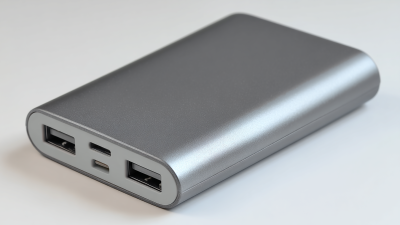
Consider your output options carefully. A portable charger may offer only one USB port. This can be limiting if you have multiple devices. Some chargers come with multiple output options. This allows you to charge a phone and a tablet simultaneously. Yet, be cautious. The total output may decrease when using multiple ports.
Keeping an eye on the milliampere-hour (mAh) rating helps too. Higher mAh means more power. However, think about the size and weight you can carry. A balance is needed. A compact charger may not have the highest capacity. Reflect on your specific needs and usage habits. This will lead you toward the right choice.
How to Choose the Best Portable Mobile Charger for Your Needs? - Evaluating Charging Speed and Output Options
| Model |
Battery Capacity (mAh) |
Output Power (W) |
Charging Speed (Fast Charge) |
Ports Available |
Weight (grams) |
| Model A |
10000 |
18 |
Yes |
2 USB-A |
200 |
| Model B |
20000 |
22 |
Yes |
1 USB-C, 1 USB-A |
400 |
| Model C |
5000 |
10 |
No |
1 USB-A |
150 |
| Model D |
15000 |
24 |
Yes |
2 USB-C |
350 |
Considering Battery Capacity and Size for Portability
When choosing a portable mobile charger, battery capacity and size are key. A high-capacity battery can recharge your devices multiple times. But a larger battery means more weight. If you're always on the go, consider how often you will need a charge. A lightweight option might be preferable, even if it has a lower capacity. Sometimes, smaller chargers are underpowered. They'll only give you a partial charge, leaving you frustrated.
Battery size directly influences portability. Compact chargers fit easily in pockets and bags. They won't weigh you down during travels. A good rule is to check the mAh rating. Aim for a balance between capacity and size. However, not every brand displays this clearly. Some may mislead you about their products’ efficiency. Always read reviews; real-life experiences can highlight issues you may overlook.
Think about your unique usage. Are you frequently indoors or always outside? This choice affects your charger needs. If you often find yourself without a plug, a larger capacity might become essential. Yet, carrying a heavy charger can be annoying. Reflecting on what you truly need will guide you to the best decision.
Exploring Additional Features and Compatibility
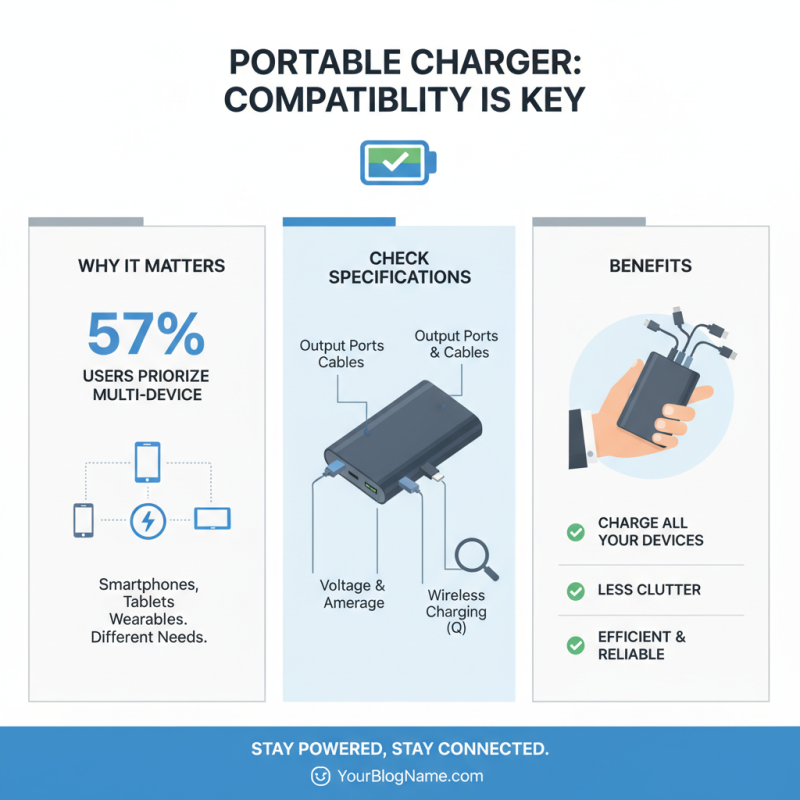
When selecting a portable mobile charger, compatibility is crucial. Many chargers support multiple devices, but not all are effective. Research shows that 57% of users find multi-device compatibility to be a top priority. You might own smartphones, tablets, or wearables. Each device may have different charging requirements. Check the charger's specifications to ensure it meets your devices' needs.
Additional features can enhance the user experience. Some chargers come with fast charging capabilities. According to industry data, fast charging can reduce charging time by up to 75%. This is significant for busy lifestyles. Other useful features include built-in cables and LED indicators. Built-in cables prevent the hassle of carrying extra cords. LED indicators show battery status, helping you plan ahead. Not every portable charger offers these perks, so choose wisely.
Not all chargers perform equally well. Some may charge slowly, leaving you frustrated. Others might heat up during use, which raises safety concerns. User reviews often point this out. Reading them can provide insights into performance. Ultimately, it’s essential to evaluate your personal needs and preferences. The right choice can shape your charging experience dramatically.
Assessing Price and Warranty Options for Value
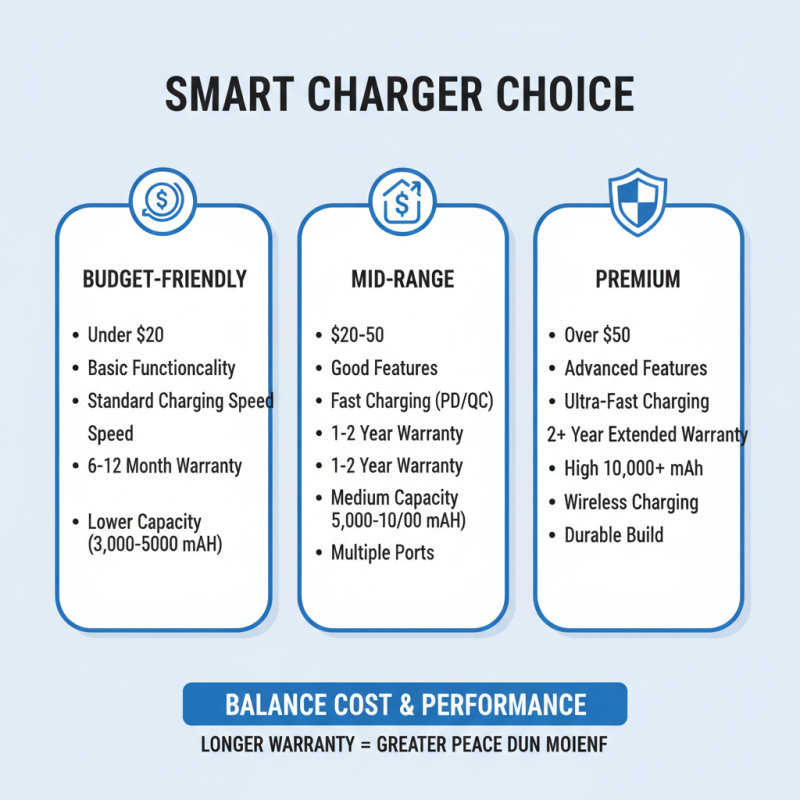
When choosing a portable mobile charger, price and warranty options can significantly affect your decision. Finding the balance between cost and functionality is key. Some chargers are inexpensive but may lack important features, like fast charging or enough capacity. Explore options in different price ranges to see what fits your budget. Spending a bit more might mean better performance.
Warranty options also play a crucial role. A solid warranty can save you money in the long run. It provides reassurance that the product will last. Many devices offer limited warranties, but the term length varies. Some may cover only a few months. Short warranties can make you question product reliability. Take the time to read the fine print before purchasing.
Consider the potential need for replacements. If you invest in a charger without a good warranty, you might find yourself disappointed. You'll want to think about performance, capacity, and long-term value. Research can take time, but it’s worth it. A well-chosen charger will keep your devices powered without ongoing worry.





 Mr. Leaf