How to Choose the Best Laptop Power Bank for Your Needs?
Choosing the right Laptop Power Bank can be daunting. With so many options available, it’s essential to consider your specific needs. Tom Harris, a leading expert in portable power solutions, once stated, “A good power bank can make all the difference when you need reliable energy on the go.” His insight highlights the importance of understanding what makes a power bank suitable for your laptop.
When selecting a Laptop Power Bank, power capacity is crucial. Look for one with enough watt-hours to charge your laptop effectively. Weight and size also matter. A bulky power bank might be inconvenient. Meanwhile, additional features such as fast charging and multiple ports can enhance usability. Remember, not all power banks are compatible with every laptop model. Checking compatibility is vital before making a purchase.
Lastly, think about your usage patterns. Are you a frequent traveler or a casual user? This consideration will guide your decision. A reliable Laptop Power Bank is an investment. Make sure it fits your lifestyle and charging needs.
Understanding Laptop Power Bank Specifications and Compatibility
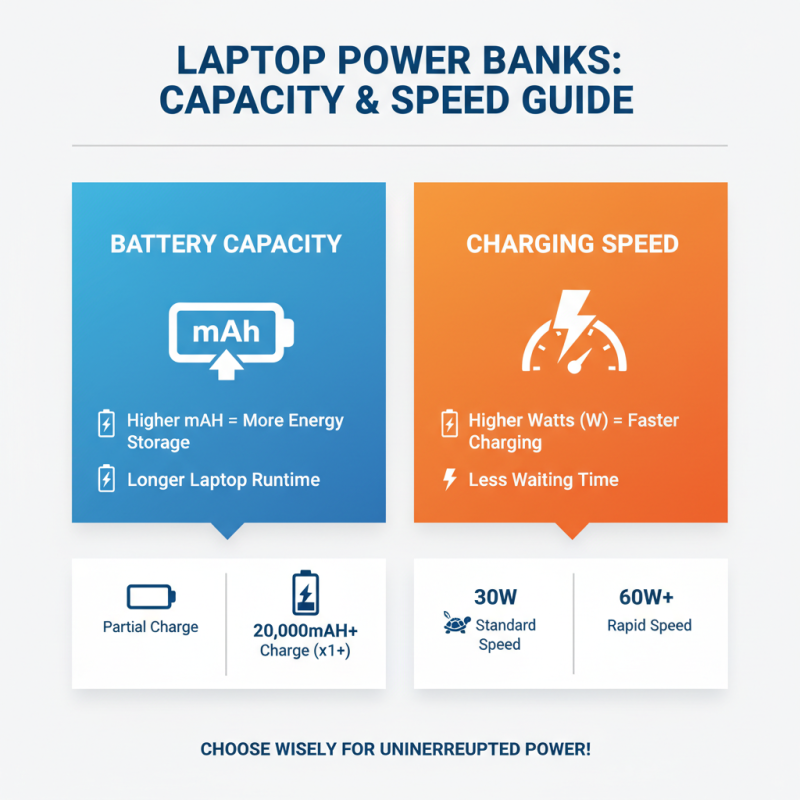
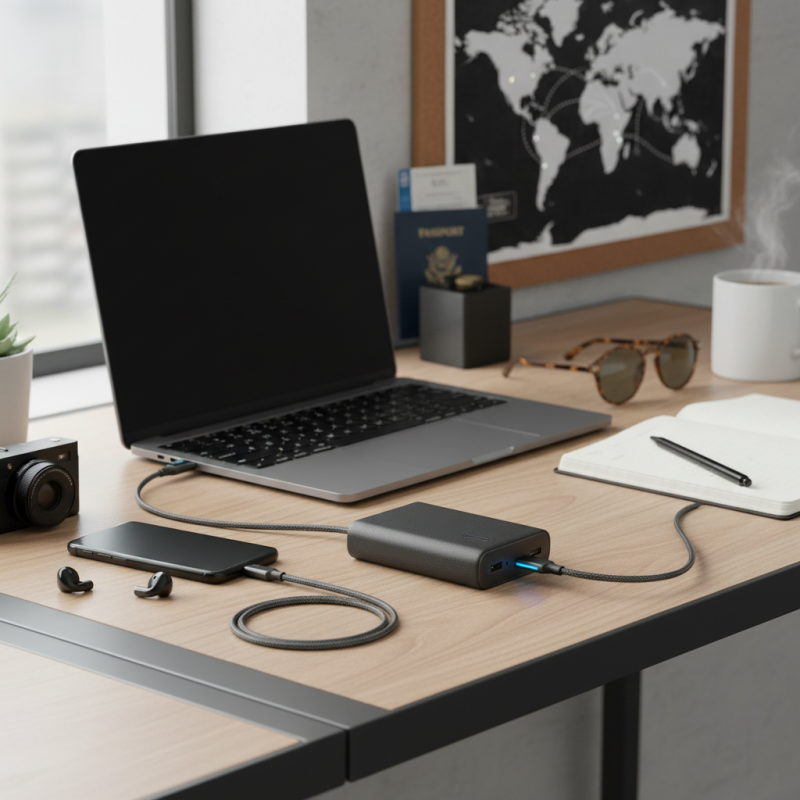
When selecting a laptop power bank, understanding specifications is vital. Key features include capacity measured in milliamp hours (mAh). A higher mAh rating indicates longer battery life. For instance, a power bank with 20,000 mAh can charge a typical laptop more than once. However, do check the power output. Most laptops need between 30W to 100W to charge efficiently.
Compatibility is equally crucial. Different laptop brands use varying charging protocols. Ensure the power bank supports your laptop’s input voltage. Investigate if your laptop requires USB-C, which is becoming a standard, but not universal. Some older models may still need standard DC plugs. It’s frustrating to buy a great power bank, only to find it doesn’t work with your device.
Testing the power bank with your laptop can save time and disappointment. Check for overheating or insufficient charge times. Look for customer reviews about real-world usage. While a 100W power bank sounds appealing, it may not always perform as expected. Prioritize what works best for your needs.
Choosing the Best Laptop Power Bank: Capacity vs. Output
Assessing Your Power Requirements for Laptop Usage
When considering a laptop power bank, assessing your power requirements is crucial. Different laptops have varied power needs, influenced by their specifications and usage patterns. A basic laptop may need around 30 watts, while gaming or high-performance models might require 60 watts or more. Understanding your device’s specifications can help you select a suitable power bank.
Take a moment to think about your typical usage. Are you often on the go, or do you primarily work from home? Portable power banks should be lightweight and compact for easy transport. However, they should also hold enough charge to keep your laptop running through the day. A power bank that can fully recharge your laptop at least once is ideal. Balance size and capacity wisely.
Remember that not all power banks are created equal. Pay attention to their output voltage and port compatibility. Some may not provide sufficient power for certain models. Reading user reviews can help identify reliability and efficiency. Sometimes, the perfect match may require some trial and error to find what truly meets your needs.
Evaluating Portability and Design Features of Power Banks
When selecting a laptop power bank, portability is crucial. Recent reports show that nearly 70% of users prioritize weight and size in their purchasing decisions. A good power bank should fit easily in your backpack or briefcase. Weight plays a significant role. A model weighing over one pound may be cumbersome for daily commuters.
Design features further enhance usability. Look for power banks with multiple output ports. USB-C and USB-A ports provide flexibility. A compact design with a smooth finish is easy to handle. Also, consider the power bank’s capacity. A capacity of 20,000mAh can typically provide two full charges for most laptops. This level of power makes it suitable for long trips or workdays.
However, a large capacity can mean a heavier power bank. Balance is key in achieving the ideal combination of portability and power. Users often overlook the importance of design. A power bank that is difficult to grip can lead to frustrating experiences. Prioritize ease of handling to ensure reliable performance on the go.
Comparing Battery Capacity and Charging Speed Options
When choosing a laptop power bank, battery capacity and charging speed are crucial. Battery capacity is measured in milliampere-hours (mAh). A higher mAh means your power bank can store more energy, resulting in longer charging times between sessions. For example, a 20,000mAh bank can recharge most laptops at least once, while a smaller option may only provide partial power.
Charging speed is another factor. Look for power banks that support fast charging technology. These can deliver higher power output, allowing your laptop to charge quickly. A typical USB-C power bank can provide 30W to 100W output depending on the model. It’s wise to check the input requirements of your laptop. Matching the output to your needs is essential for effective charging.
Tips: Before purchase, assess your usage patterns. If you travel frequently, opt for a more compact design with higher capacity. Always read reviews to gauge reliability and performance. Finally, don't overlook the importance of safety features to protect your device during charging.
Exploring Additional Features and Price Considerations
When selecting a laptop power bank, understanding additional features is crucial. Look for essential attributes like size, weight, and capacity.
A compact power bank is easier to carry. High-capacity options may provide multiple charges but can be bulkier. Balance portability with your usage needs.
Price is often a significant factor. Higher prices can indicate better quality, but it isn’t always the case. Some models offer excellent efficiency without breaking the bank. Review user reviews and ratings to gauge reliability. This gives insight into long-term performance and potential flaws. Price can also reflect brand trust. However, not all renowned brands guarantee better results.
Be cautious about extra features. Fast charging can be a game changer for busy individuals, yet it may affect the battery’s lifespan. USB-C connectivity is becoming standard but check compatibility with your devices. Reflect on what truly meets your needs. Asking questions about your specific usage helps. You may find that a simple, reliable power bank serves you better than a feature-rich one that complicates your life.



 Mr. Leaf