Why Choose a Mobile Power Inverter for Your Devices?
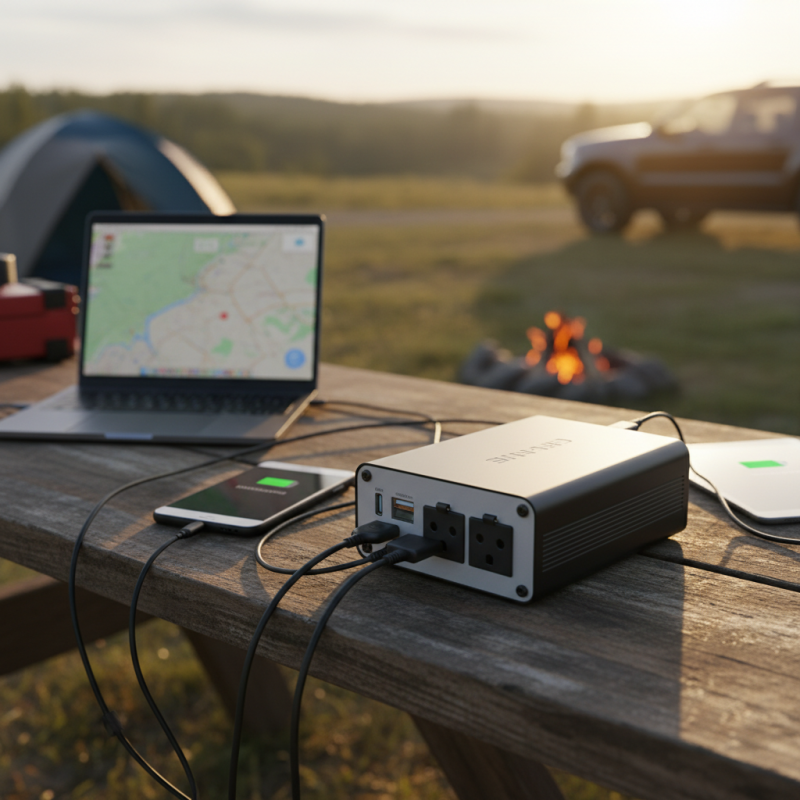
In an increasingly mobile world, staying powered up is vital. A Mobile Power Inverter can transform this need into reality. It allows users to charge devices on the go, whether on a road trip or in emergency situations. Imagine being able to power your laptop while camping or ensuring your phone is charged during a long drive.
Consider the convenience of having access to electricity wherever you are. A Mobile Power Inverter can provide this freedom. It’s not just about convenience; it's also about safety. Charging devices while on the move reduces risks associated with drained electronics. However, it’s important to note that not all inverters are created equal.
Some may undervalue the power demands of their devices. This can lead to frustrating moments when a device won’t charge. It's crucial to choose the right Mobile Power Inverter for your specific needs. Think about the devices you want to charge and their power requirements. Sometimes, it’s easy to overlook these details, but they can greatly affect performance.
Benefits of Using a Mobile Power Inverter for Devices
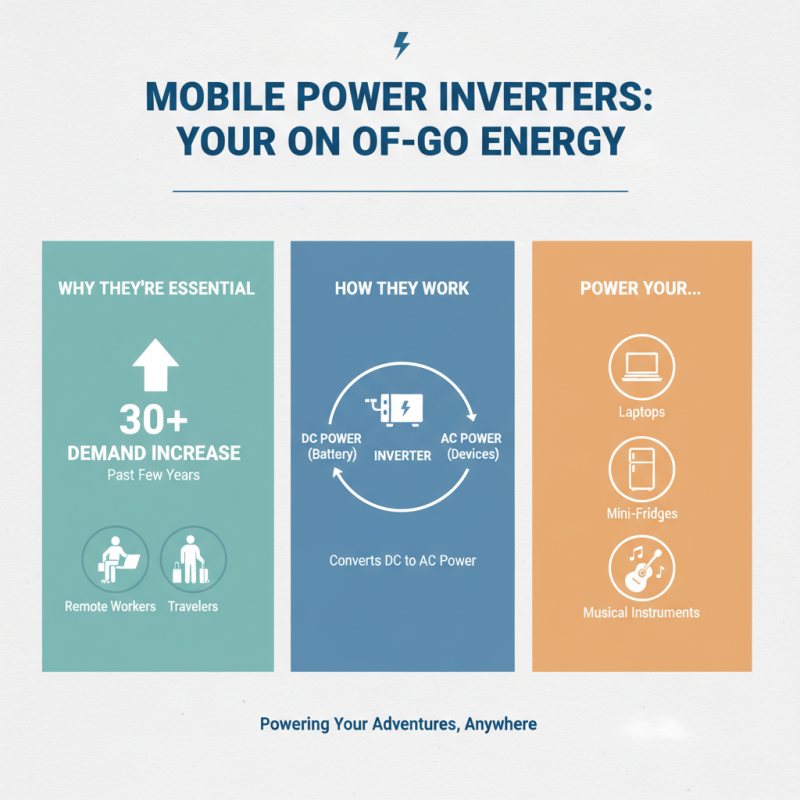
When it comes to powering devices on the go, a mobile power inverter offers notable benefits. Reports indicate that the demand for portable power solutions has soared by over 30% in the past few years. This trend showcases how essential reliable power sources have become, especially for remote workers and travelers. A mobile power inverter converts DC power to AC power, making it possible to run laptops, mini-fridges, and musical instruments almost anywhere.
One significant advantage of using a mobile power inverter is versatility. Many models can charge multiple devices simultaneously, with some offering USB ports alongside standard electrical outlets. Research suggests that over 58% of users rely on such features while camping or while on road trips. Portability is another factor; a lightweight inverter can easily fit into a backpack. Still, not all inverters perform equally. Some may overheat or strain under heavy loads, which calls for careful selection based on power requirements.
Safety is paramount when using inverters. Studies indicate that improper use can lead to short circuits or equipment failure. Users should always check the inverter's capacity against their devices’ needs. While mobile power inverters are invaluable, they also require responsible use. Understanding the limitations and selecting the right model are crucial steps to ensuring a seamless power experience.
Types of Mobile Power Inverters Available on the Market
When considering mobile power inverters, it's crucial to understand the types available.
There are several varieties of inverters, each designed for different needs.
Modified sine wave inverters are common and cost-effective.
They are perfect for small electronics. However, they may not work well with sensitive devices.
Pure sine wave inverters are another option.
They produce a smooth power output and are ideal for powering laptops or medical equipment.
Their downside? They tend to be pricier than modified sine wave inverters.
If you plan to power high-end devices, investing in a pure sine wave model could save you from potential issues.
Tips:
- Always check the wattage before purchasing.
- Choose an inverter with at least 20% extra capacity. This safety margin allows for unexpected power needs.
- Also, consider the inverter's size. A compact model is easy to transport, but ensure it doesn't compromise on performance.
- Think about where you will use it. Whether in a car or on a camping trip, choose accordingly.
Key Features to Consider When Choosing a Mobile Power Inverter
When selecting a mobile power inverter, certain features stand out. The wattage capacity is crucial. It determines how much power can be drawn for your devices. A higher capacity allows you to charge multiple items at once. However, higher wattage often comes with a trade-off in size and weight. Consider your needs carefully.
Portability is another key feature. Look for a lightweight and compact design if you plan to travel. Some inverters even come with convenient carrying handles. The input and output options matter, too. Multiple outlets and USB ports provide flexibility. Yet, too many can complicate usage and setup.
Safety features should not be overlooked. Overload protection is essential. It prevents damage to both the inverter and your devices. Some inverters have cooling fans to manage heat. That can be a game changer during long trips. Ensure that you choose an inverter that fits your lifestyle. It’s not just about power; it's about usability and safety.
Why Choose a Mobile Power Inverter for Your Devices? - Key Features to Consider When Choosing a Mobile Power Inverter
| Feature |
Description |
Importance |
| Power Output |
Determines the total power (in watts) the inverter can provide for devices. |
Essential for ensuring all your devices can be powered simultaneously. |
| Portability |
Weight and size that influence ease of transport. |
Crucial for outdoor activities and travel. |
| Number of Outlets |
Indicates how many devices can be connected at once. |
Important for versatility and for using multiple devices. |
| Safety Features |
Includes protections against over-voltage, overloading, and short-circuiting. |
Critical for preventing damage to devices and ensuring user safety. |
| Input Voltage Range |
Refers to the range of input voltages the inverter can accept. |
Important for compatibility with different power sources (e.g., car batteries, solar panels). |
| Output Waveform |
Describes whether the inverter provides pure sine wave or modified sine wave output. |
Pure sine wave is better for sensitive electronics. |
Applications of Mobile Power Inverters in Everyday Life
Mobile power inverters are gaining popularity for various everyday uses. These devices convert DC power from batteries into AC power, enabling us to use household appliances on the go. Research indicates that the mobile power inverter market is expected to reach $7 billion by 2026, driven by a surge in outdoor activities and remote work.
In our daily lives, mobile power inverters serve crucial roles. Campers often rely on them for charging electronics during trips. Users can power everything from laptops to small refrigerators, enhancing comfort in the great outdoors. Moreover, during emergencies, inverters can keep essential devices running, like medical equipment. This versatility makes them invaluable.
Tip: When choosing an inverter, consider wattage requirements. Ensure the inverter can handle the combined wattage of all devices you plan to use.
Another common application is for road trips. Inverters provide energy for GPS systems, entertainment devices, and even coffee makers. However, it's essential to monitor battery levels. Over-reliance can lead to power shortages when least expected.
Tip: Test your inverter with smaller devices first. This helps you gauge its performance before relying on it for larger appliances.
Mobile power inverters are practical tools for enhancing modern living, yet they require careful consideration to maximize their benefits. The potential pitfalls should always be acknowledged, and preparation is key.
Safety Considerations for Using Mobile Power Inverters
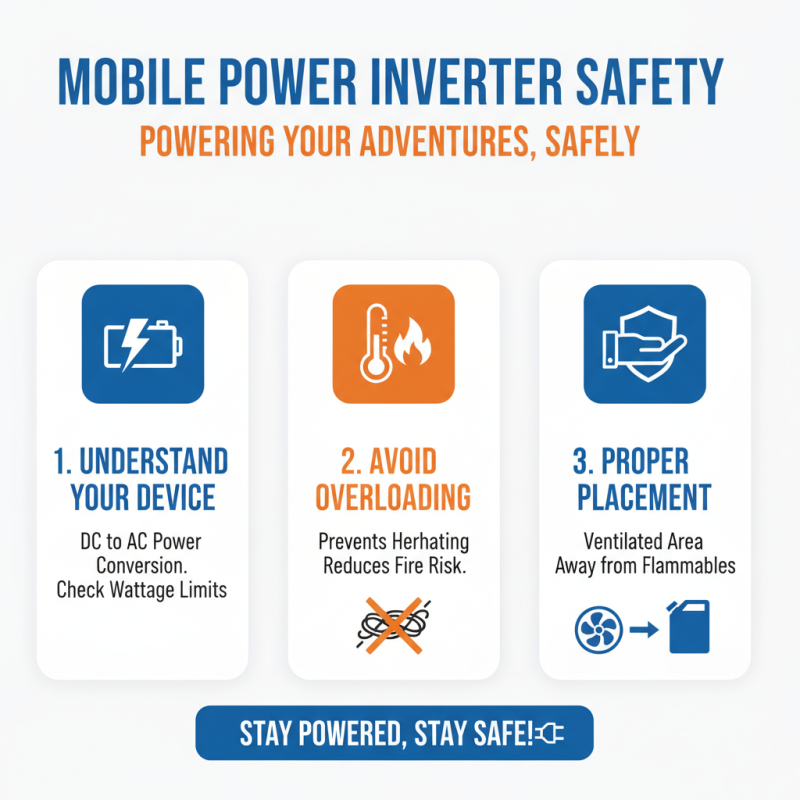
When using a mobile power inverter, safety must be a priority. These devices convert DC power into AC power, enabling you to charge various electronics. However, improper use can lead to accidents or even injuries. For instance, overloading the inverter can cause it to overheat. This not only risks damaging the inverter but could also ignite nearby materials.
Make sure to check the power rating of your devices. Each inverter has a maximum output limit. Exceeding this limit is a common mistake. Using devices that exceed the power capacity can lead to device failures as well. Moreover, always ensure proper ventilation while using the inverter. Heat buildup is a serious concern. A well-ventilated area can mitigate this risk effectively.
Connections are another area where safety is vital. Loose connections can create sparks and pose fire risks. Ensuring that your devices are securely connected is essential. Lastly, remember to regularly inspect your inverter for signs of wear or damage. Even minor issues can escalate if ignored. Keep your inverter in good condition for optimal safety.






 Mr. Leaf