How to Choose the Best Portable Power Bank for Your Needs?
Choosing the right Portable Power Bank can be daunting. With so many options, how do you know what suits you best? The market is flooded with various brands and specs. A few key aspects can guide your decision.
Consider your devices. Different gadgets require different power capacities. Larger devices, like tablets, may need power banks with higher mAh ratings. Think about your daily activities. If you travel often, a lightweight and compact design might be essential. Balance size with power output.
Price is another factor to consider. Sometimes, a cheaper Portable Power Bank lacks quality and performance. It’s important to invest in a reliable brand. Reflect on your needs and usage habits before making a choice. With careful thought, you can find the perfect power bank to keep your devices charged and ready.
Understanding Portable Power Banks: What They Are and What They Do
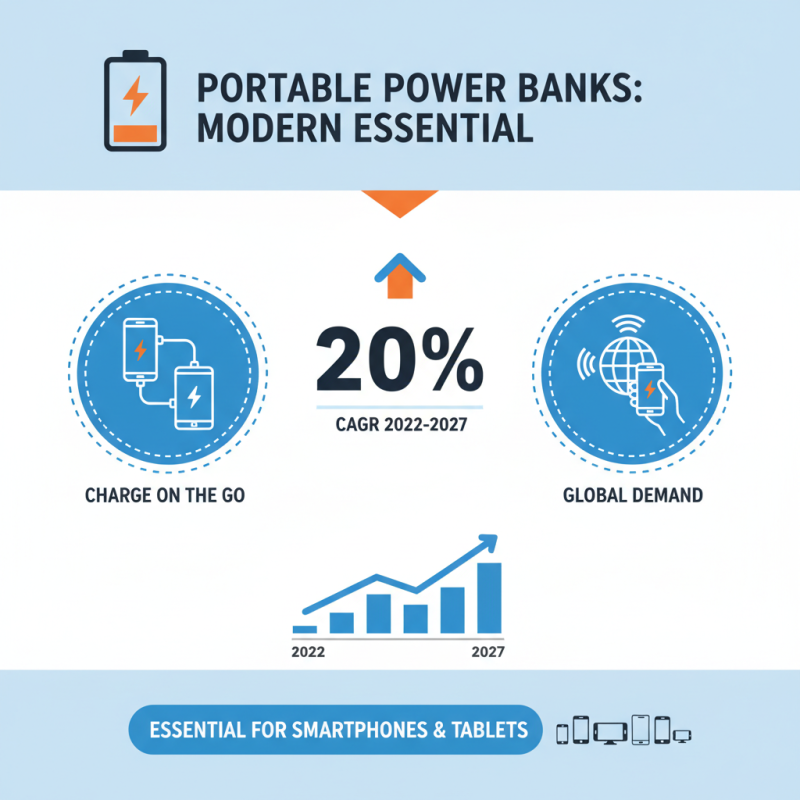
Portable power banks have become essential for modern living. They allow users to charge devices on the go. According to recent industry reports, the global portable power bank market is expected to grow at a CAGR of 20% from 2022 to 2027. This indicates a strong demand for efficient charging solutions as more people rely on smartphones and tablets daily.
Understanding the specifications of power banks is crucial. Capacity is measured in milliampere-hours (mAh). A typical smartphone battery has about 3000-4000 mAh. Therefore, a power bank with at least 10000 mAh can charge most smartphones two to three times. Furthermore, some power banks offer fast charging, allowing devices to charge up to 80% in just 30 minutes. However, not all power banks deliver consistent performance, which can be frustrating.
Tips: Choose a power bank based on your usage. If you travel often, a lightweight option is vital. Pay attention to output ports; a dual-output can charge multiple devices at once. Research user reviews to find real-world performance insights. Quality varies widely, and being informed is key to avoiding disappointment.
Key Features to Consider When Choosing a Power Bank
When choosing a portable power bank, several key features should be at the forefront of your decision. Capacity is crucial. A higher mAh rating means more power. However, not everyone needs 30,000 mAh. It might be excessive for a day trip. Think about your daily usage. Spend a moment assessing how often you charge your devices. This helps to avoid carrying unnecessary weight.
Portability also matters. A lightweight, compact design can make a difference. Consider the size of your bag. Some power banks are too bulky for pockets. Look for slim options that fit easily. Charging speed is another vital aspect. A power bank with fast charging capability can save valuable time. However, fast charging can generate heat. Make sure the device can handle it without overheating.
Lastly, think about the number of ports. If you have multiple devices, a power bank with several ports is useful. Yet, consider if you will truly use all of them. Often, simple designs offer what you need. Choosing a power bank is about understanding your lifestyle. Reflect on your habits before making that purchase.
Comparison of Key Features in Portable Power Banks
Identifying Your Power Needs: Capacity, Output, and Charging Speed
Choosing the right portable power bank hinges on understanding your specific power needs. Start by considering capacity, usually measured in milliampere-hours (mAh). A higher mAh rating means more charge available for your devices. For example, a 10,000 mAh power bank might charge a smartphone two to three times, while a 20,000 mAh option can power multiple devices.
Next, think about output. This determines how quickly the power bank can charge your device. Look for models with at least 2.1A output for fast charging. However, be cautious—some devices may require specialized outputs to charge efficiently. You might find a power bank that looks perfect, but if it can't meet your device's charging needs, it could fall short.
Lastly, charging speed is crucial. Some power banks allow passthrough charging, letting you charge the bank and your device simultaneously. However, this may not always be the fastest route. Many times, I've ended up with a power bank that seemed efficient, only to realize it took ages to recharge itself. Reflecting on these factors can help you find a balance that truly meets your needs.
How to Choose the Best Portable Power Bank for Your Needs?
| Power Bank Model |
Capacity (mAh) |
Output (W) |
Charging Speed (Fast Charge) |
Number of Ports |
| Power Bank A |
10000 |
18 |
Yes |
2 |
| Power Bank B |
15000 |
22 |
Yes |
3 |
| Power Bank C |
20000 |
30 |
No |
2 |
| Power Bank D |
25000 |
36 |
Yes |
4 |
| Power Bank E |
30000 |
45 |
Yes |
5 |
Portability and Design: Size, Weight, and User-Friendliness
When selecting a portable power bank, two key factors are size and weight. According to a market report by Allied Market Research, the demand for compact power banks is steadily increasing. A majority of consumers prioritize portability. Many users prefer a device weighing less than 200 grams. This weight range allows for easy transport in bags or pockets.
The design should also enhance user-friendliness. A sleek profile with rounded edges feels comfortable in hand. LCD screens showing battery levels are becoming standard. Research shows that 45% of users appreciate visual indicators for remaining power. However, some designs may lack sufficient port options. This can lead to frustration, especially if you need to charge multiple devices.
In terms of size, a power bank with a capacity of 10,000mAh is often ideal for daily use. Yet, many people overlook how size influences portability. Consider how a bulkier device could hinder mobility. Balancing capacity with dimensions is essential. Many users need easy access and efficient charging. Evaluating these aspects can significantly impact your satisfaction.
Budget Considerations: Finding the Right Balance Between Quality and Price
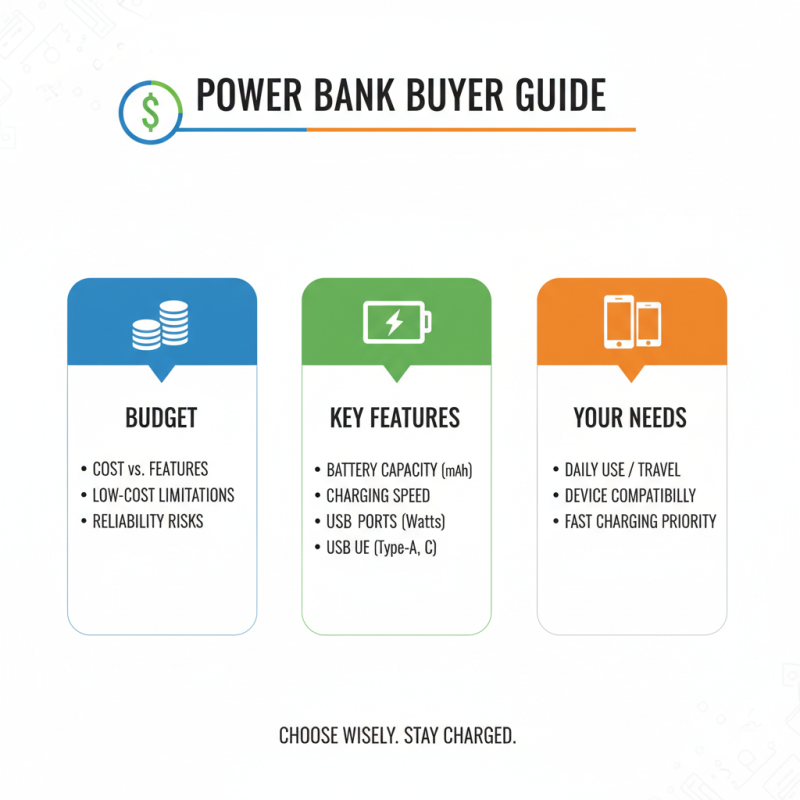
When it comes to choosing a portable power bank, budget plays a huge role. It's important to consider what you really need. A low-cost option might lack essential features. Always think about battery capacity, charging speed, and USB ports. These factors vary widely among different models. You might find what seems like a bargain, but lacks reliability.
Finding a balance between quality and price can be tricky. Sometimes, spending a little more pays off in the long run. A more expensive power bank often offers better durability. Look out for warranties, as these indicate the manufacturer’s confidence in their product. A portable power bank that breaks down after a few uses is not worth the savings.
You may also want to read user reviews. They provide insight into real-world performance. Ask yourself: Can you trust the cheaper option? Will it fulfill your needs? Reflecting on these questions can help clarify your decision. Remember, investing in a quality power bank can make your trips more enjoyable and stress-free.



 Mr. Leaf