2026 How to Choose the Best Lightweight Power Bank?
In today's fast-paced world, staying connected is essential. A Lightweight Power Bank has become an indispensable tool for many. Professor Emily Carter, a leading expert in portable energy solutions, states, “Choosing the right power bank is crucial for convenience on the go.” Her insight highlights the importance of thoughtful selection.
When considering a Lightweight Power Bank, weight and capacity are key factors. A power bank that is too heavy can be a burden. Ideally, it should fit comfortably in a pocket or handbag. Additionally, not all lightweight models provide sufficient charging capacity. This often leads to frustrating moments when your device runs out of battery too soon.
Moreover, some consumers overlook compatibility with their devices. An incompatible power bank can lead to inefficiencies. It raises questions about the utility of the purchase. Therefore, thorough research and consideration are necessary. Engaging with expert opinions and user experiences can greatly enhance your decision-making process.
Understanding Power Bank Specifications and Features
When choosing a lightweight power bank, understanding specifications is crucial.
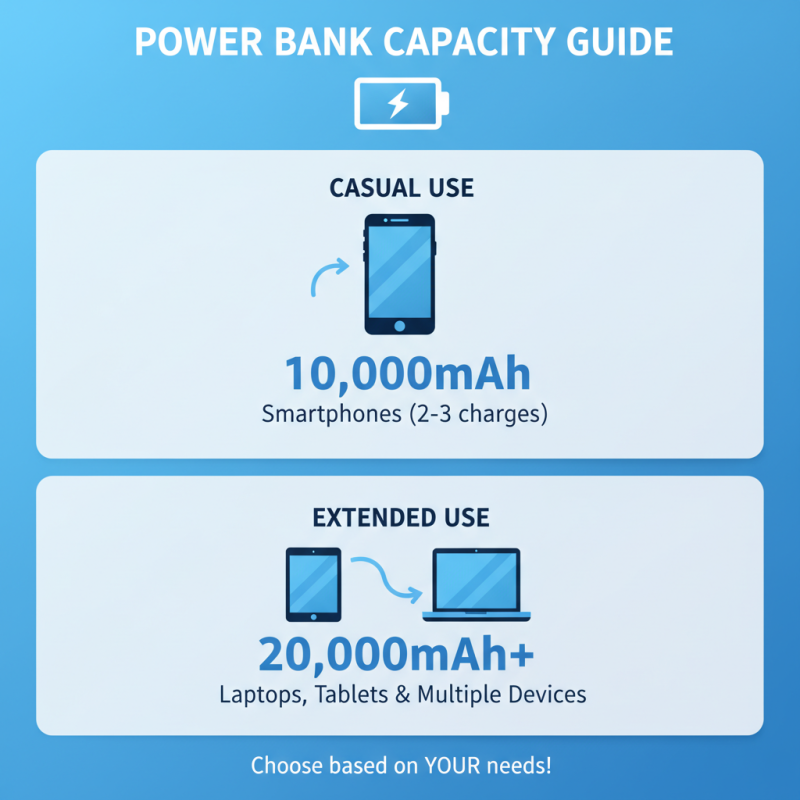
Consider capacity measured in milliampere-hours (mAh). Higher mAh means more power. Look for a capacity that matches your device needs. For example, a 10,000 mAh power bank generally charges most smartphones two to three times.
This could vary based on usage.
Charging speed is another important factor. Check the output current rating in amperes. A higher output means faster charging. Many power banks now offer quick charge capabilities. Look for those with at least 2.1A output for efficient charging.
Tips: Always check the input and output specifications. A power bank with both is more versatile. Avoid power banks that weigh too much. Aim for a balance between capacity and portability. Durability matters too, especially if you travel often. Look for features like shock resistance or waterproofing.
Keep in mind that some power banks can be tricky. Their actual capacity may differ from what’s advertised. Many brands exaggerate mAh ratings. Research and read reviews before purchasing. Warning: not all power banks are created equal.
Evaluating Capacity: How Much Power Do You Really Need?
Choosing the right power bank often starts with understanding your capacity needs. How much power do you really need for your devices? The answer varies. If you only charge a phone, a power bank with about 10,000mAh might suffice. This provides several charges for most smartphones.
For frequent travelers or heavy users, consider a higher capacity. A 20,000mAh power bank can charge multiple devices multiple times. Think about the devices you carry. Laptops require even more power. In this case, look for power banks with USB-C output for faster charging.
Tips: Assess how often you use your devices away from home. Calculate how much battery life you need daily. This helps you avoid buying a power bank that is too small. Remember, a lighter power bank may sacrifice capacity, leading to disappointment later on. Balance is key. Keep in mind that larger capacity banks can be bulky. Choose wisely to match your lifestyle.
Assessing Size and Weight for Portability
When choosing a lightweight power bank, size and weight are crucial for portability. A compact device fits easily into a pocket or bag. It’s essential to balance capacity and portability. A power bank with too much capacity can lead to extra weight. This can make carrying it around cumbersome.
Consider the physical dimensions. Look for units that are slim and lightweight. A good guideline is to aim for a weight under 300 grams. This ensures that it won't be a burden during daily activities or travel. Tighter designs often lead to higher efficiency too, allowing for faster roams to charge your devices.
**Tips**: Always check the power bank's dimensions before purchasing. Does it match your lifestyle? For daily commutes, a small, lightweight option is better. However, if traveling long distances, consider slightly larger options for more power. Think critically about your use case. Don't let a heavy power bank weigh you down.
2026 Lightweight Power Bank Comparison
Exploring Charging Speed and Output Options
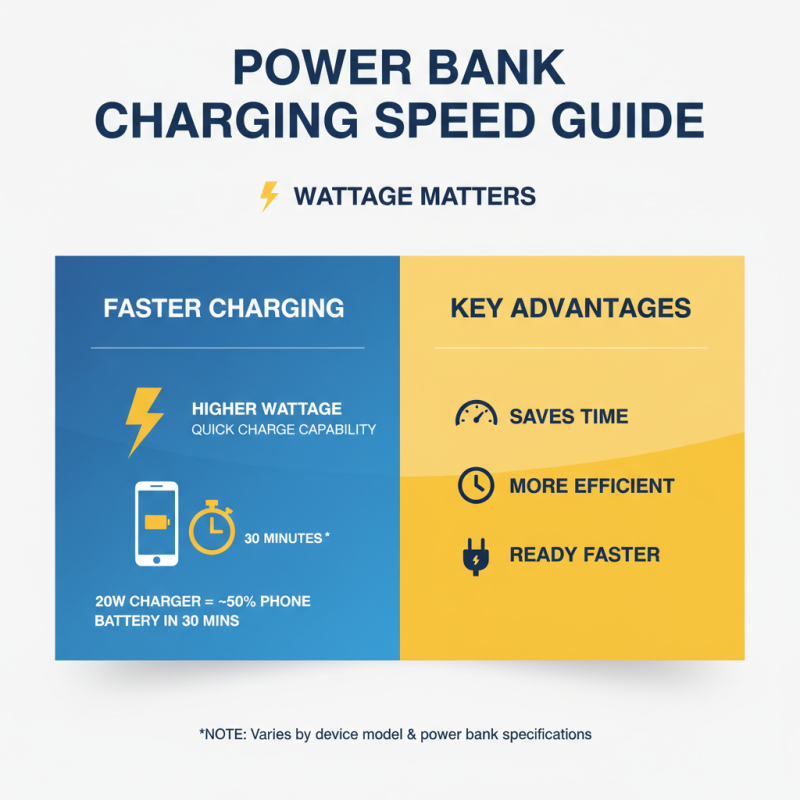
When choosing a lightweight power bank, charging speed is crucial. A power bank with higher wattage can charge your devices faster. Some offer quick charge capabilities, which is a notable advantage. A 20W charger can bring most phones to 50% in about 30 minutes. It’s impressive but not always the case for all models.
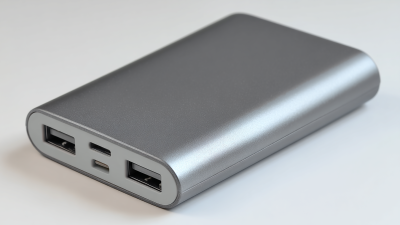
Output options are another essential aspect. Look for multiple USB ports. This allows you to charge more than one device simultaneously. It’s convenient for travel when time is tight. Not all power banks handle multiple outputs well, though. You might find that charging two devices at once means a slower charge for each.
Consider your individual habits. Some users prioritize speed, while others need portability. Lightweight means easier carrying, but it often comes at the cost of capacity. A smaller power bank may not hold enough charge for extended trips. Reflect on your usage before making a choice. Balancing weight and performance can be tricky.
Comparing Price Points and Brands for Best Value
When selecting a lightweight power bank, price and brand reputation matter significantly. Recent industry reports indicate that the average price for reliable lightweight power banks ranges from $20 to $50. However, many options are available at both lower and higher price points. This variation raises questions about value. Are you paying for features you don't need?
Brands may differ substantially in quality and performance. Some companies focus on high-capacity models that weigh more, while others prioritize portability. A survey by the consumer electronics association revealed that 70% of users prefer compact designs that are easy to carry. Yet, many overlook battery efficiency. Lower-priced models may not have the longevity you expect. The endurance can drop significantly after repeated use, leading to disappointment.
Warranty and customer service are also critical when weighing options. Many brands do not offer substantial warranties, which can be a red flag. Research shows that 30% of power banks fail within the first year. Consumers should consider not just the price but also the reliability of the power bank they choose. Quality assurance matters, especially if your device depends on it during travel or emergencies.
2026 How to Choose the Best Lightweight Power Bank? - Comparing Price Points and Brands for Best Value
| Capacity (mAh) |
Weight (grams) |
Price (USD) |
Output Ports |
Fast Charging |
Warranty (years) |
| 10000 |
200 |
25 |
2 |
Yes |
1 |
| 15000 |
250 |
30 |
2 |
Yes |
1 |
| 20000 |
300 |
40 |
3 |
Yes |
2 |
| 25000 |
350 |
50 |
3 |
No |
2 |
| 30000 |
400 |
60 |
4 |
Yes |
3 |




 Mr. Leaf